
An tiny amount of USA Pro Cycling Challenge (UPCC) news made its way to the public this past week. Visit tomorrow for a report on the October 18th press conference regarding economic impact of the 2011 race and its spectator profile.
Until then, revel in a few interesting pépites (nuggets), including a video of the Lookout Mountain scene during the 2011 stage 6 (complete with pink bunny), and a collection of insightful replies to UPCC Facebook questions.
Host city news
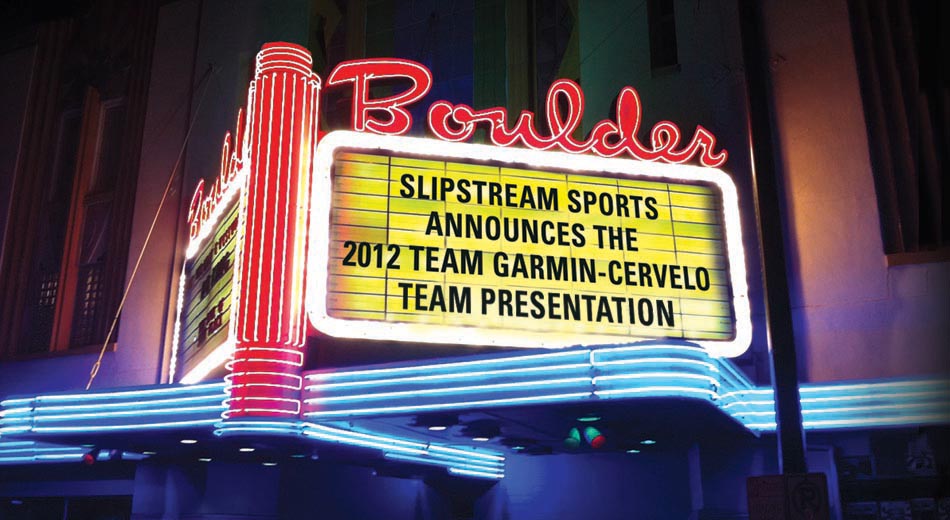
2012 Garmin-Cervélo Gala (Slipstream Sports webpage)
The Boulder-based Garmin-Cervélo 2012 team presentation on November 17th in Boulder will feature a UPCC announcement about one of the selected host cities selected for the 2012 route. It’s easy to conclude that the name of this host city will begin with a “B” and mean “big rock,” but that’s only speculation.
Breckenridge acknowledged on its Facebook page that it will bid.
Signs point to Fort Collins submitting a bid. Bid organizers held a town hall to discuss bid submission. According to a message about the meeting, “Medalist Sports is considering Fort Collins for the honor of hosting future stages of the race.” While earlier intelligence for these updates did not identify Fort Collins as one of the cities invited to bid, it’s possible Fort Collins folks spoke with Medalist or UPCC representatives and received a positive response to their intention to bid for 2012.
Lookout Mountain fan video
UPCC Facebook page questions and answers
Q: Did you attend the US Pro Challenge? If so, tell us about your experience. We’d love to hear if the race impacted your life in some positive way. Post your story on our wall or email us at Ride@upcc.com.
Selected comments:
Chad Reich I chased the peloton in Mt. Crested Butte dressed as a pink taco, which may have made Frank Schleck laugh.
Roxanne Meida King I attended the whole week, driving out from Michigan. My photos are over on Flickr: http://www.flickr.com/photos/rmkcycling/ with a separate group for each day. I had a blast!! I got a great feel for Colorado as well as getting to experience world-class bike racing. Each town was unique and the scenery spectacular. I’ll definitely be back next year, budget and time permitting.
Dave Andrews Was lucky enough to work security for Golden during the final stage and had one of the best seats in the house (three times) at 13th and Washington. The unbelieveable WHOOOOOSH of the peleton inches from my nose as they made their way through town to Lookout will remain one of the greatest memories of my life. Way to go, Colorado, and to all involved in the race!
Terra Drobny It was awesome….made me even more excited about the sport and I have been a fan since Marco Pantani ruled Alpe d’Huez
Eric Jocz Went to two stages. Ran beside the riders at top of Monarch Pass dressed as Micheal Jackson. To bad T.V. did not put that part of stage on T.V.
Carla Merritt DeKalb The first stage, the time trial through Colorado Springs was coming right down Colorado Ave dissecting our postal routes in half. What were we to do?!!!? I deliver mail to SRM on my route so the excitement was building in our area! I got across the ave and took my lunch watching these great athletes and the crowds cheer them on. Then the cycling bug bit me! I can’t stop now! I had to watch the final 10 riders! I called the boss and told him to put me “off the clock” so I could watch these guys! It was all worth it! I taped all the stages and watched them at home with my husband. Like the rest of us….he now wants to get a bike! AND HE’S A DIABETIC! So, seeing the TT1 racing was just icing on the cake. WE WILL be taking vacation time next August to see more of this great race.
Q: “In search of the perfect grand tour” VeloNews. Would you like to see the US Pro Challenge become a grand tour or stay the way it is?
Selected comments:
Steve Swain Americans don’t have a 3 minute attention span, let alone a 3 week span
Marnie White Although I love the idea of a grand tour, I really enjoyed seeing our continental teams this year. Would hate to lose that aspect.
Jonathan Abernathy I would love to see it as a grand tour,, time to eliminate the Vuelta…lol,, maybe include sections in Wyoming, Utah, New mexico..just sayin 😉
David Gardner Is this a real question? One of the greatest places to ride in all the world deserves a Grand Tour.
Sherman Paranandi Grand tour = bad idea. USAPCC will just become the Vuelta of the US, a watered-down grand tour where practically the only elite participants are American. I’m sure the last thing the elite European GC riders want less than a month after the TdF is to fly across the Atlantic for a 3 week race with high altitude. A 9-10 day race staying within Colorado is ideal.
Gregg Scharin 1. Where would it fit in the calendar? 2. One successful year in current format and it needs to be changed? 3. Inaugural year was so successful, the demand for next year will be double. Don’t dilute it. 4.Spread it out over 3 weeks and ADD American fans will lose interest and it will go broke in 2 years.
Luke Gregory Just make it STEEPER! Even weekend warriors here ride tougher courses, admittedly at half the pace.
Eric Zilling I don’t know if I can take 3 weeks off….
Mark Stookesberry 3 weeks would spread it thin. When I watch tours I only care about mtn stages. Maybe stretch it to 10 days, but only add 1 flat day.
Please share your favorite moments — or favorite comment above — and thoughts about elongating the race.
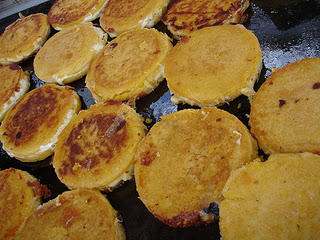
Arepas on grill (chefmomcooks.blogspot.com)
A door into the magical universe opens when you buy white corn meal flour with the intention of transforming it into arepas.
The urge to cook for pro-cyclists often strikes me – not to fatten them up but to offer them something they might miss during all their traveling, something to help them feel at home. After the Gobernacion de Antioquia-Indeportes Antioquia team, EPM-UNE team, and the Colombian riders on Team Exergy crossed the last USA Pro Cycling Challenge finish line in Denver, I caught myself wishing I had cooked arepas and carried them still warm to the team cars at a stage start. The arepa is a thick pancake that is especially associated with the Colombian Department of Antioquia, birthplace of many of the Colombian cyclists I admire and mention in this blog.
I have never cooked them. Now the off-season – and some magical Colombian force – invites me to practice.
Today I drove to the nearest Latin-American supermarket in Denver, the Avanza market, in search of the main ingredient. At the back of one of the aisles a row of shiny P.A.N. arepa flour bags greeted me. No other flour would do; Cycling Inquisition recommended this brand. I scooped a bag into my arms.

P.A.N. White corn meal for arepas
The magic began as I walked to my car, P.A.N. safely swinging in a white plastic grocery bag. The magic continued for at least seven hours. I write “at least” because there’s a good chance the magic will continue through the night.The magical events of the last seven hours, in order of appearance:
- A gray baby pony on a lead clacked hooves on the Avanza asphalt behind my car.
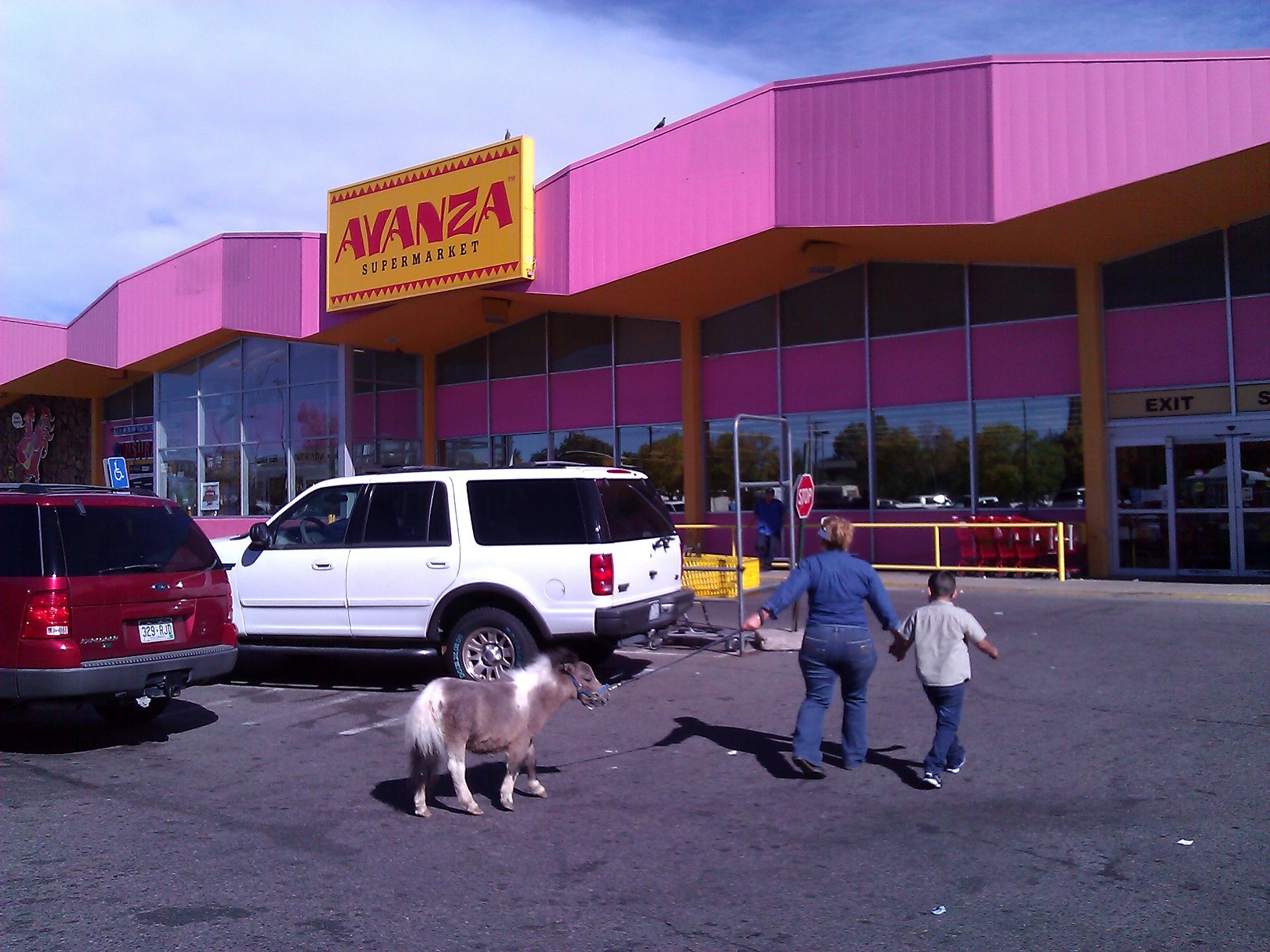
Baby pony in Avanza market parking lot, Denver
- The most glittering, outlandish cowboy hat rested on the head of a man standing on the west side of the Avanza parking lot.

Fanciful Hat in Avanza Parking Lot (Mary Topping)
- My husband and I changed today’s plan to visit Rocky Mountain National Park to hear the bull elk bugle, an annual tradition I treasure. We hiked in an open-space park in Evergreen instead. I clicked the safety belt in place for the drive home and wondered where I stored the elk bugle CD at home. As we drove away a herd of female elk crossed the road in front of us. Their destination: the one male with a five or six point rack standing in the wheat-colored grass on the other side of the road. He bugled.
- I feed my husband almost daily. He only knows how to cook hotdogs. Tonight he fixed dinner for us.
Tomorrow I’ll let you know how the first batch turns out. Cycling Inquisition supplied the recipe for a sweet variation of arepa. Save room.
P.S. As I type, I just received an email with answered interview questions that I had started to think would never come. The magic continues, now ten hours.
Continue with part 2 of Arepa Cycling Magic, here.
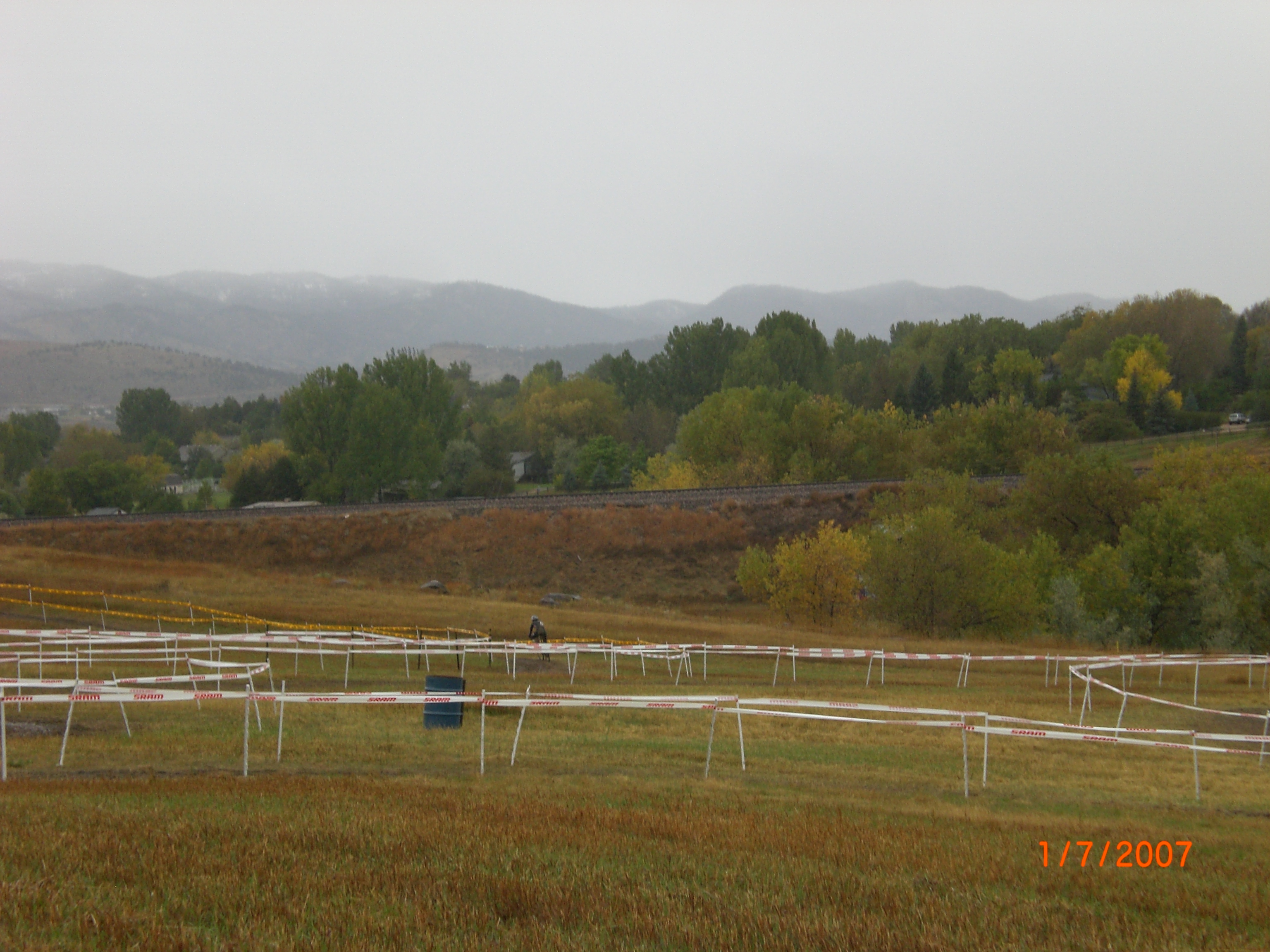
New Belgium Cup, Day 1, course view (Mary Topping)
Twice in the last week I’ve enjoyed spectating at cyclo-cross races. Here’s what they’ve taught me.
- Getting to the front after the start is really important in cyclo-cross where races last from 30 minutes to one hour. More than one rider in the parking lot at the New Belgium Cup in Fort Collins said: “Man, I got stuck behind a bunch of guys who went down in front of me. I couldn’t catch up, got lapped, and directed off the course.”
- The guys started to put on serious faces in the minute before the start when they stripped off their jackets and passed them to staff or family or friends on the other side of the barriers. In that moment the air began to crackle. Some, like these guys, seemed to be saying in that minute, “I don’t know why I’m here but what else can I do now?”

New Belgium Cup, Day 1 elite men at the start-line (Mary Topping)
- The women – not all of them but more so than the men – expressed themselves with facial expressions and sounds on the course. Perhaps that’s their way of muscling through a tough corner or mentally preparing to leap over a barrier. Some uttered muted roars with lips pressed lips together; others wimpered, “aaahhhwww,” open-mouthed. An observer might interpret the latter as cries for help but change his mind when these women returned for the next lap and finished the race. A good number of the women said, “thank you” after you cheered them on.
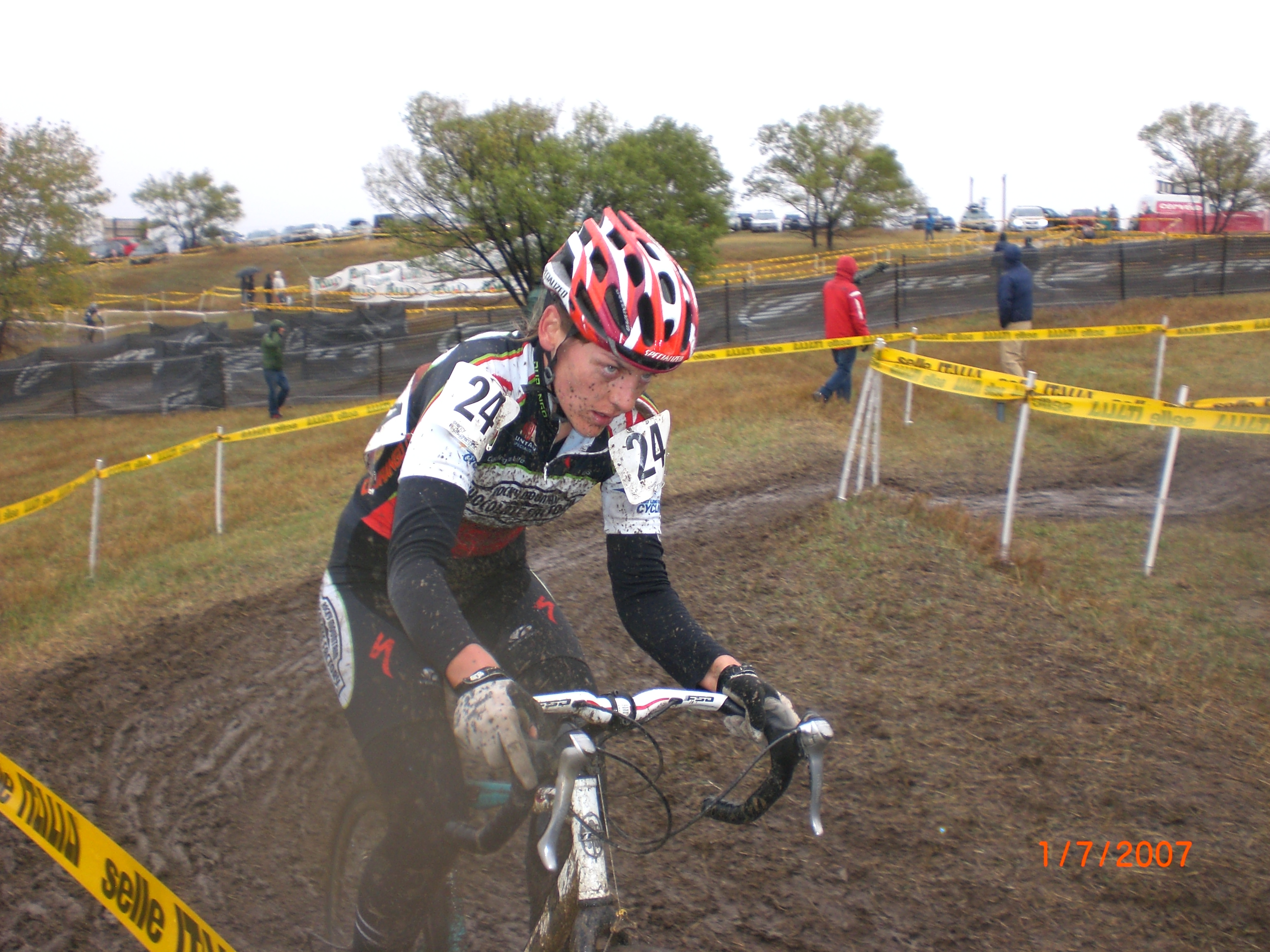
Fierce focus: Sage Wilderman finished 20th on Day 1, New Belgium Cup (Mary Topping)
- It’s easy to make new friends at a cyclo-cross race. I overflowed with questions at my first race, and everyone was happy to help.
A photographer at the US Gran Prix of cyclocross New Belgium Cup taught me the most important lesson: a rider fares better in mud if she lets herself slide instead of forcing a line through the muck. This sounded like a metaphor for a good life lesson. Our journey isn’t a clear line from A to B; expect a lot of slipping and sliding along the way. And sometimes you just have to take a flying leap.
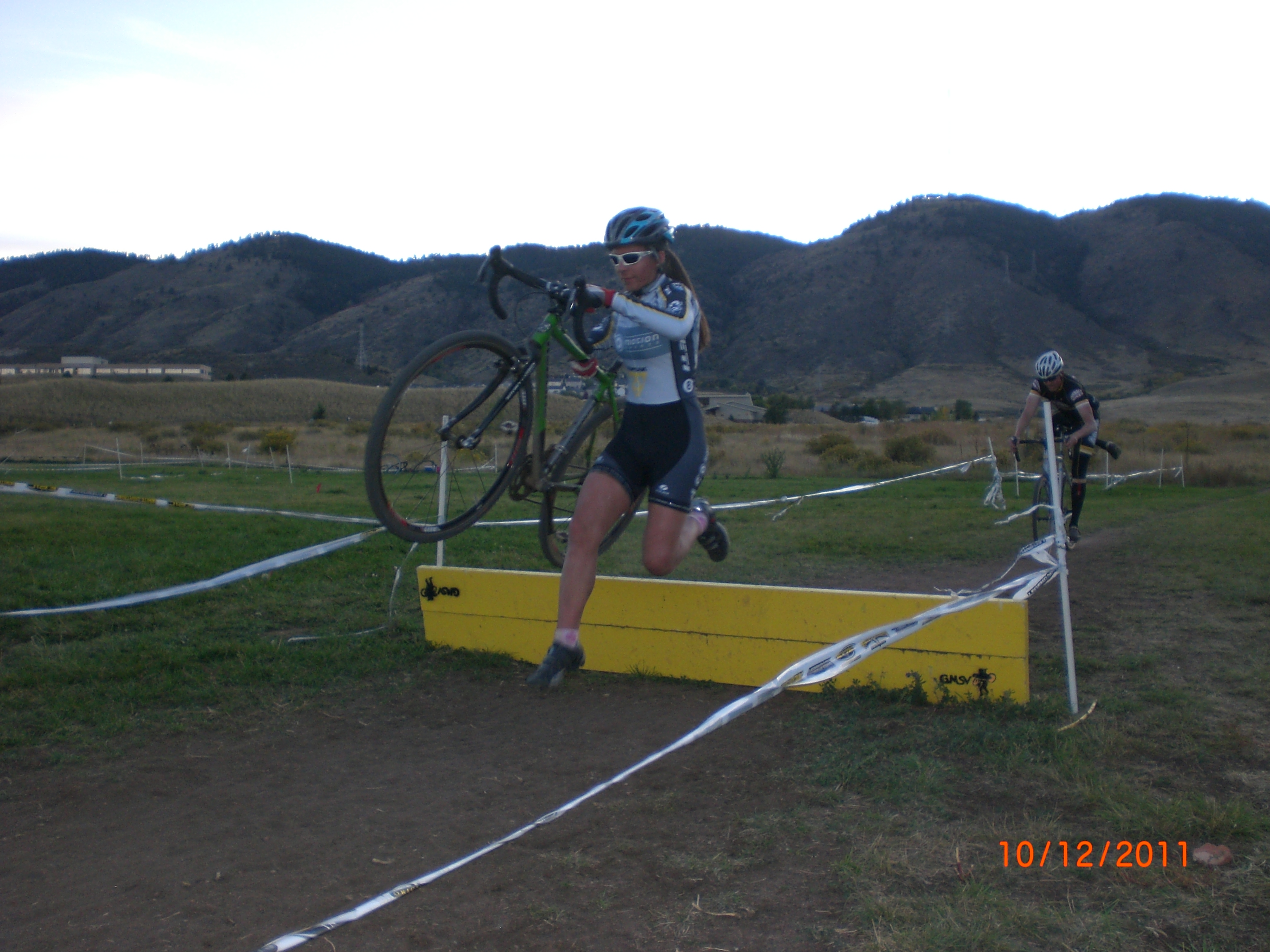
Back to Basics Cyclocross Series, Golden, CO (Mary Topping)
(my apologies for the camera dates of 2007, which are incorrect)
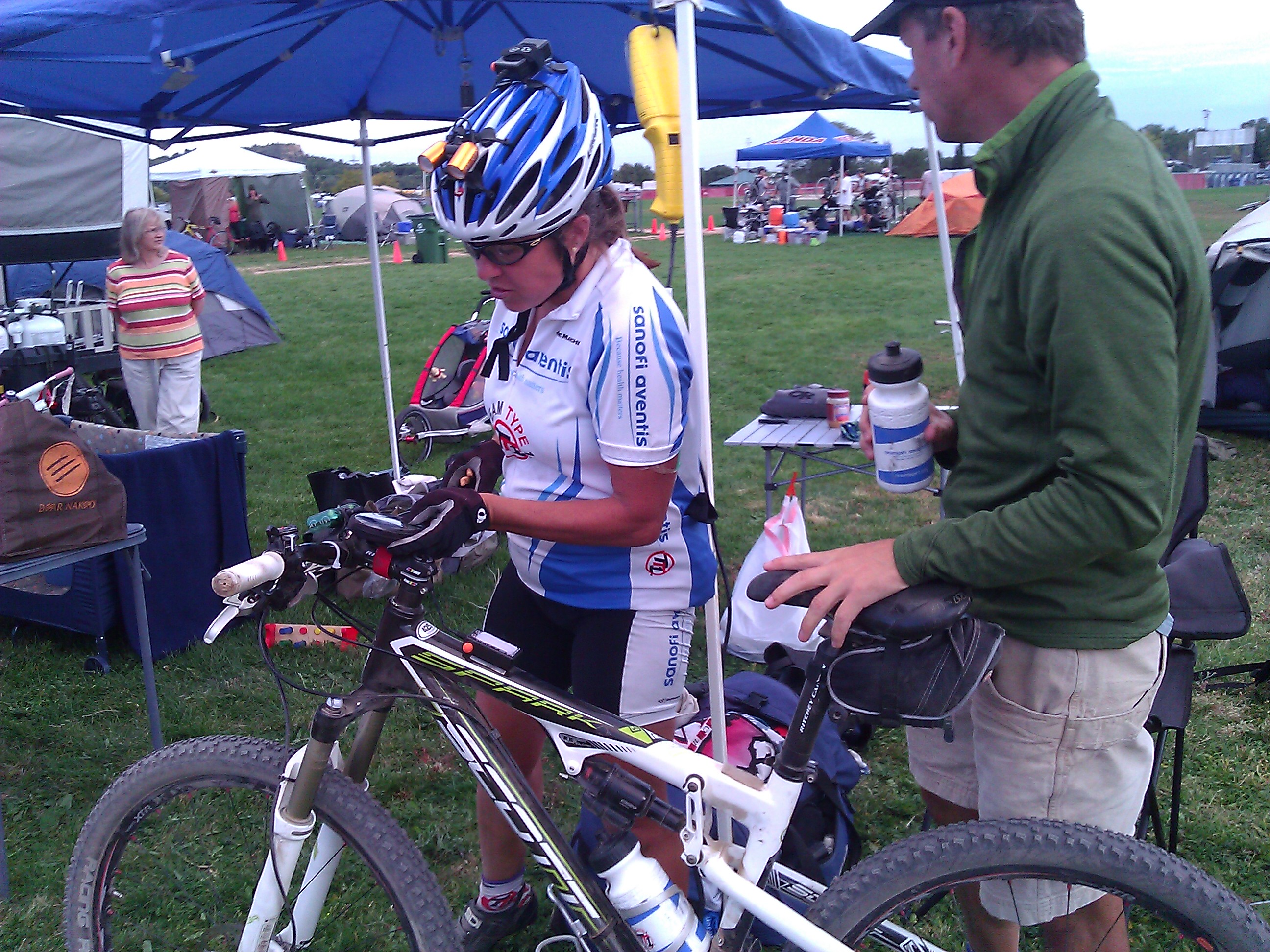
Kerry White, getting ready for lap 5 of 24 hours of COS (Mary Topping)
[updated 9/13/2012]
Athletes like Kerry White finish ultra-endurance bike races like the 24 hours of COS (Colorado Springs) because they overcome the challenges of the dark hours. Helmet and handlebar-mounted light beams bounce over the off-road terrain, casting shadows and distorting shapes and distances. Pinon pines transform into black bears; sandy patches hide and surprise. Increased concentration, coupled with a hyper-alert state, exacerbates the fatigue that has accumulated from already pedaling over 50 miles. Alone at midnight, “You can start feeling sorry for yourself, wonder why you signed up for this,” Stephen White said.
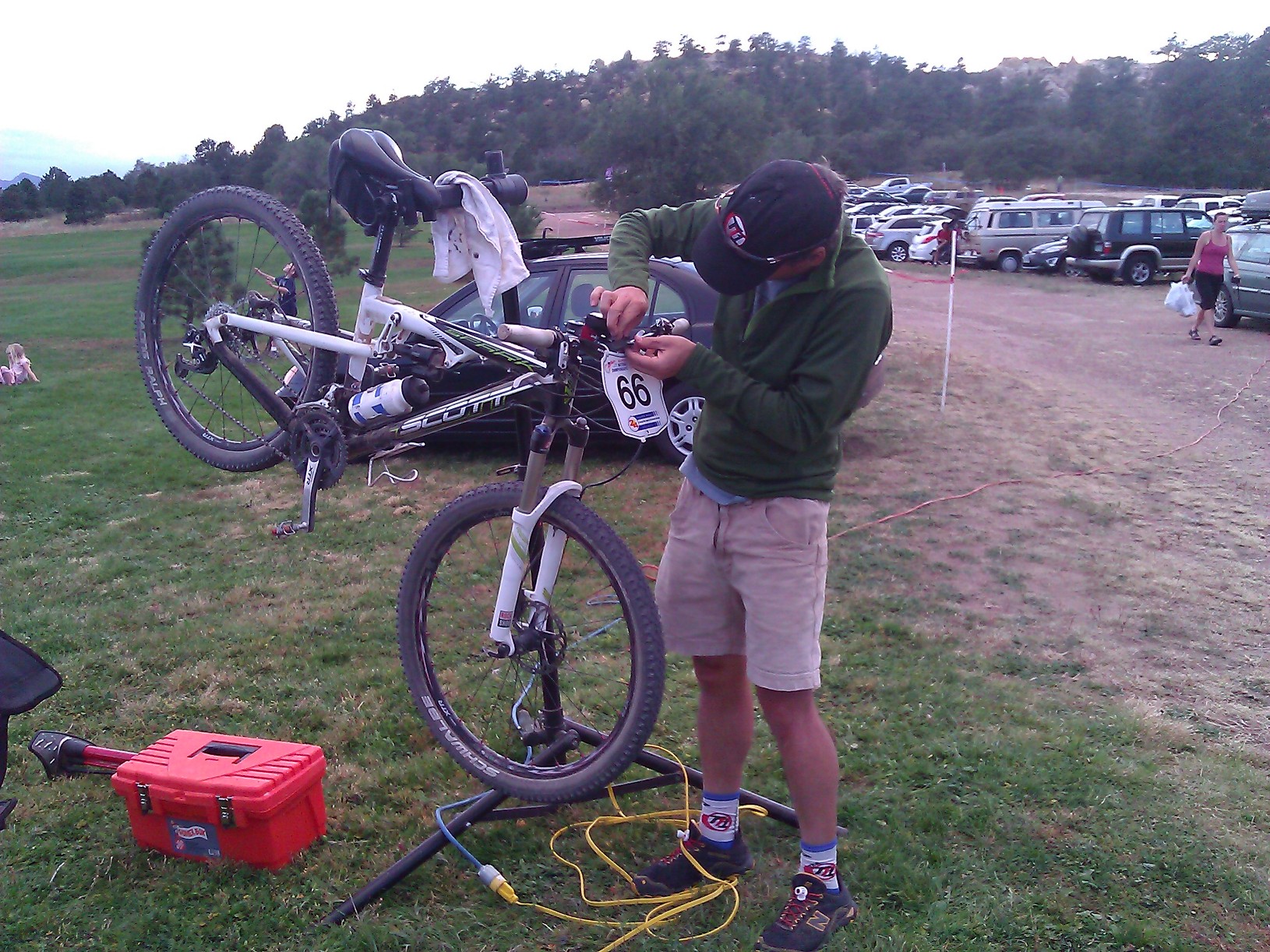
Stephen White installs lights on Kerry’s bike at 24 hours of COS (Mary Topping)
On October 1st and 2nd of 2011 at the 24 hours of COS venue, Palmer Park, Stephen supplied food, drink, mechanical skill, and encouragement to his wife Kerry in her pit stop adjacent to this national championship mountain bike course. Stephen, a Nordic skier and 24 Hours of Moab national champion, enjoys crewing for Kerry. So does their one year-old son Calen. He crawled in the grass under the tent shelter, and pulled himself up on one of the coolers.
Kerry, an endurance cyclist with type 1 diabetes, rides for Team Type 1, a world-class athletic program that includes professional, development, and elite cycling, triathlon, and running athletes. In addition to Team Type 1, PowerBar sponsors Kerry. The White family lives in Eagle, Colorado.
Kerry possessed a motivation for surviving the night that was likely unique among the nine women competing in the solo category. And she knew she needed one. The 24 hours of COS was Kerry’s first 24 hour race after a two-year break of giving birth to and caring for Calen. An accomplished endurance athlete, she’s completed multiple 12 and 24 hour off-road races with podium results, and was the only solo female to finish the 2007 Race Across America road competition.

Kerry and Calen White (Stephen White)
Going into the race she didn’t know how it would turn out. And she didn’t want to disappoint her family. “When you drag your family to a race, and spend $500 on things like accommodations and entry fees…the remorse I’d feel if I didn’t finish would be very depressing,” she said. “If you lose your head, your motivation to continue, you’re done; I was afraid of that, that I wouldn’t believe I could finish,” she said, after the race.

Calen helps Stephen in Kerry White’s pit area, 24 hours of COS (Mary Topping)
Kerry still breast-feeds her first born son Calen. She aims for breast-feeding over formula whenever possible because she found research that shows children of type 1 parents who are fed formula are more likely to acquire type 1 diabetes. During 24 hours of COS the choice she had made to protect her son by breast-feeding became a factor in the race for third place in the women’s solo competition.
Two days after the race, Kerry explained the decision she made at about midnight, half-way into the race which had started at noon on Saturday. Physically uncomfortable from the build-up of breast milk, during three laps she went back and forth about whether to stop to breast pump. She said, “I probably could have coped with the discomfort but mentally decided I wouldn’t make it if I didn’t pump, so I did. It was just two ounces which was pathetic, but mentally it made me comfortable for the rest of the race.”
This decision added 10 minutes to the typical five minute break between laps at a critical time in the race – Kerry held third place, but suspected she would lose time during the night laps, which she did. The winner is decided by the number of completed laps, and when there is a tie, by the rider’s total time. She said, “I walked a lot of stuff I could ride in the day. When it gets dark I fall apart. Even though I know I can ride it, I lose confidence.” During the two year break from competition, Kerry only rode once at night. “I set myself back by not doing a lot of practice at night. If I had done more night practice I probably could have made up the 10 minutes,” she said.
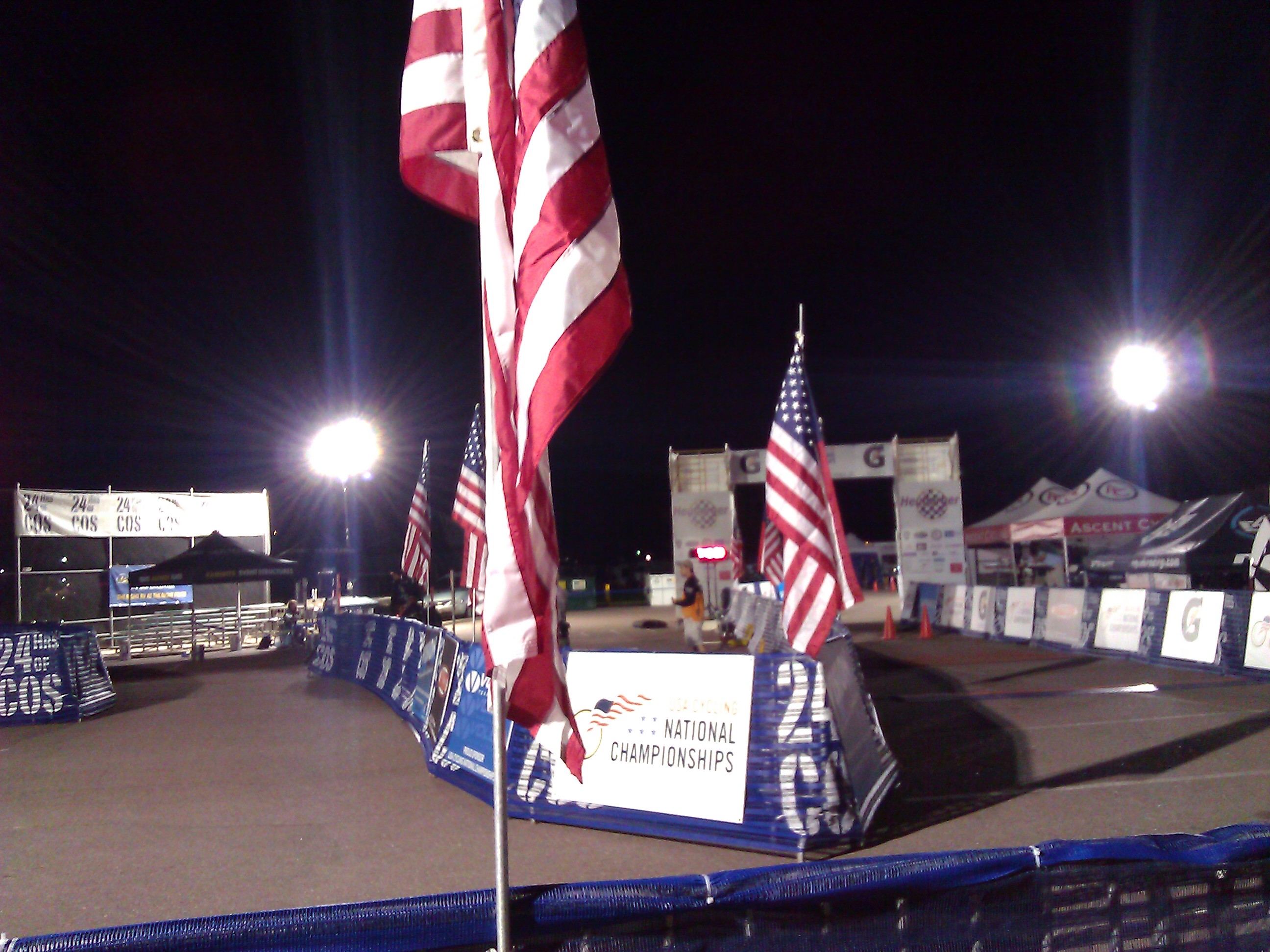
24 hours of COS, lonely at night in the start/finish area
One night ride in two years. If she hadn’t been pregnant, managed up and down blood sugar during pregnancy, worked, given birth, and struggled with Calen’s early lack of weight gain, yes, she probably could have squeezed in more night practice. The journey through first pregnancy poses special challenges for an athlete. At six and a half months pregnant, Kerry wrote in her blog, “…time is flying by…NOT…as a competitive cyclist when you are not competing or training for anything, and seem to be simply getting fat, the days seem to be very long waiting for this little blessing to make his presence known.”
Some female athletes say the pain of childbirth raises their threshold for pain during competition, but this — like other claims about how pregnancy can affect female athletes positively, isn’t true for Kerry. She wanted a natural delivery. But as Calen’s heart rate dropped and did not recover, she decided to have a C-section. She said, “I was bitterly disappointed in myself that I couldn’t do it, I didn’t go all the way through birthing, but the pain up until the C-section was as much as I could handle. But no, pregnancy hasn’t made a difference in my pain threshold.”

Calen White as newborn (Stephen White)
Female athletes sometimes experience stronger performance post child-birth. “I don’t think it’s made me tougher or faster,” Kerry said. “Sari Anderson, a friend I often compare with, has had two children and gotten so fast it makes me jealous. You hope the same will happen to you and it doesn’t.” Kerry doesn’t think she’s gotten slower. “I’m probably about the same,” she said. At least one study has concluded that while each woman’s body responds differently to pregnancy, it’s unlikely that pregnancy will have a negative impact on an athletic comeback.
Commenting on her performance in the 24 hours of COS, Kerry said, “I was as consistent as I have been in the past. That was a good feeling.” Her first 5 laps came in within 13 minutes of each other, averaging 97 minutes on the 13.5 mile course. By noon on Sunday, Kerry had completed 13 laps in 23:51:35. Laureen Coffelt, who finished third, logged 13 laps in 23:37:21. First place Monique Mata rode 15 laps in 22:34:57.
Perhaps Kerry’s not entirely the same person she was prior to Calen. Kerry specializes in making more when others make do, and turning what others define as obstacles into assets. The way she describes her experiences with 24 hours of COS and motherhood imparts the notion that having Calen has provided a deeper reservoir of belief in herself to draw upon than she previously possessed.
Achieving a high level of athletic performance, “requires more mental energy now than before,” Kerry said. “I will ask myself, ‘why am I spending all this time on the bike, I’m sacrificing time with my child and husband. Do I really want to do this?’ This struggle makes it harder. It’s taking a long time to rebuild the endurance I had before, and it’s nerve-wracking to think I have not prepared enough. I’m learning to accept I can do it with a lot less training hours.” Kerry now trains about 16 hours a week; before pregnancy she averaged 25 and as many as 30 hours of training weekly.
As the end of the race approached, the time differences between second, third, and fourth places in the women’s solo race at 24 hours of COS compressed. Second place finisher Kt Desantis slowed down; Laureen and Kerry sped up. Sometime between 6:30 a.m. and 8:30 a.m., Laureen’s pace overtook Kerry’s to achieve third place. Kerry said, “My goal was to finish. I was happy to finish and with my results and performance. I didn’t drop out. I had the mental toughness to continue to the end, and that’s all I can ask for.”

Kerry White finishes her 24 hours of COS (Mary Topping)
In early September Kerry raced in 12 hours of Snowmass and placed third in a field of six in the women’s solo category. She’s looking forward to returning to the 12 hour Sunlight Endurance Challenge where she won the women’s duo race in 2010. She’s also looking forward to supporting Stephen. “It’s Stephen’s turn this winter,” she said, “he’s given up a lot this summer so I could get back. I need to give him a chance to do more racing.” The couple married in 2003.
Kerry doesn’t regret her choice to breast-pump at midnight while her competitors continued to cover more ground. When a woman becomes a mother, the increased responsibilities lead her to become more realistic in her expectations. “It is what it is. Whatever place I’m in I’m pleased I achieved my goal to finish. I’m not remorseful that I could have been third.”

Kerry White’s happy with her 24 hours of COS ride (Mary Topping)
———————————————-
Find Stephen and Kerry’s blog at http://xcwhite.blogspot.com/.
Sari Anderson, Kerry’s friend and a multi-sport endurance athlete, won the mixed duo mountain bike national championship in the 2010 24 hours of Moab six months after giving birth to her second child. She lives in Glenwood Springs, Colorado. Read about training advice and more in her blog, http://sarianderson.wordpress.com/sari-anderson/.

Leipheimer after Vail TT win, 2011 UPCC (Mary Topping)
The biggest news this past week:
Levi Leipheimer plans to return to Colorado with his new Omega Pharma — Quick-Step team to defend his inaugural edition win. And he’s extremely confident. Referring to the Tours of California, Utah, and Colorado, he said in a recent video, “I’ve won those races in the past and I’ll continue to do so.” A Bicycling.com article* said Tony Martin will “join Leipheimer as co-captain in one- and three-week races such as Paris-Nice, the Dauphiné Libéré, the Tour of California, the USA Pro Cycling Challenge, and the Tour de France.”
Cities that have in the past week committed to submitting a bid as host city for 2012:
- Montrose. The city has not decided which type of stage / start / finish to pitch.
- Durango. This popular cycling venue previously expressed concerns about whether hosting the UPCC would jeopardize the success of their established Iron Horse Bicycle Classic. The 2012 Iron Horse will run from May 26th to the 28th. The city plans to bid for the stage 1 start and has draft an 83-page proposal to support its bid. An offer of $160,000 from the city to help fund the host city’s cost should impress the organizers.
Who knew? Counties regulate helicopter use:
An Aspen Times article mentioned issues with Pitkin County regarding helicopters. Apparently the county needed to approve the use of a helicopter and hadn’t been informed until late in the planning process. This is another example of how putting on the race as a host city isn’t easy; it involves collaboration with multiple entities.
Introducing a new host city requirement, a commemorative monument:
The cost of hosting the UPCC has gone up. The RFP for 2012 says, “The Host City is required to produce and display a permanent monument or iconic representation of the USA Pro Cycling Challenge to commemorate the presence of the Tour. Examples include wrapping a gondola car, painting a mural on the side of a building, erecting a statue, etc.”
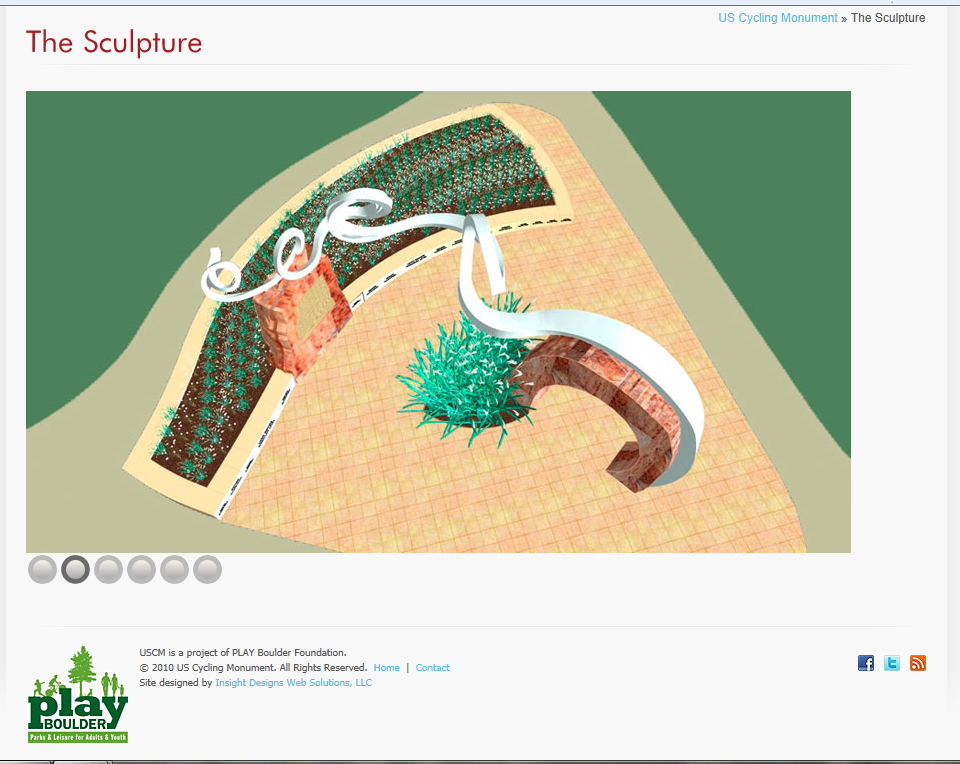 Planned Boulder Monument, uscyclingmonument.com
Boulder seems to be a step ahead of the game if it can parlay the planned cycling monument for North Boulder Park, near the finish line of the historic Red Zinger/Coors Classic, into meeting this condition. Supporters are accepting donations via kickstarter.com. While statements on this website probably don’t speak for the city (the monument is a project of PLAY Boulder), Boulder seems pretty confident about its chances of being selected for 2012: “The total funding goal for construction is $215K. If funding is complete by May 2012 we can unveil [the monument] at the 2012 USA Pro Cycling Challenge in August!”
*10/20/11 update: the Bicycling.com article found at the time this post was written now seems to be unavailable online.
Jeremy Powers on Team Rapha FOCUS pulverized some mud while previewing the Exergy US Gran Prix of Cyclocross New Belgium Cup course in Fort Collins, Colorado on October 8th, 2011. He joined ProVéloPassion after this cold and rainy warm-up, under the team’s tent.
Enjoy Jeremy’s comments on: the course, why he will continue to ride cyclocross and on the road, how to get a shout-out on Behind the Barriers, and more. Thank you, Jeremy.
Why are you a JPOW fan?
Jeremy recently won on Day 2 at the Gran Prix of Gloucester. He currently leads the elite men’s category of the New England Pro Cyclocross Series. Before the start of the New Belgium Cup, he ranked 6th in the US Gran Prix of Cyclocross.
{updated, 10/7/2011 8:50 p.m.}
Today I realized I owe a lot to everyone I’ve met through Twitter. So I’d like to say thanks by sharing why I love my tweeps and what I’ve learned from them.
10. Get out there – there’s a beautiful world outside. Thank you for mentioning or posting photos of your bike rides, the flowers you found on hikes, and the creeks you’ve crossed: @lindaguerrette, @erikslack.
9. Be authentic — it’s easy to hide. I appreciate tweeps who tell it like it is and thereby encourage honesty: @kalenski, @cyclehermit (I think especially of grey-blue eyes and duck-tails).
8. Spread cheer — some days it’s hard to face the world. My tweeps make me laugh out loud just when I need it most: @GregIenco (he also helps me practice French).
7. Be creative — it’s refreshing to read simple emotion expressed in many different ways. I especially like how @Melissagerman accomplishes this with hastags such as “#immalovernotafighter.”
6. Pay it back – give a little, get a little. Tweeps take time to thank others for retweeting them or sharing links to stuff they enjoy reading. The queen is Julie of @taigaCompany. Also, @Debamundo.
5. Share stuff — there’s a lot of great reading on the internet in blogs and websites, and in just the 140 words of a tweet. Thanks for sharing, Tracie @cyclingdiva, Danny @dnelissen, @JohnH1204.
4. Do something good — many tweets related to charity rides and good causes scroll down the page every day. They remind me to stay grateful. Recently tweeted by: Steve of @FLiByeRacing.
3. Make new friends, but keep the old — (yes, I was a Girl Scout). New friends arise all the time on Twitter and are Silver, but old tweeps are Gold. Especially good at tweeting about cycling but also interacting with many on Twitter is Natalie @brassyn.
2. Be silly — sometimes I get a little too serious. When that happens, @mmmaiko sets me straight. Tweets about Tom Bonnen’s health conditions come to mind. Another good one: “the world will explode into rainbow sprinkles and iridescent paillettes!”
1. Share your friends — everyone has something to offer. I love it when tweeps tweet with Follow Friday #FF, providing new potential tweep-friends. Thanks, Richard @cyclingart, Roxanne @CycleGirl108.
If your eyes scan this page, thank you for spending time here. Especially @heidimo6, one of my earliest readers.
And to everyone who follows and chats with me on Twitter: thank you for being there. Tweet on. What do you love about your Tweeps or other virtual friends?
The mind matters more than the body parts that propel an athlete through a race. The importance of mental toughness in finishing ultra-endurance races arises again and again as I draft pieces about the rides this past weekend of Kerry White and FLiBYeRacing in the 24 Hours of COS (Colorado Springs). While we wait for the finished stories, warm-up to the topic with the following insights.
From bikeforums.net:
- “Well, bike-racing is 90-95% mental strategy and tactics and 5-10% physical anyway.”
- “This is so true. In bike racing, especially crits, it has so much more to do with strategy than anything. You can safely asssume that nearly everyone is at about the same physical level, but the winners are those with the strategy.”
From SonicBoom Racing.com:
- “Whatever anyone tells you, cycling is a mental game. You trick yourself into believing that you’re not tired. You convince yourself that you’re not going too fast to make it around a corner. You look yourself in the mirror and, straight faced, tell yourself that your shaved legs, spandex shorts, and ridiculous tan-lines are totally manly. Part of being a successful cyclist is creating a version of reality and buying into it completely, without doubt or hesitation.”
From the acefitness.org blog:
- “Most successful triathletes will tell you that racing, especially long-distance events, is 95 percent mental.”
- “That percentage may seem high, but if you’ve put in the hard training, the only thing standing in the way between you and the podium, or simply a good experience and not-so-good experience, is how you deal with obstacles.” Obstacles include fatigue, going out too hard, cramps.
A coach referenced in this blog, Brian Maiorano, believes suffering is related to an athlete’s mental state. “Suffering is entirely mental. If you dwell upon your discomfort, it will turn into suffering. You’ll feel sorry for yourself, become miserable, sink into despair, and eventually slow down.”
“Discomfort [different from pain] such as sore muscles, blisters, overall fatigue, a stiff neck, is part of racing, and part of pushing yourself to a top performance. Embrace it and rejoice that you are fit enough and tough enough to push yourself so hard. You will thank yourself after crossing the finish line.”
24 hours of COS, lonely at night
Finally, to understand what can occupy a rider’s mind during a 24 hour mountain bike race, read about the “dirty biker’s” experience in 24 Hours in the Old Pueblo.
Is winning — or achieving a goal — 95% mental in any endeavor, and not just ultra-endurance events?
Factoid: The U.S. hosted six UCI races in 2011: the 2.HC Amgen Tour of California, 2.1-rated USA Pro Cycling Challenge and Larry H. Miller Tour of Utah, 2.2-rated Tour of Elk Grove, 1.HC TD Bank Philadelphia International Cycling Championship, and 1.1 Univest Grand Prix.
Since only a couple of tidbits about the USA Pro Cycling Challenge (UPCC) surfaced this week, here are a couple of interviews from the 2011 UPCC to enjoy:
1. Rory Sutherland, UnitedHealthcare
2. Find one with Frank Schleck, Leopard-Trek, by the same interviewer, here.
The USA Pro Cycling Challenge received an upgrade from 2.1 to 2.HC status for 2012. This means:
- The race offers more UCI America Tour points, and
- The same team invitation requirements as 2.1 status still apply: ProTeams can’t exceed 50 percent of the field and the top three teams in the UCI America Tour rankings should be invited.
2012 Host City Candidates
- The UPCC released the official request for proposal on 9/21 via a link to request a RFP on the race website. The Coloradoan posted a PDF of the RFP in the article about Fort Collins’ interest in the race.
- The number of new cities interested in hosting a stage has jumped to 27, according to Stacie Lang, EVP of communication for the UPCC (from The Coloradoan).
- Fort Collins expressed interest in a start or finish. The city has concerns about how to raise the estimated $150,000 to $250,000 host cities spend on hotels, municipal staffing, and other requirements, and is studying the feasibility of generating the funds. Supporters of bringing the race to Fort Collins set-up a facebook page called, “Bring the Pro Challenge to Fort Collins.” The page has 275 “likes.”
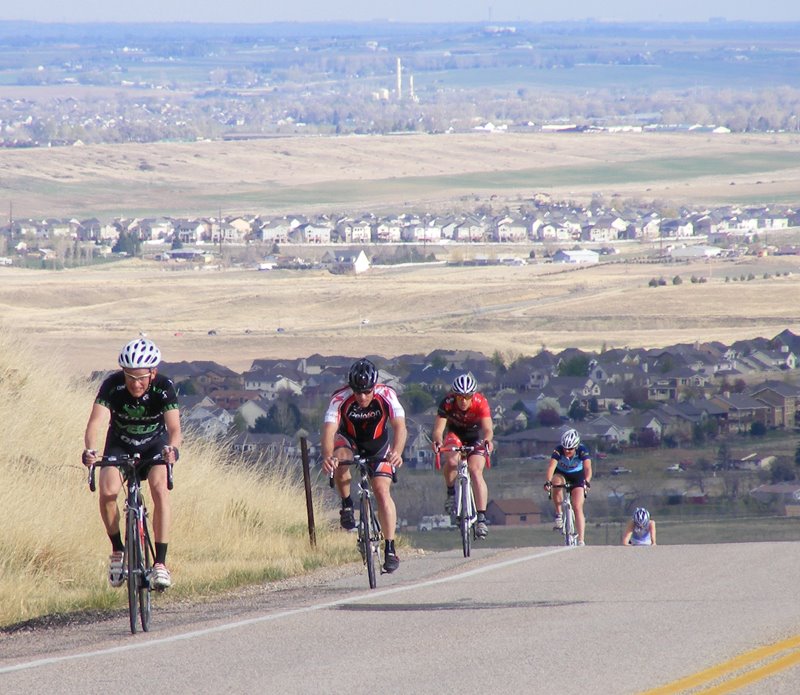
Bike racing in Fort Collins (Bring the Pro Challenge to Fort Collins FB page)
Attendance and economic estimates
- Breckenridge estimates it drew 50,000 to its finish
- Denver estimates it drew 100,000 spectators
- Salida estimates between 3,500 and 5,000 people came out for the race
- Colorado Springs estimates 100,000 watched the prologue
- Colorado Springs is expected to submit a bid and offer to host a prologue or a stage start or finish
- Initial reports indicate that towns that hosted the race this year saw a 10 percent to 15 percent increase in reservations over last year, not including comps
- Golden raised more than $200,000 in sponsorship and came in under budget
- Salida generated $60,000 in contributions in addition to in-kind donations such as city staff time. (first three and last three bullet points from The Coloradoan article)
Other
- Tour companies already have offers up to follow the 2012 UPCC. Here’s one for $3,900.
24 Hour National Mountain Bike Championships Village, Colorado Springs, 8pm (Mary Topping)
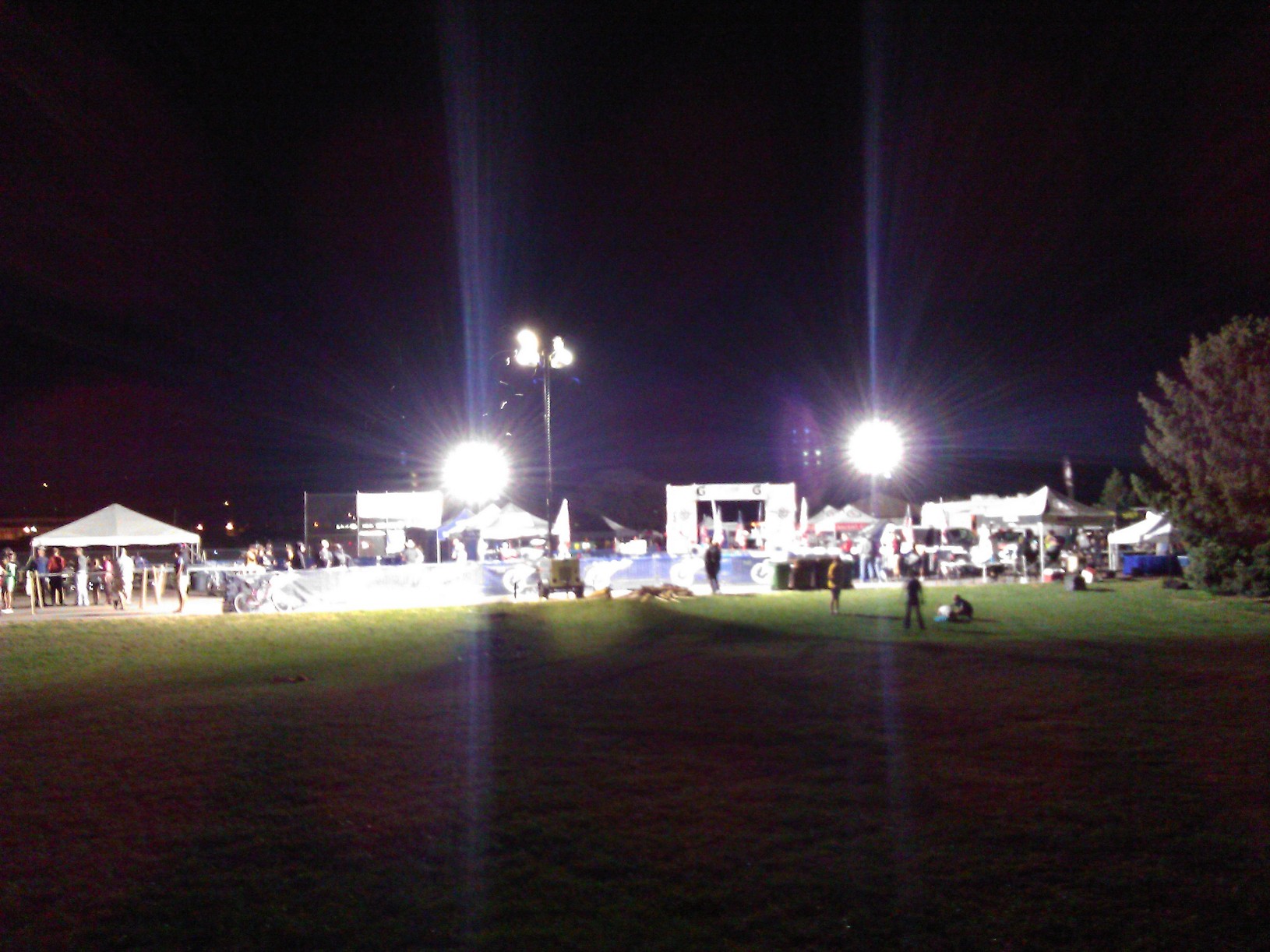
11:35 p.m., Saturday October 1st, 2011. While Colorado Front Range residents sleep, 200 mountain bikers pedal paths between trees, rocks, and cactus guided by helmet and handlebar mounted lights. Some cruise in groups of two or three on the 13 mile course in Palmer Park in Colorado Springs, but most cut through the darkness alone. Their constant companions: summer’s last crickets, the crunch of tires chewing through sandy earth, a crescent moon, and thoughts about the approaching witching hour.
Five hours earlier when the sun started to fade, Stephen White said, “Two a.m. is when the fatigue starts. They’ll either get into the groove or slow down. It’s usually at night when the time gaps are made and the race won.” His wife, Kerry White, rides on course as he speaks. She competes in the solo category, a TeamType1 athlete. Stephen staffs Kerry’s support tent near the start / finish line. She rolls up to camp White near the end of her fourth lap to refuel and collect lights. She chugs spring water from a gallon plastic container. I ask her how she feels. “Good,” she says. “It’s early.”

Kerry White in-between laps at 24 hrs of COS, with son Calen (Mary Topping)

Kerry White's bike at 24 hours of COS, lights mounted
At 6 p.m. in a 24 hour race that began at noon, three-quarters of the race stretches before her.
Eighteen hours also remain for Team FliByeRacing. Steve, Andy, Todd, and Ian alternate laps in the four-man open classification. At about 6:15 Todd rides into the team transition area, passes his yellow Velcro timing anklet to teammate Andy, then makes his way to the team’s camp, a tent about 50 yards from camp White, to rest for three hours until his next turn. Team FliByeRacing’s pace of 64 minute laps earns second place so far. It’s an excellent start toward a podium goal.
At 9:58 p.m. Steve will say his third lap, the first in the dark, took four minutes longer than a day-time lap. He’ll begin his fourth lap, 13th for the team, near 12:30 a.m. on Sunday. One minute later he’ll leave the start-finish area’s generator powered lights behind and disappear into the dark.

Steven Thompson's dream destination mantra

Steven Thompson, FLiBYeRacing, in-between laps at 24 hours of COS (Mary Topping)

 ProVéloPassion