
[updated 12/8/2011]
Two weeks have passed since Team Garmin-Cervélo presented its 2012 team at the Boulder Theater. But the memories linger. Photos, quotes, and other special moments from that evening keep it alive.

Cervélo bike on display in Boulder Theater lobby

Sign-in table, lobby of the Boulder Theater
The theater’s lobby led to a large rectangular bar at the back of the auditorium, under the balcony seats. Sconces sent streaks of light up the magenta-colored walls. At the end of the bar, Christian Vande Velde’s choice of argyle-patterned clothing added extra glow to the darkness.
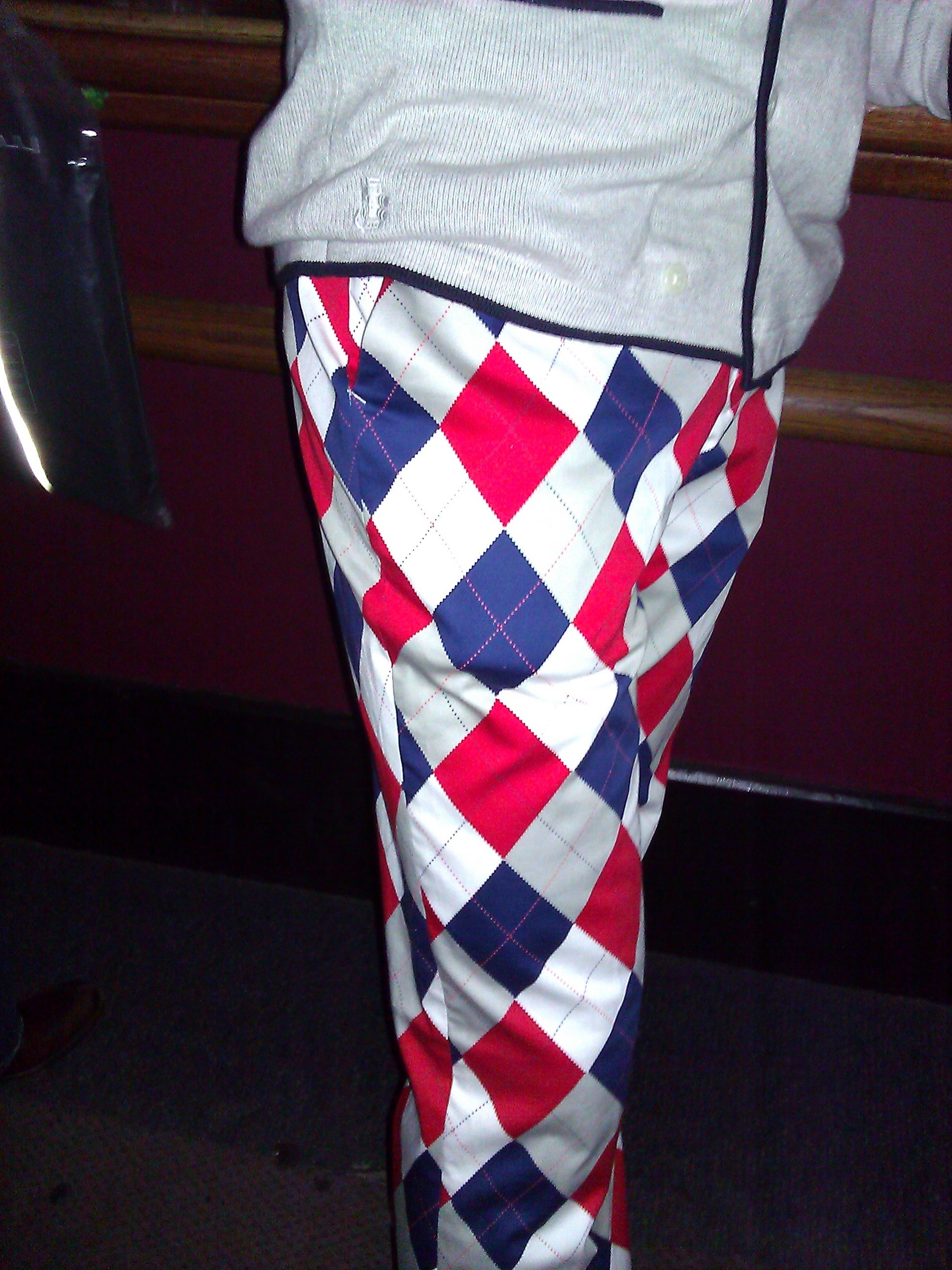
Christian Vande Velde's infamous pants

Top half of Christian Vande Velde
While several team members like Christian and David Zabriskie leaned against the bar surrounded by knots of guests, some younger team members clustered together on rows of chairs alongside the bar.
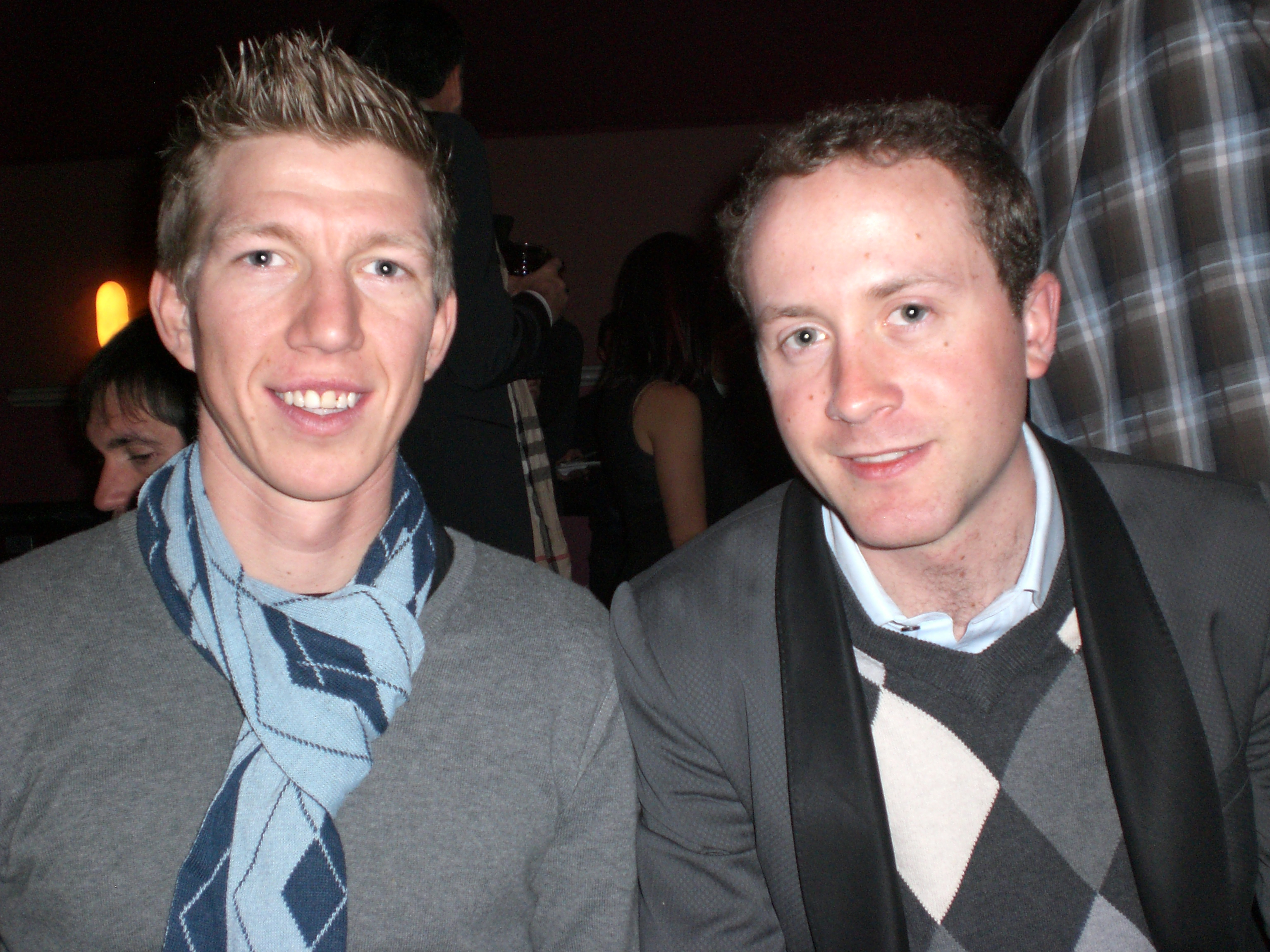
Sep Vanmarcke and Tom Peterson (l to r) (Mary Topping)
Within minutes of the start of the cocktail hour guests moved about by holding glasses in the air and repeating, “excuse me, please, sorry, excuse me.” White-shirted waiters offered among other snacks zucchini fritters and mini-sandwiches. Dessert awaited VIPs on the tables from which they would soon watch the team on stage.

VIP table centerpiece
An evening of firsts
After an introduction by Robbie Ventura and comments from Slipstream executives Matt Johnson and Doug Ellis, Jon Cassat of Garmin took the microphone. Cassat outlined Garmin’s objectives as a team sponsor. He said their objectives had been accomplished every year since 2008, including growing cycling computer sales in Europe.
Then the first showing of the documentary film, “Journey to a Dream,” began. It highlighted race victories with voice-overs by Phil Liggett. Several of the riders shared intimate moments about their early lives and cycling careers in the film:
- Alex Howes: “Bikes hung over my crib.”
- Johan Vansummeren: “My mother, she wanted me to go to university and get a degree. But I was a bit sick of school and my father he was a bit sick of us both arguing, I think, so he said ‘you can stop school and you have one year to become a professional bike rider’.”
- Peter Stetina: “I don’t remember the first time I entertained the thought of going pro. I did so many sports, and I was always the most competitive kid in school. I wanted to finish the test first even if I didn’t do the best, and I wanted to peel an orange fastest. I actually raced my buddy in peeling an orange once.”
Then the curtain opened to reveal a living / dining room setting of cognac-colored chairs, mahogany round tables, and painted desks, complete with a stack of firewood and pokers. Jonathan Vaughters led the audience through a list of firsts by the team: “the first to claim anti-doping, the first to put argyle on spandex, the first not to eat pasta at every meal, the first to allow unfettered access of media to the behind-closed-doors of professional cycling.” He defined the team in one sentence: “A bunch of tiny pieces put together to beat a bigger foe; that’s Slipstream and Garmin-Cervélo.”
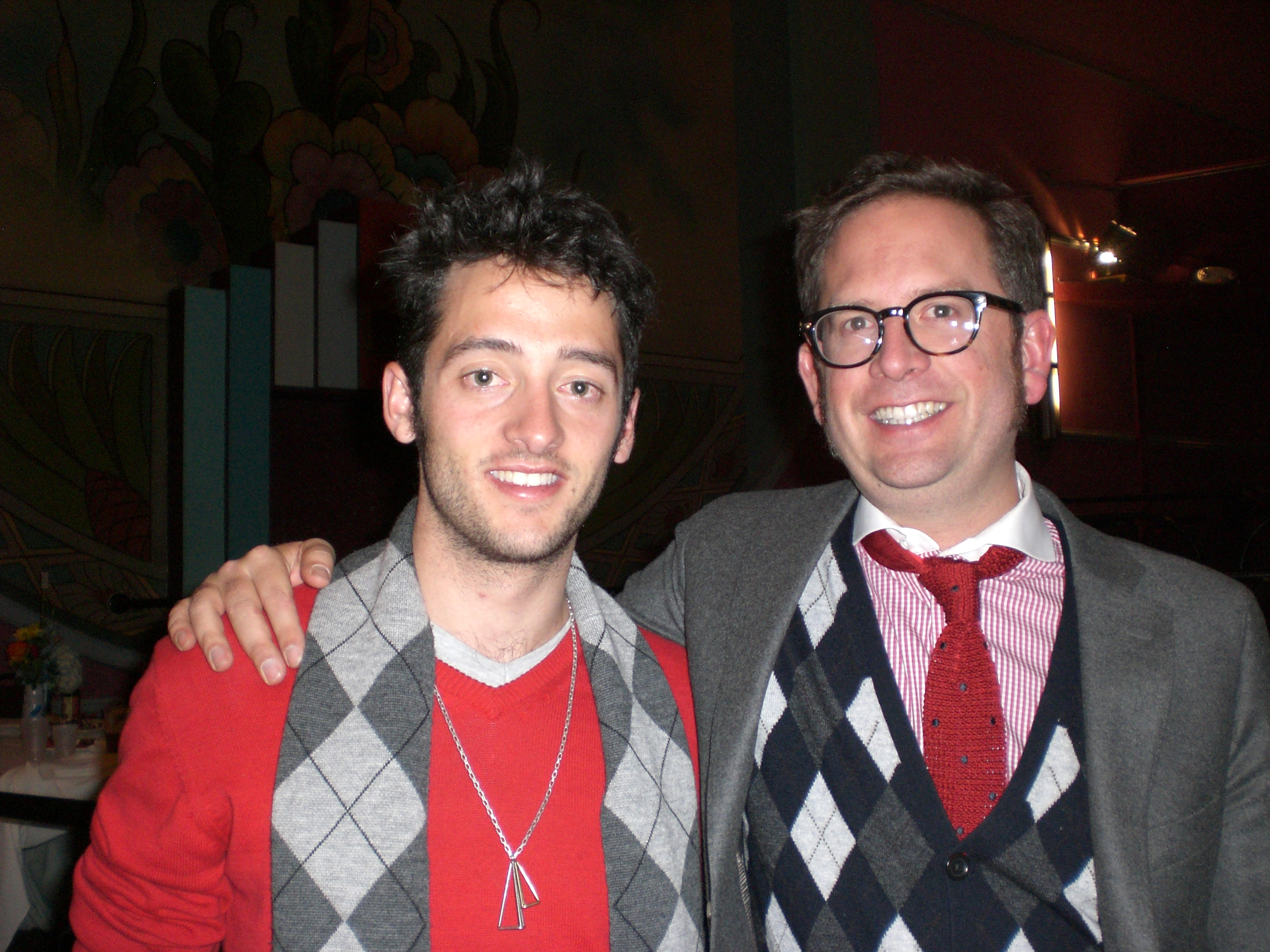
Nathan Haas with Jonathan Vaughters (Mary Topping)
Jonathan promised future firsts, including embracing overlooked talent, performing beyond anyone’s expectations, and emerging first on fans’ list of teams. Perhaps he meant repeated firsts?

Zabriskie playing auctioneer (Mary Topping)
Taking the stage
Booming, upbeat music ushered the riders onto the stage. They introduced themselves and responded to audience questions.
- Christian Vande Velde: “There were crowds at the USA Pro Cycling Challenge, and then we got to Golden. Golden was insane. We love beer.”
- David Millar: “I’m trying to treasure every single moment…We do everything to make sure we don’t let each other down.”
- Thomas Dekker: “I’m thankful they give me a second chance. It’s nice to be back with guys that love to ride their bikes.”

David Millar and Ryder Hesjedal during after-party (Mary Topping)
After the last audience question the team left the stage and continued to visit with fans, friends, sponsors, and staff. New guests arrived; Lucas Euser joined the party. He made his way to Jonathan Vaughters. Lucas leapt across the aisle and charged, tackling Jonathan.
Other reports on the presentation:
A short interview with new Aussie rider Nathan Haas, including details on the infamous 10-mile hike.
Garmin-Cervélo’s Boulder Camp was as much fun for the riders as the fans, by Velonews.
Garmin-Cervélo’s 2012 squad presented in Boulder, by Velonews.
Dekker, Rasmussen confirmed at Garmin Gala, by cyclingnews.
The team’s news summary, with many candid photos.
Lots of reader commentary flowed from the brief PodiumCafe post.
YouTube video of David Zabriskie singing a “Garminized” version of Proud Mary.

David Zabriskie, profile view (Mary Topping)
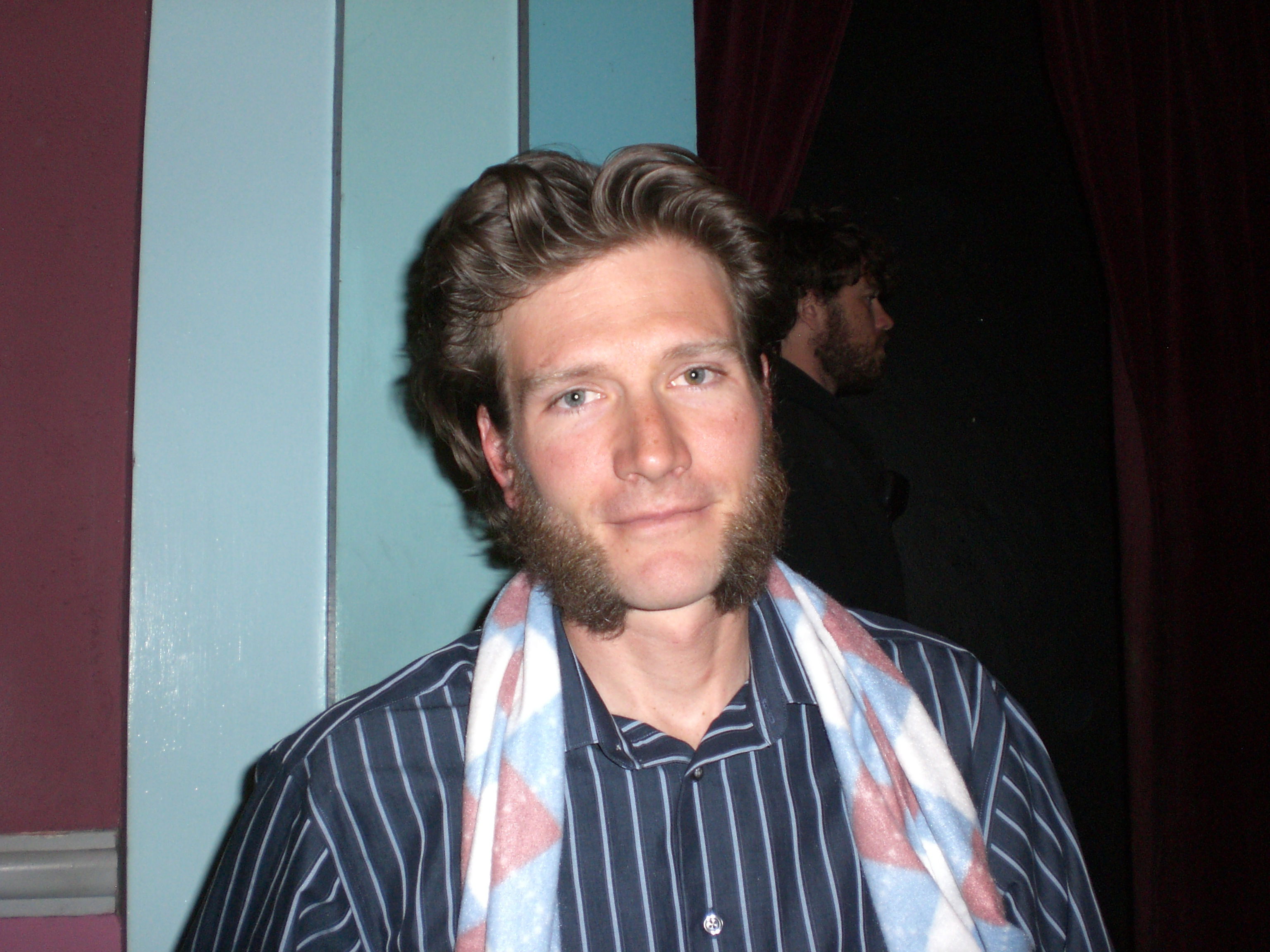
Teammates nicknamed David Zabriskie "Wolverine" (Mary Topping)
[updated 11/28/11 9:40 p.m.]
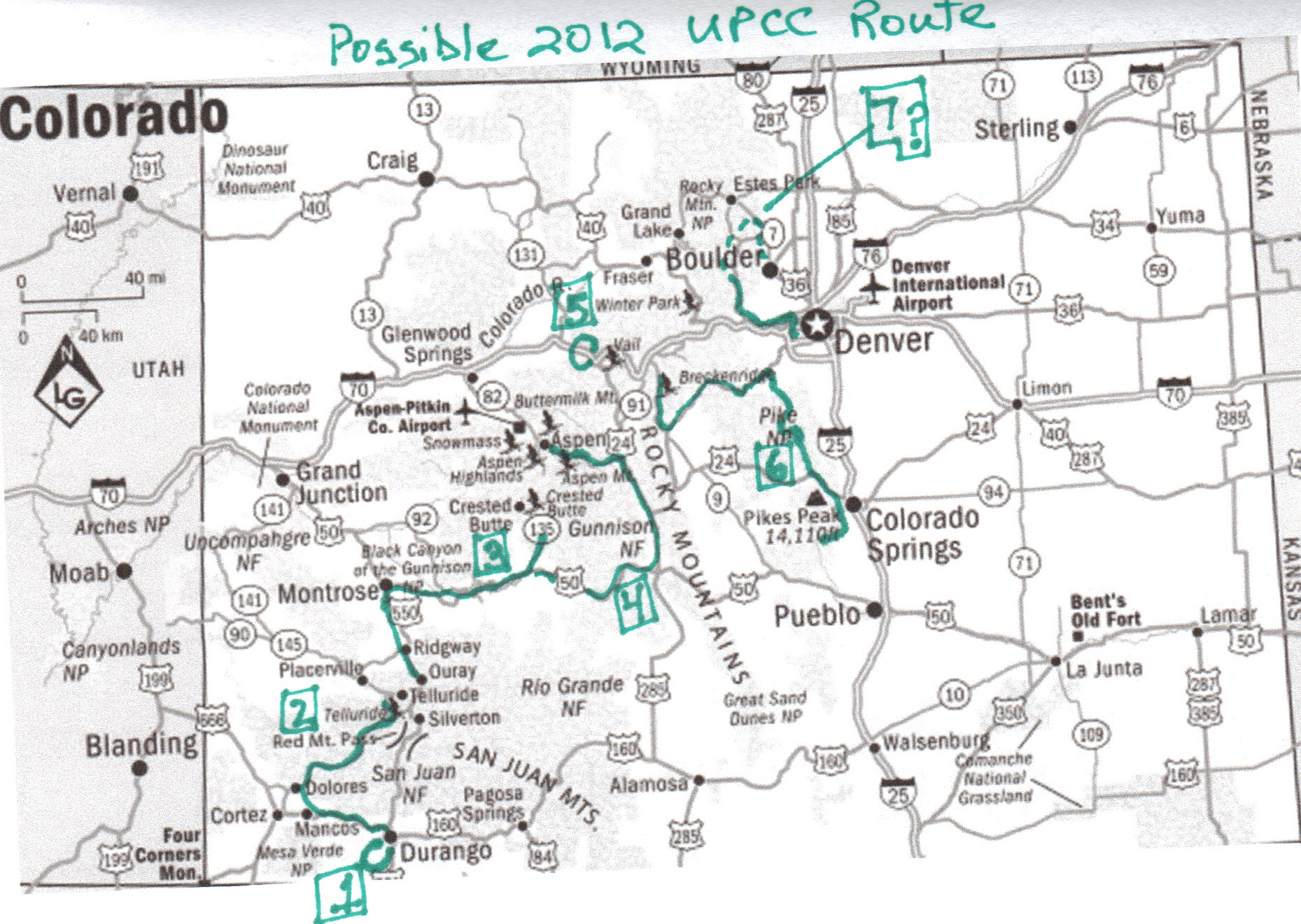
At least two articles have mentioned a leaked USA Pro Cycling Challenge (UPCC) route for 2012. It’s possible to make some route predictions based on the rumored host cities. The cities included:
- Durango
- Telluride
- Ouray
- Mount Crested Butte
- Gunnison
- Aspen
- Beaver Creek
- Breckenridge
- Colorado Springs
- Lakewood
- Boulder
One possible 2012 UPCC route
This potential route begins in the southwestern part of Colorado and makes its way northeast for a final stage on the front range. It includes an uphill finish on the next to last day of the race, which is scheduled to run from August 20th to August 26th. The route lacks a “true” uphill finish; the one included falls a bit short in distance as it lasts just three and one half miles with an average grade of 6%.
The absence of a longer uphill finish, together with armchair mapping sans scouting and too many long stages are just three reasons why this route is suggestive and not an ideal candidate. But it’s a start at developing some potential route scenarios.
Day 1: Prologue in Durango, on the road up to Fort Lewis College. 3 miles with 400 feet elevation gain makes this more challenging than the 2011 prologue. MapMyRide route for Day 1.
Day 2: Durango to Telluride, via Lizard Head Pass. 113 miles, easy climbs with no grades over 4.1% for a sprinter’s finish. MapMyRide route for Day 2.
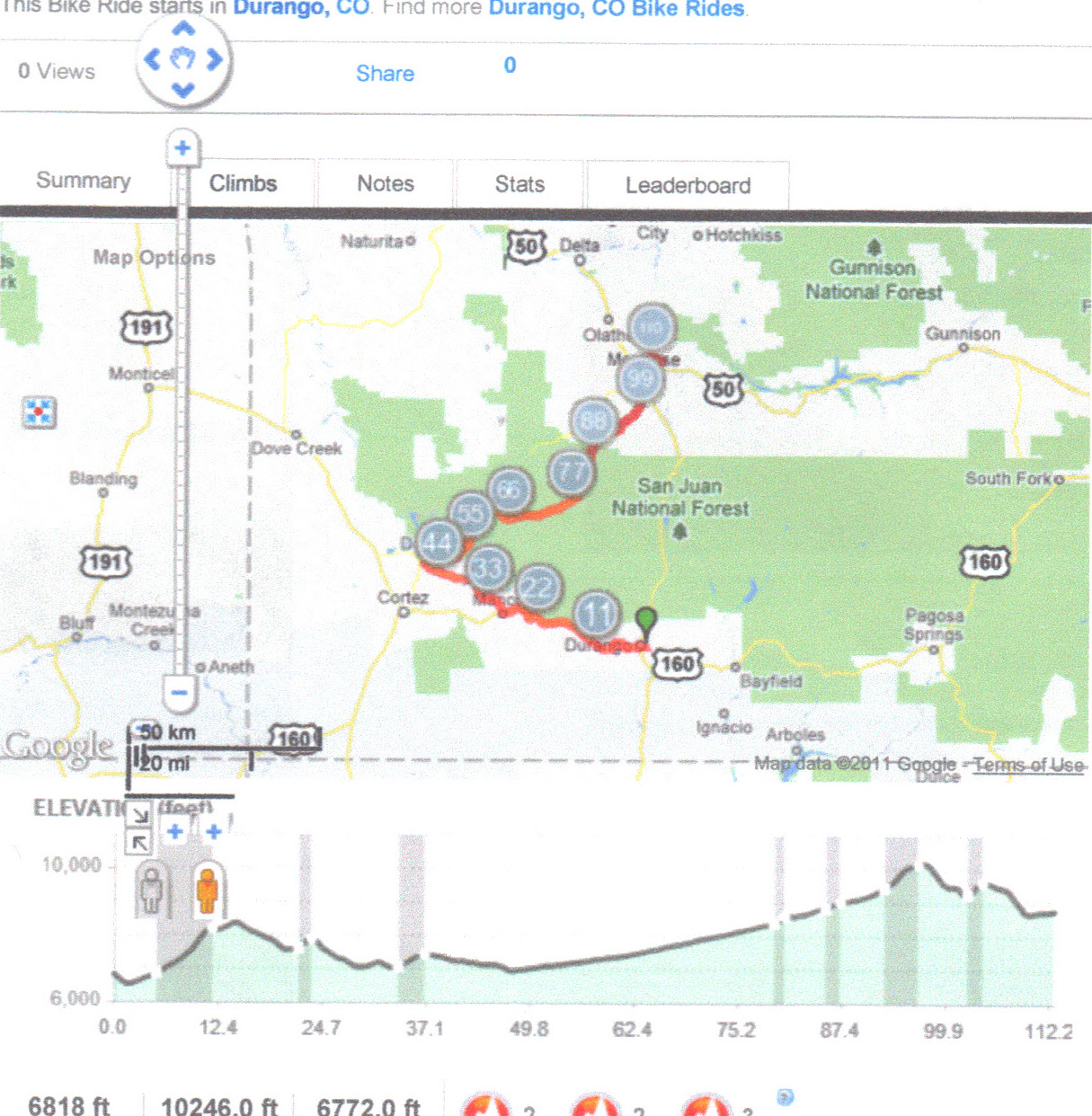
Possible Durango to Telluride route for 2012 UPCC (MapMyRide)
Day 3: Ouray to Mount Crested Butte, via Montrose. 132 miles, easy climbs but short uphill finish which was part of the 2011 route is likely a GC contender finish. MapMyRide route for Day 3.
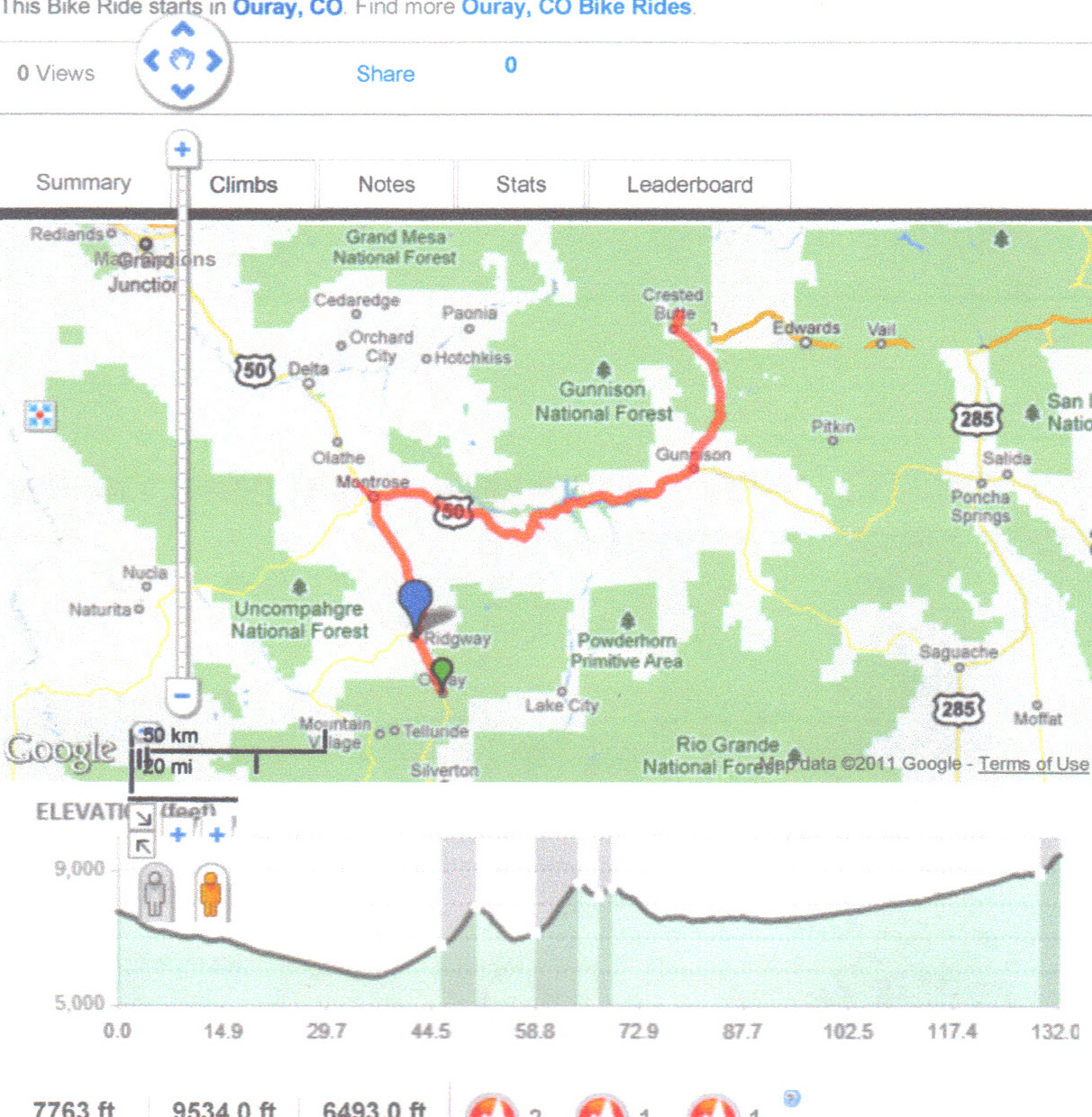
Possible route from Ouray to Mt. Crested Butte for 2012 UPCC (MapMyRide)
Day 4: Gunnison to Aspen, via Monarch and Independence Passes. 147 miles with Indy Pass near the end will wear out much of the peloton and create a select finish with GC contenders and possibly strong climbers like the 2011 finish in Aspen. MapMyRide route for Day 4.
Day 5: Vail or Beaver Creek time trial.
Day 6: Breckenridge to Colorado Springs, via Deckers, with uphill finish on Cheyenne Canon Road. 140 miles brings the peloton to lower elevation, with a 3.5 mile climb for a likely GC finish. MapMyRide route for Day 6.
Day 7: Lakewood to Boulder. So many options exist for a leg of the race between these two cities. One possible route would wind up the backside of Lookout Mountain and through Golden to Boulder. A distance of 70 miles allows a finish at approximately 2 p.m. The big question: how to include the Flagstaff climb with a finish line in downtown Boulder? Could the finish line land on Flagstaff?
Total estimated distance for this route is 615 miles. What changes could improve this route?
[12/8/11 update: the poll is now closed. Thank you everyone for your votes. Keep in touch to discover which pro-cyclists’ scruff merits placement on the ProVéloPassion Scruff-A-List.]
Now that you’ve read What’s Up with Race Day Scruff?, vote for your favorite pro-cyclist scruffy look. You may vote for up to three candidates, including a write-in for those not shown. The poll is open until and including December 7th and the top five will be posted after voting closes.
Scruff-A-List Candidates
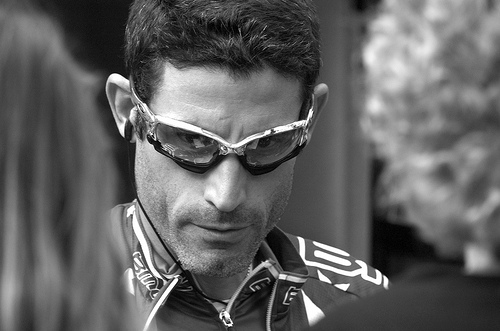
George Hincapie (Zoe-Rochelle photo)
—————————————————————————————————
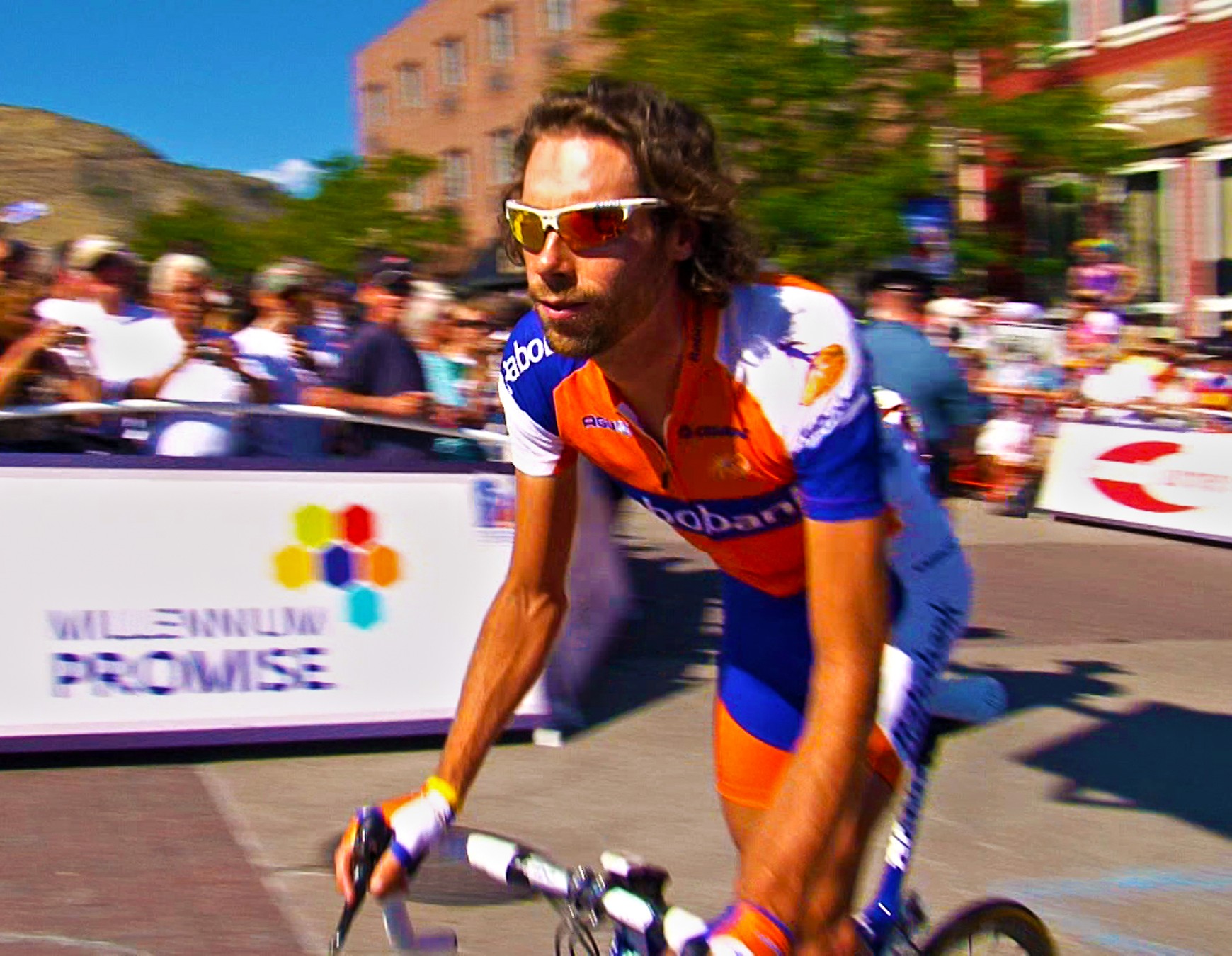
Laurens ten Dam in Golden (Bob Pearce, City of Golden photo)
—————————————————————————————————
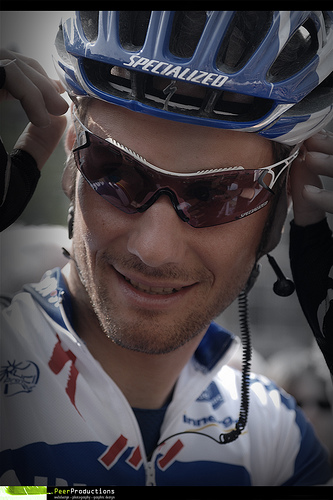
Tom Boonen (cxfan photo)
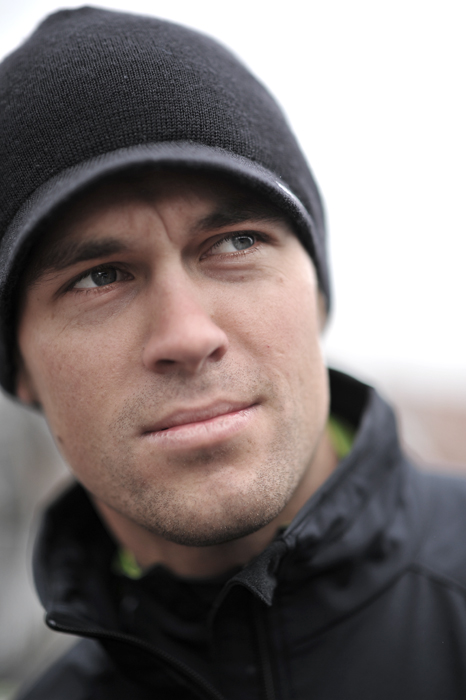
Jack Bauer (Joolze Dymond photo)
(http://www.joolzedymond.com) (http://www.peerproductions.be)
—————————————————————————————————
Bernie Eisel (Joozle Dymond photo)

—————————————————————————————————
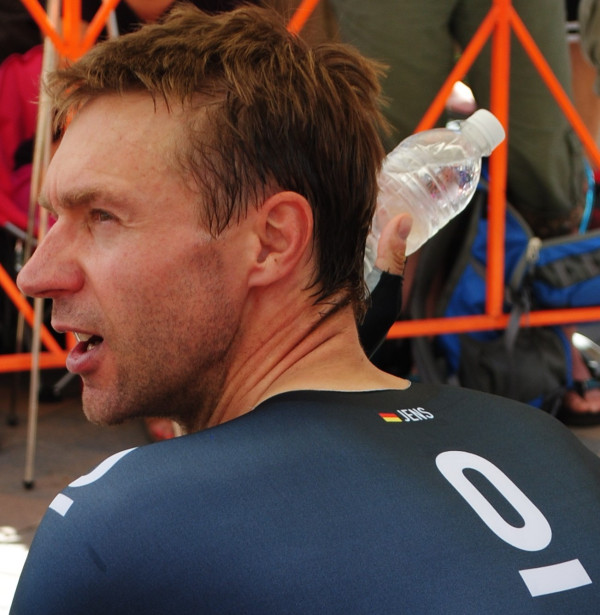
Jens Voigt (Melissa German photo)
—————————————————————————————————

Thor Hushovd (Joozle Dymond photo)
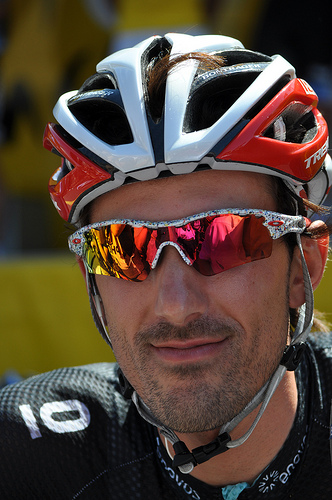
Fabian Cancellara (Laurie Beylier photo)
(Laurie Beylier, Flickr) (http://www.joolzedymond.com)
—————————————————————————————————

Lucas Euser (Mary Topping photo)
—————————————————————————————————

Daniel Schneider (Daniel Schneider photo)
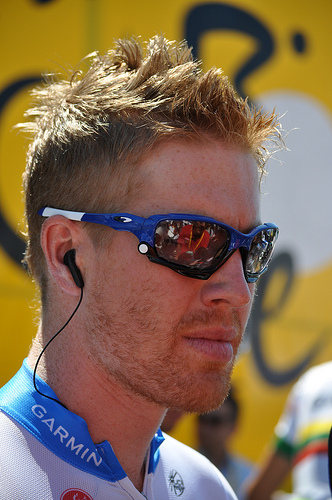
Tyler Farrar (Laurie Beylier photo)
(Dan Schneider is an elite cyclist with Team Type 1)
—————————————————————————————————
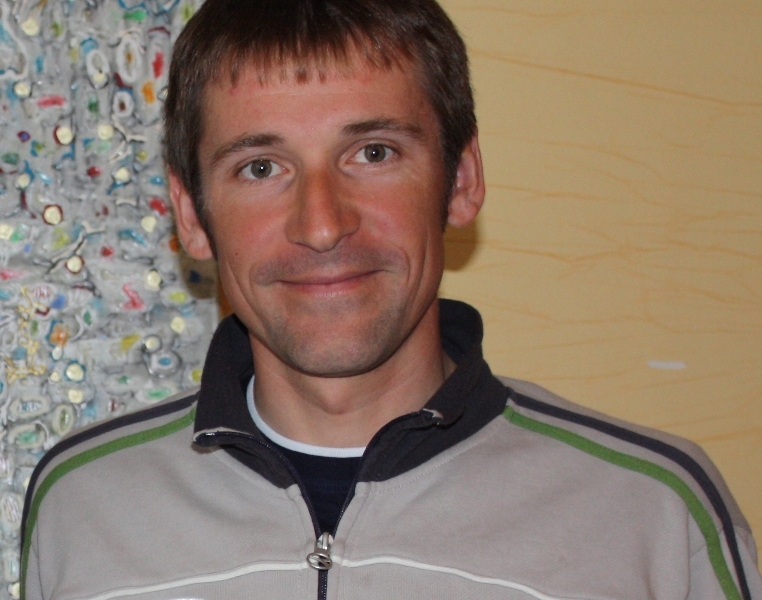
Denis Menchov (via velolive.com)
(Velolive.com: “Menchov Ready for Giro d’Italia)
—————————————————————————————————
Erik Slack (D'Andrea Worrall photo)

Vincenzo Nibali (Fan club photo)
___
——————————————–
[Many thanks to everyone who provided permission for photos for this story, and those who allow photo-sharing via Flickr.]
Coloradoans gave thanks for many things today: a turkey dinner, the family together, a new job after a long period of unemployment.
And some gifted their time so kids could ride bikes on Thanksgiving morning with their super-hero, Tom Danielson, pro-cyclist on Team Garmin-Cervélo. Tom led his first Thanksgiving Ride for Juniors today.
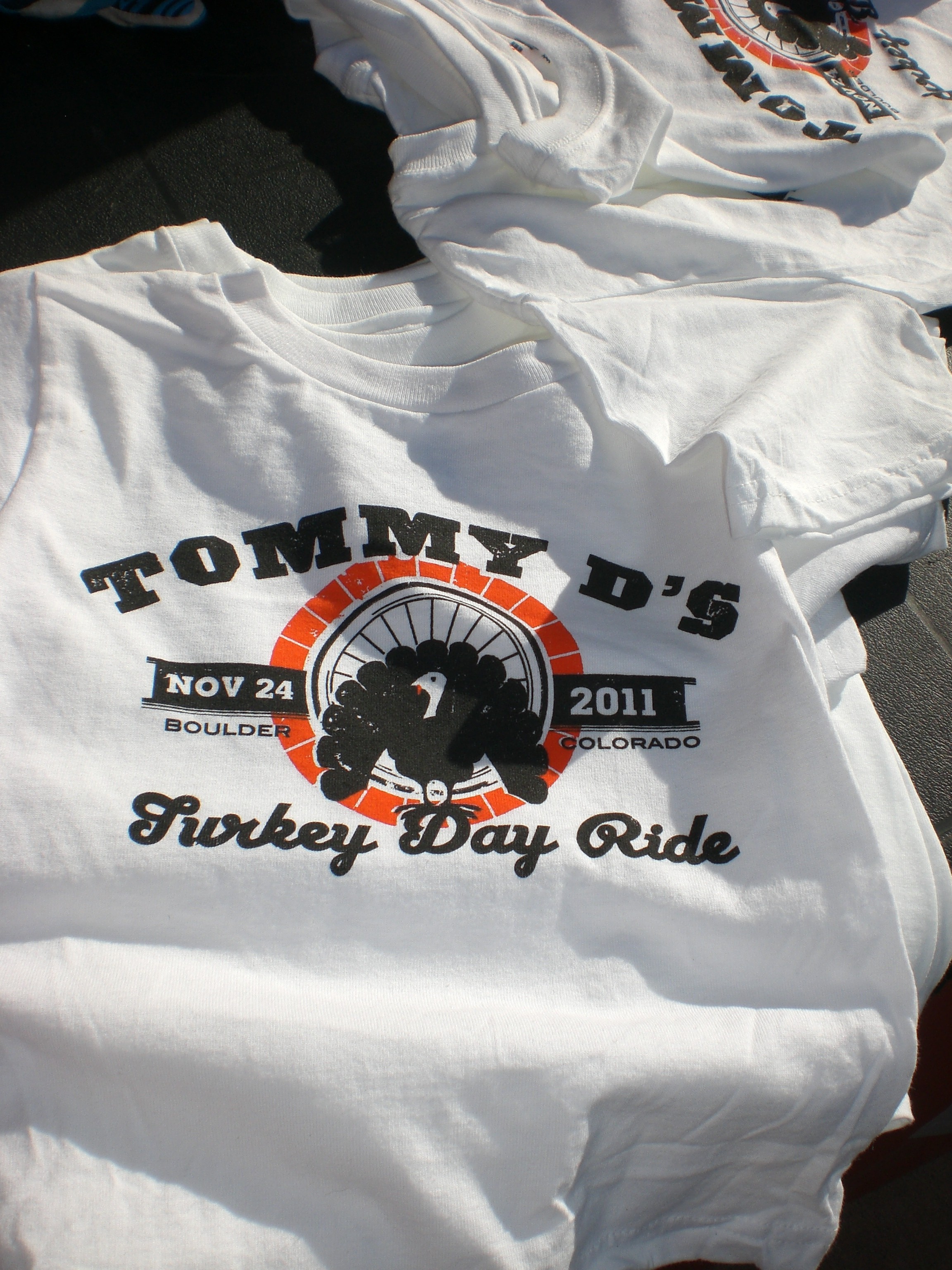
Official tee-shirt for junior riders
While others prepared cranberry sauce and rolls this week, Tom and his family and folks at DBC Events, the American Cycling Association, and Pro-Active Chiropractic rustled up tee-shirts, route maps, snacks, give-aways, goodie-bags, and more for about one hundred-thirty kids who registered for the ride which left from Tom’s home.
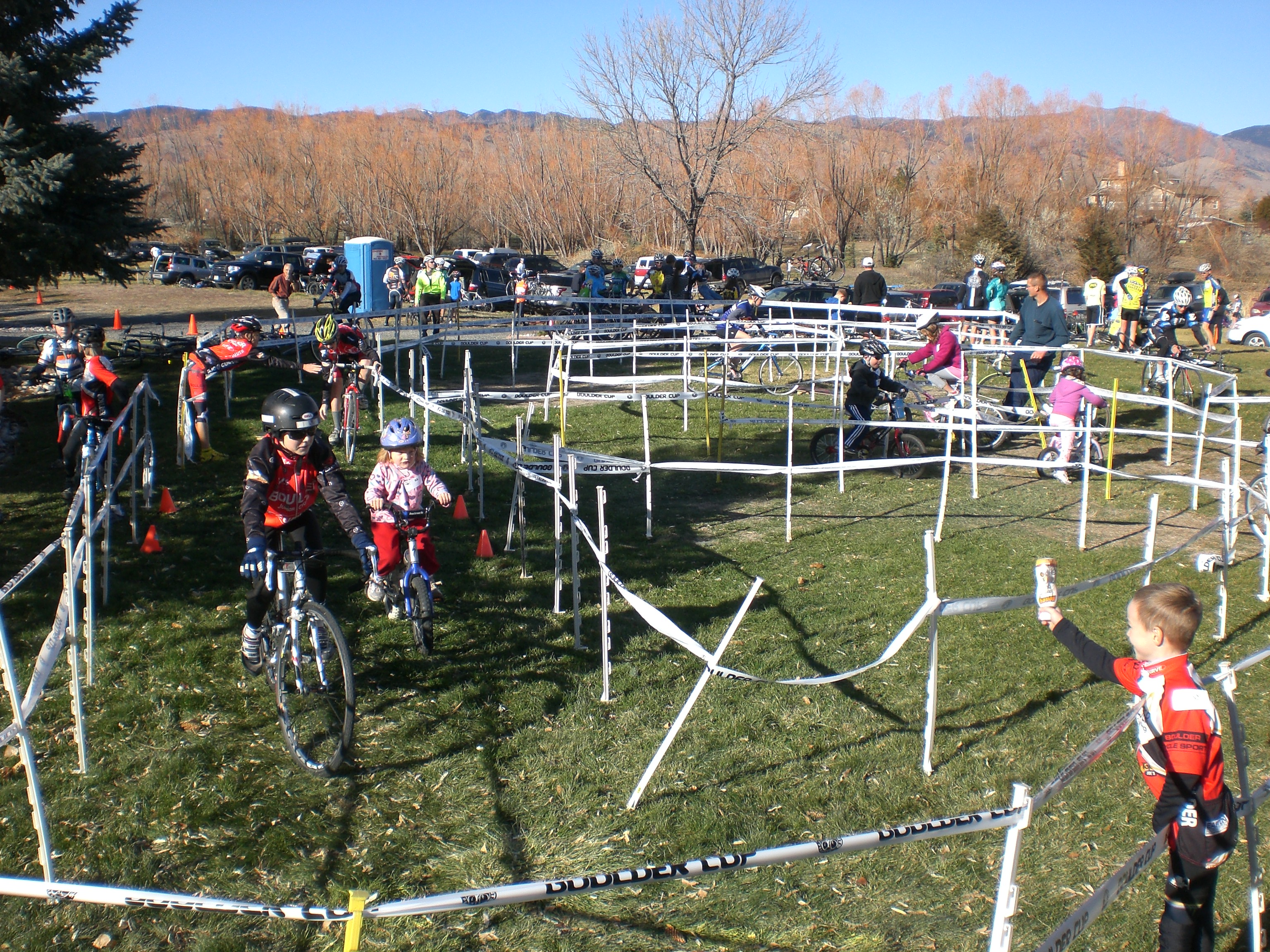
Hand-up on Tommy D's Strider course (Mary Topping)
Tom built a Strider course just beyond his front door so even the littlest ones could take part on these “pre-bikes” without pedals. Mechanics from The Service Course stood ready with a full tool-set.

The Service Course mechanics at Tommy D's Thanksgiving Ride for Juniors
“We have a lot to be thankful for, here in Colorado,” Tom said over a megaphone, as parents gently coaxed the swarm of little and medium-sized eager bodies on bikes into an organized line-up with the youngest in the front. “Thanks for coming out.”

Marshalls in argyle help lead juniors
Before they set off, Tom said he’d stick around after the ride for as long as anyone wanted an autograph or photo. Then he announced it was a no-drop ride, and asked the kids not to drop him because he’d only just started training.
There’s no need for Tom to worry. Not a single person who attended today would ever drop him, not after this Thanksgiving.
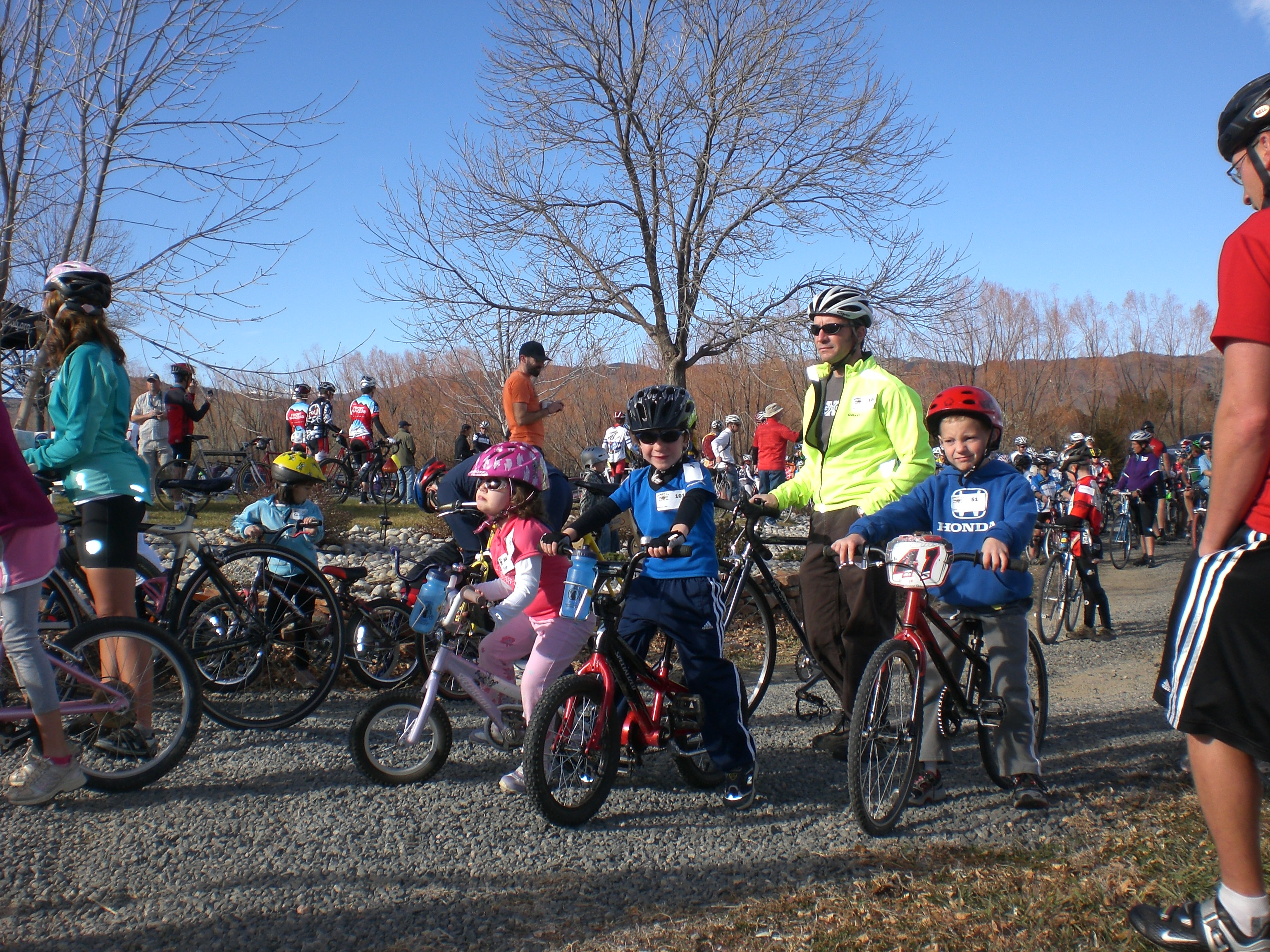
Leaders of the pack, Tommy D's Thanksgiving Ride for Juniors (Mary Topping)
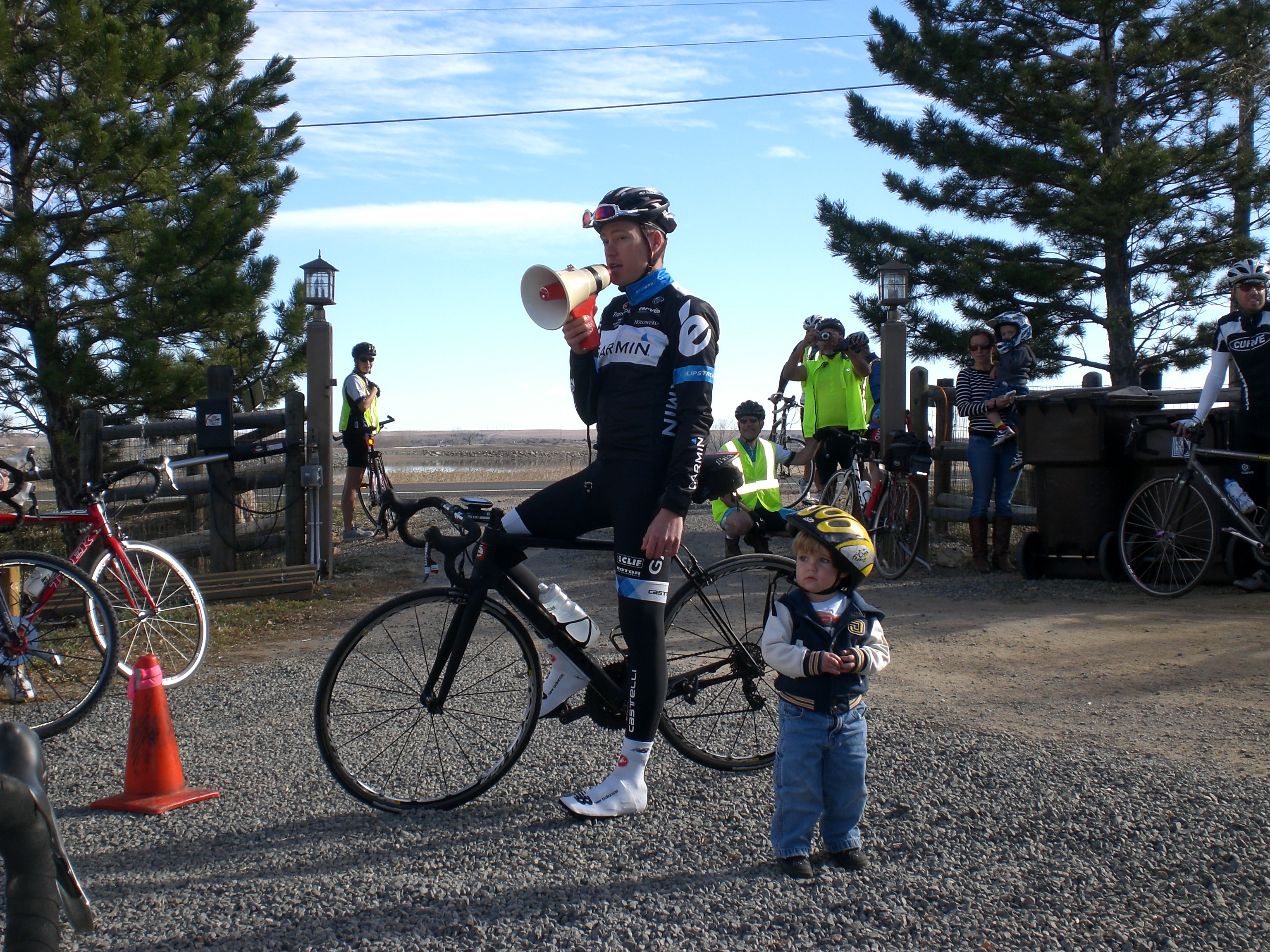
Tom and Stevie Danielson before Thanksgiving Ride for Juniors (Mary Topping)
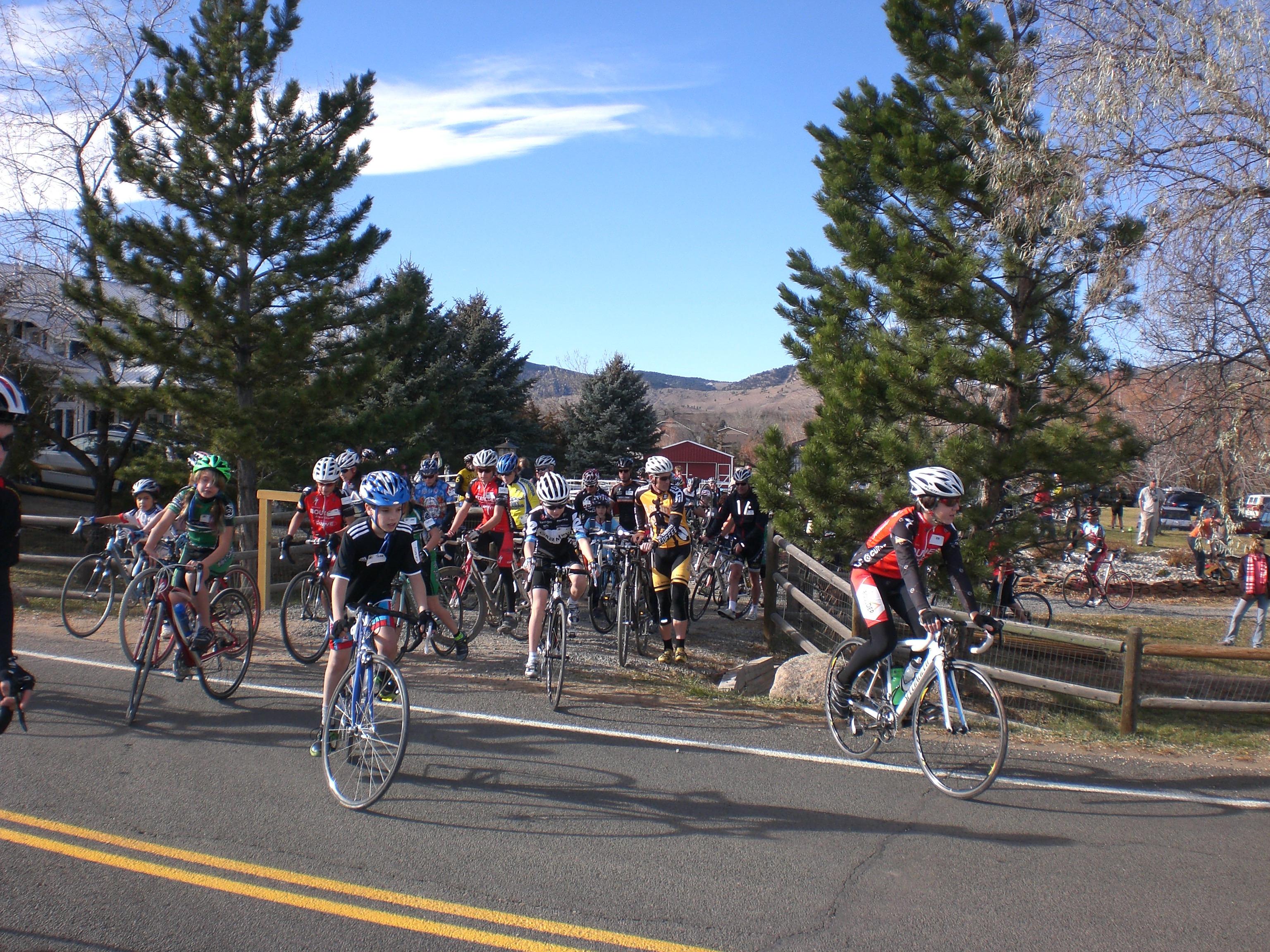
Onto the road, Tommy D's Thanksgiving Ride for Juniors
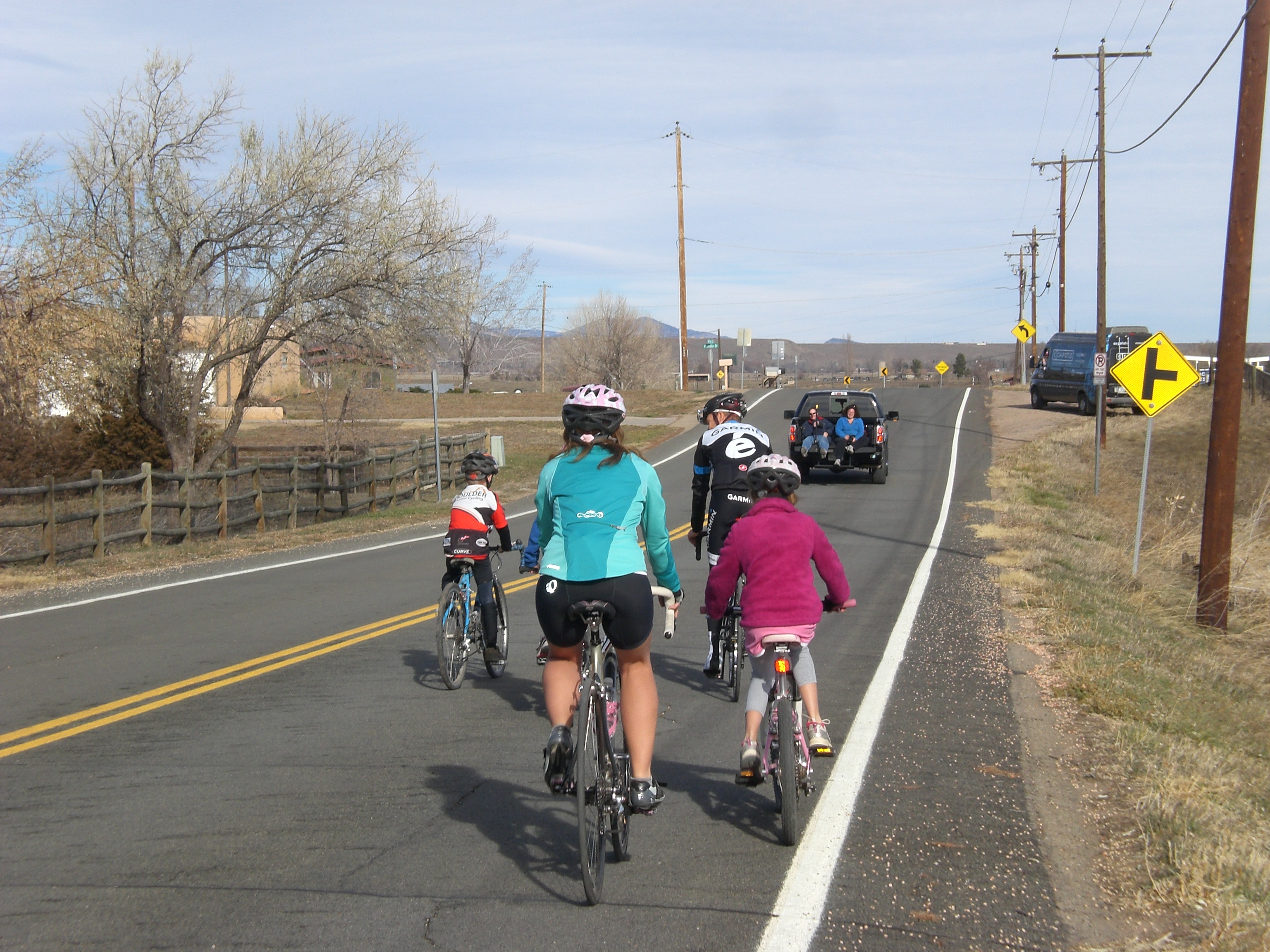
Head of the peloton with Commissar's car out front, Tommy D's Thanksgiving Ride for Juniors
[Updated 11/22/11, 7 pm, 2:04 pm]
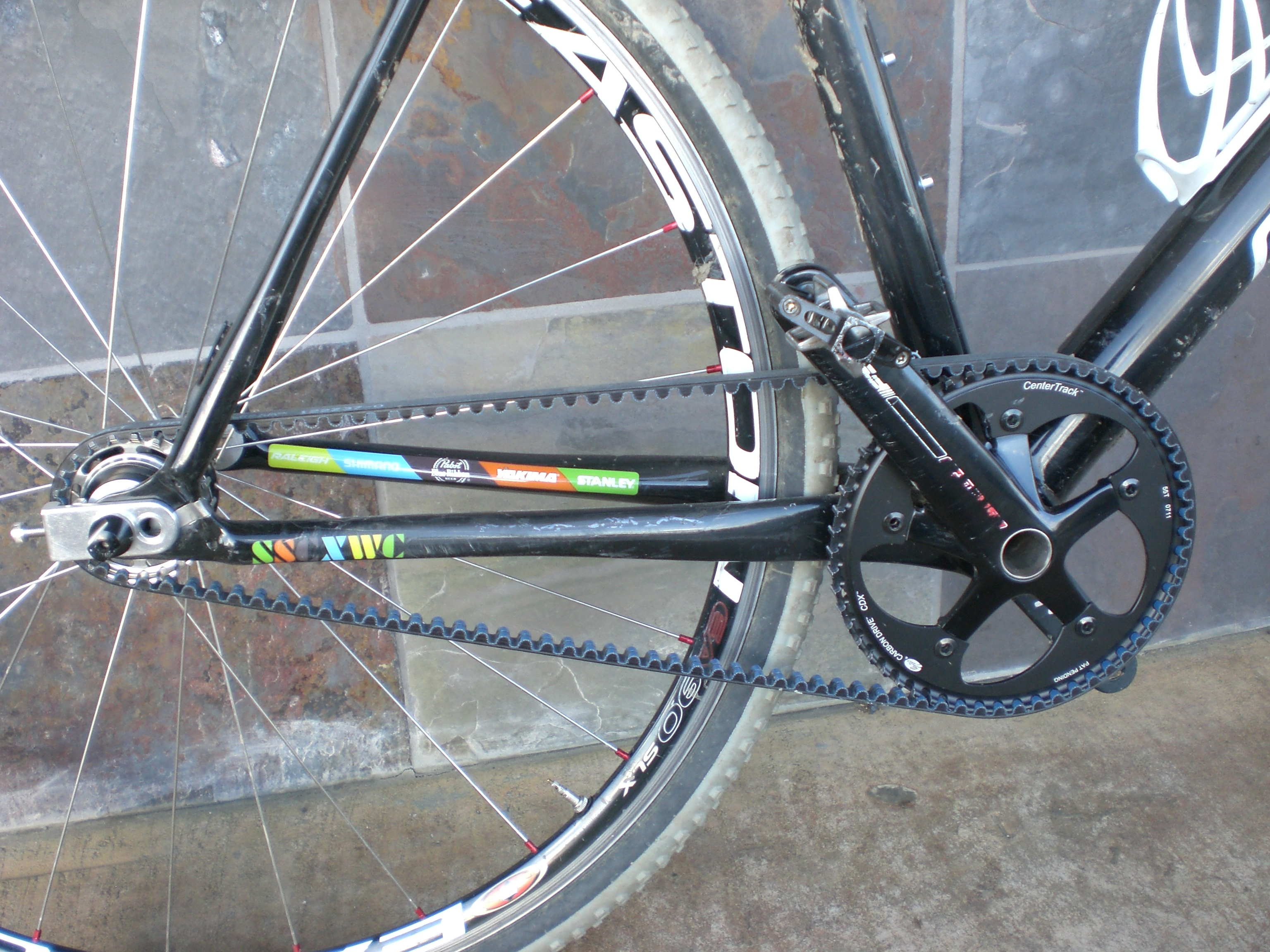
Gates Carbon Drive system on Jesse Swift's Raleigh cross bike (Mary Topping)
Jesse Swift dropped many gears, and he’s quite happy about it.
In 2011 he has raced single speed almost exclusively on mountain and cyclocross bikes, joining the Gates Carbon Drive Team in August. “It’s all about the new challenge,” he said. Single speed racing isn’t the only challenge he’s welcomed this year; 2011 is this 36-year-old’s first year racing cyclocross since 2002.
In a season that’s by no means complete, he’s achieved an enviable number of victories and top placings in cyclocross. This weekend he competes in the Single Speed Cyclocross World Championships where he takes on his top rival and now friend, Craig Etheridge.

Jesse Swift (left) with teammate after Back to Basics win (Mary Topping)
Why the single speed challenge?
Single speed cycling has stretched Jesse’s thinking about a machine whose components nearly all of us take for granted. Jesse, who lives in Golden, Colorado and teaches computers to 7th and 8th graders, rides with the Gates Carbon Drive system comprised of belt plus chainring and cog, which he’s heard together can weigh less than a traditional chain. “You don’t think of the chain’s weight,” he said, “because you’ve always accepted that that’s part of [a bike]. You’ve never tried to get rid of it. The carbon belt changes your thoughts about bikes and drive trains.” His carbon frame Raleigh cross bike with the Gates Carbon Drive system feels silly light.

Jesse Swift's silly light cross bike (Mary Topping)
The single speed set-up brings other advantages. With no derailleur for the chain to snake through, Jesse said, “The transfer from pedal to the rear wheel feels instantaneous. Not like there’s a big lag with a regular derailleur, but it just feels when you’re riding the carbon belt, you think about it and the bike’s going.” And without the derailleur and a heavier cassette, “the balance point of a single speed bike is much more even. When I’m bunny-hopping I feel like it pulls right up, I don’t have to overcome the additional weight in the back of a traditional bike.”
The bunny hop is an important tool for Jesse who typically clears cyclocross barriers with bunny-hops. “On some courses there’s an advantage to bunny-hopping,” Jesse said. “You can gain five seconds each lap.”
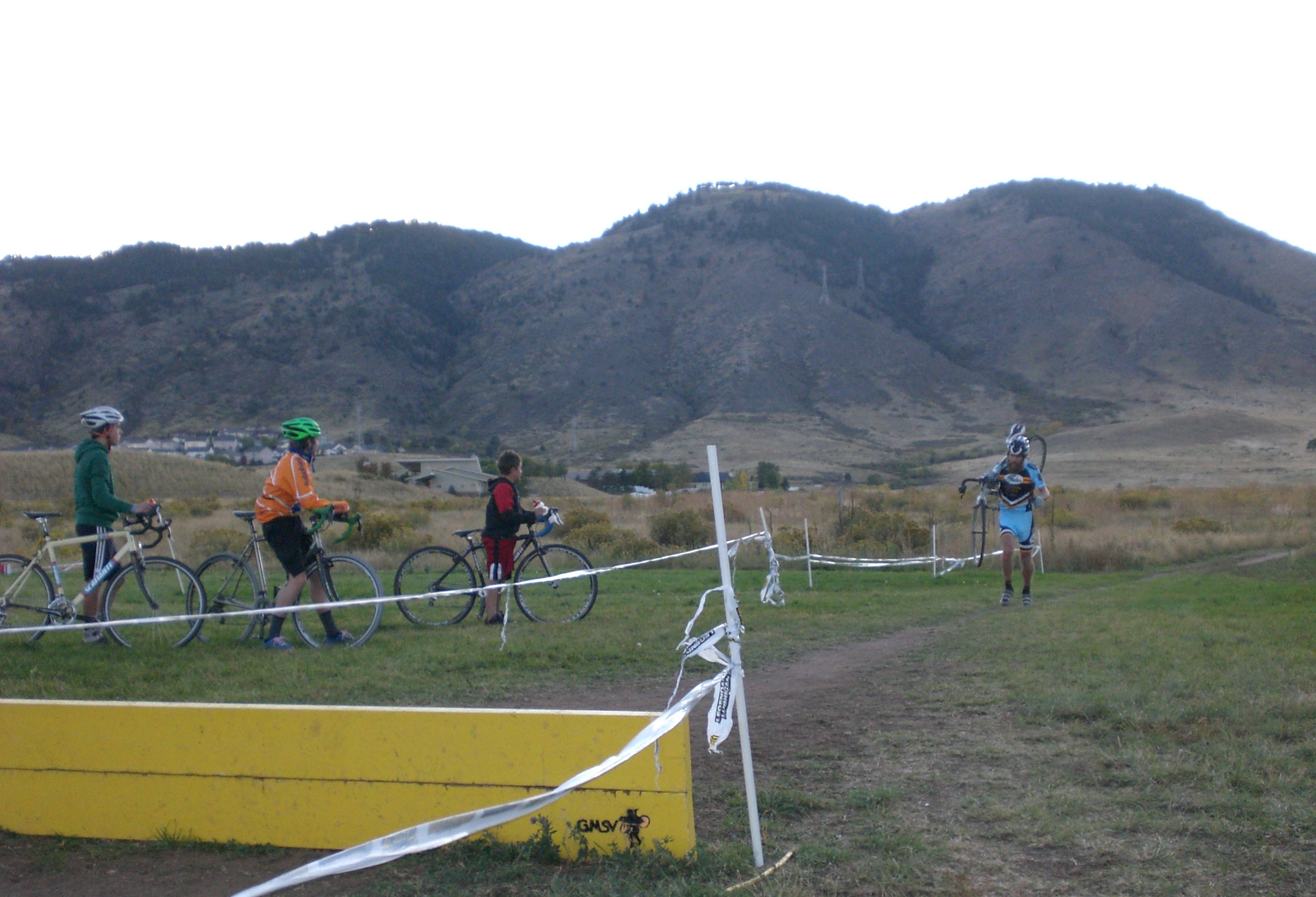
Bunny-hops helped Jesse Swift win at Back to Basics even after a mechanical on the last lap (Mary Topping)
He admits the bike handling skills he honed in trials riding while at Fort Lewis College in Durango during the 1990’s aid his cyclocross performance. “I’ve bunny-hopped up onto a wall at chest level, at least 3.5 feet high,” he said. But Jesse doesn’t believe that experience alone creates his winning results. He said, “All biking helps. What I like about cyclocross is it brings all of your background to the table. It challenges you on many levels: fitness, technical skills, speed,” and endurance in the sense of a sustained all-out effort for 45 minutes.
Others have lauded the simplicity of a single speed bike because its set-up reduces cost and maintenance. For Jesse it’s actually changed his relationship with the cross bike: “I feel when I’m racing the single speed cross bike you really become focused on yourself, not on the bike. You’re not worried about shifting; you become one with the bike. You just worry about moving forward.” He also mentioned a commonly cited advantage to the carbon drive belt, fewer worries about mud clogging the gears.
Course obstacles and the single speed bike
Jesse doesn’t believe a single speed bike handles differently through mud or sand. The key is selecting a gear that “is easy enough to get through the mud and sand but high enough to keep you going on the grass or pavement.” He carries two gears to a race, a high and a low, and then selects the best gear for the course based on his pre-ride.
With the single speed bike certain cross course features become more demanding. “One thing that’s hard on single speed is trying to keep your momentum going through slow 180 degree turns, twisty ones like mousetraps,” he said. “It’s hard to get out of them quickly. A geared guy can put it in an easier gear and quickly get out of that.”
Jesse revels in technical obstacles: “I really like run-ups, triple barriers, things that play with your cadence as you’re running through them, tricky obstacles like barriers at the bottom of a hill.”
As a mountain biker whose first race was the Cactus Cup in 1995, he also appreciates cross courses with elevation gain and more dirt surfaces. In 2011 Jesse won the mountain bike single speed category of the Winter Park Epic Series and tied for 1st in the Steamboat Stinger race.
But Jesse would call the detractions of single speed minor and considers the single speed cross bike the perfect machine for everything.
Rivalry at 2011 Single Speed Cyclocross World Championships
His training schedule for his first Single Speed Cyclocross World Championships in San Francisco this weekend has included riding and racing as much as possible on his cross bike in addition to racing geared guys several times this season. He will face the guy labeled his “nemesis” by crossresults.com, Craig Etheridge from Seattle.

Jesse Swift's bike is ready for the Single Speed Cyclocross World Championships
Craig beat Jesse at CrossVegas this year as well as in Fort Collins at the New Belgium Cup Gran Prix of Cyclocross. “In Fort Collins I was leading three of the five laps and in the last lap he got around me in some traffic. I wasn’t able to get around that traffic and he beat me by ten seconds,” he said. “It will be neat to see what happens in San Francisco. He’s a very nice guy and I enjoy racing with him.”
It required a little prodding to get Jesse to say he’d like to best Craig Etheridge this weekend. “It would be nice, but it’s one of those races where anything can happen. I’ve heard they might have waist-deep water, or a culvert to go through. So it will be a race that isn’t necessarily 100% fitness as opposed to the last couple of races Craig and I have had. I look forward to competing with him and seeing how both of us do. It’s become a friendly rivalry.”

Jesse Swift, November 2011 (Mary Topping)
_________________________
Read Jesse’s Single Speed Cyclocross World Championships race report.
In part 2 of the interview: How Jesse got that crazy beard, and more. Find out if the beard is a keeper.
[Thanks to Bob Pearce for his assistance with a photo.]
[Updated 12/24/2011]
“Stubble,” according to a Telegraph article, “is the way to win a woman’s heart.” Could this be the real reason an average guy skips shaving every day, instead of the commonly cited motives of laziness, warmth, or weekend relaxation?
Still, some guys feel compelled to shave away facial hair daily. “The way I was brought up, being scruffy means you don’t care about your appearance. I am a slob but I still want to be shaven,” said one recreational cyclist.
What about professional cyclists? They all go through the considerable effort to shave their legs. So why are more and more of them choosing an unshaven scruffy face on race days?
Possible explanations
One bike shop owner who races said, “Likely they want to feel more manly since everything else is shaved.” He offered more reasons: “Probably superstition or maybe it is their game face?” Perhaps not shaving promotes an impression of the toughness required to suffer for the glory of a win – to fight for position in the peloton, fight the wind, and fight gravity on 20% inclines. The same Telegraph article expounds on this potential unconscious reason; it says, “…experts in human evolution say that facial hair may be a signal of aggression because it boosts the apparent size of the lower jaw, emphasizing the teeth as weapons.” Hmm. Can that apply to cycling?
The animalistic battle for survival is especially relevant for sprinters. Maybe that’s why fi’zi:k opted for a scruffy Mark Cavendish in this advertisement.
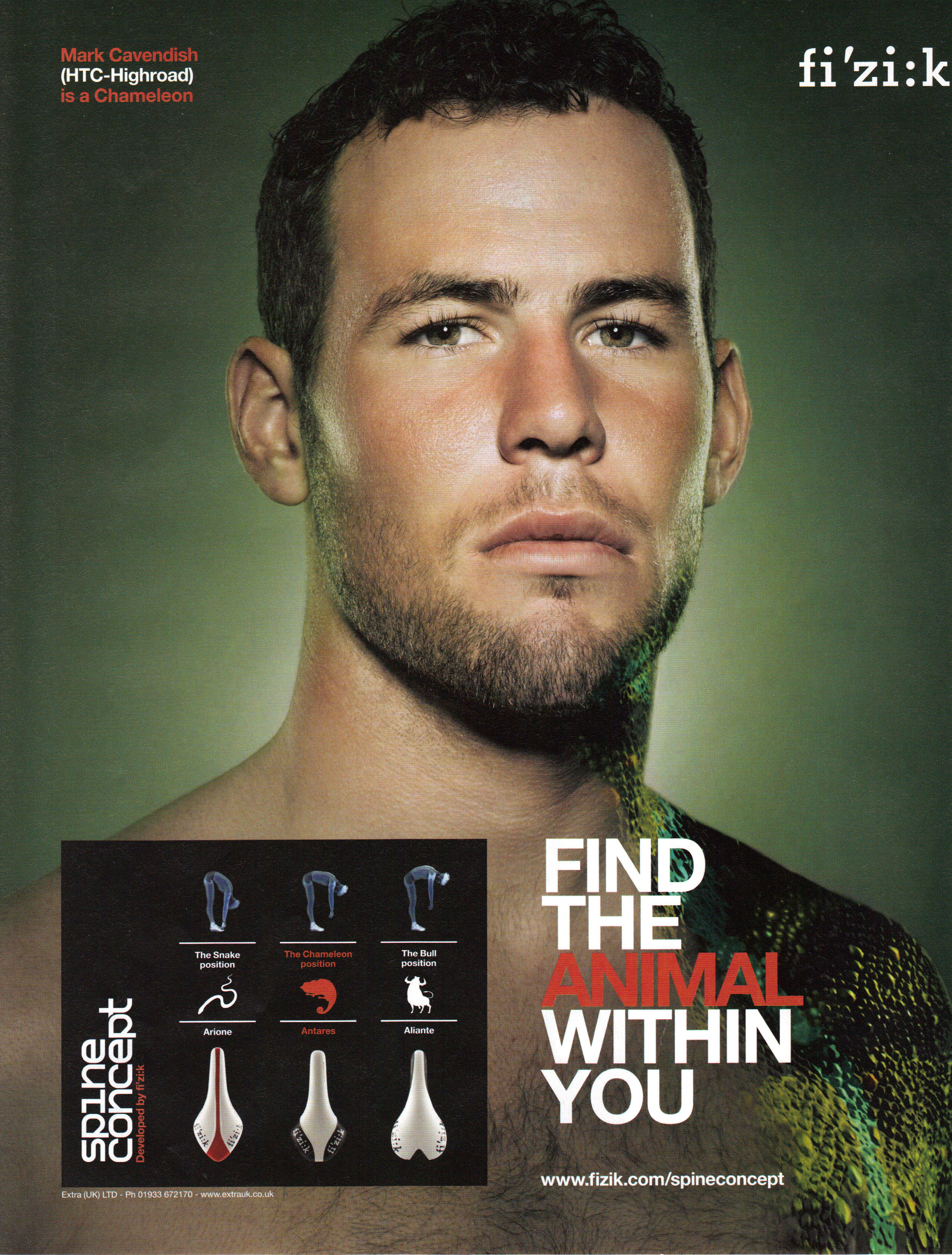
Cavendish fi'zi:k Ad
Erik Slack, Team Exergy, suggested a more personal rationale for preserving whiskers: “In terms of facial hair, many guys like doing some things different, and I might assume that for some of the married guys while they are away, it may be fun to play around and grow their [beards] out if their spouses do not approve of it. This is just a guess as I am nowhere near that type of a situation.”
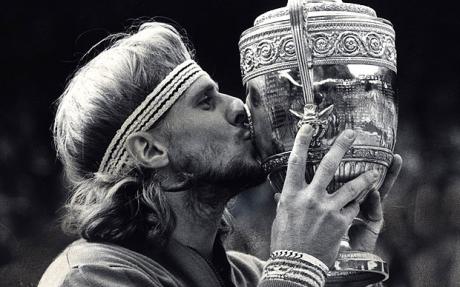
Bjorn Borg at Wimbleton (The Telegraph photo)
As the bike shop owner hypothesized, superstition could play a large role in deciding not to shave on race day, and other sports offer lots of examples where this is the case. Bjorn Borg decided a scruffy face brought him good luck at Wimbledon and won five successive titles in the 1970’s, all unshaven. Hockey players’ practice of not shaving during the Stanley Cup playoffs became so well-known it evolved into the phrase, “playoff beard.”
Cycling Inquisition has implied that cyclists follow certain practices in order to instill some stability in a sport where so much is uncertain. He wrote, “…professional cycling has an obsessively ritualistic component to it, and riders adhere firmly to a seemingly random list of do’s and don’ts that is longer than the one observed by most cult members. How many other athletes at an elite level eschew things as varied and seemingly random as pasta sauce, shaving their face before races, air conditioning, soft breads, mashed potatoes, and chocolate mousse?”
Riders agree superstition plays a role. Jack Bauer of Endura Racing said: “Maybe other riders don’t shave due to superstition reasons ie. not shaving legs on race day due to the body using energy for the regrowth. But I doubt it. That makes no sense to me! A bit over the top, however I’ve heard the rumours and riders for sure are a superstitious bunch!” Remi McManus, former U.S. Elite Road Race Champion and part owner of Team Exergy, backed-up the superstition theory: “I know riders have superstitions. I used to make sure I always put my left sock on first, followed by left shoe, and so forth. Yes some riders do not shave if they are riding well, you do not want to wash away or shave away good luck!” And Erik Slack said, “Many cyclists do have superstitions. Some folks prefer certain kits over others and sometimes riders prefer to have the same wheels as they know what it has been through etc.”
Jack Bauer (Joolze Dymond photo, http://www.joolzedymond.com)
Pro-cyclists reveal reasons for scruff
According to Remi McManus, “for most, during a stage race we are just too damn lazy [to shave].”
Jack Bauer, who said he never shaves on race days, shared a similar point of view: “I don’t because I’d rather sleep than shave! There’s always enough going on the morning before a race, and shaving is the last thing on my mind.” He described his preferred look when not racing as one or two days’ growth, “which generally seems to do the trick. I’m going for the rugged look you know! Coming from NZ [New Zealand] – once a hippy, always a hippy!”
Erik Slack’s scruff approached beard status on the last day of the 2011 USA Pro Cycling Challenge. Here’s why: “Every stage we were in a different hotel and for the most part, our days were pretty packed. I had forgotten to pack an additional set of blades and I busted a blade on the first day of the race and never had time to swing to a store to go and buy a new set of blades,” he said. “And while someone might say, ‘but Erik, your legs were shaved, you must have had a blade somewhere,’ it just seems weird to shave a face with the razor I would shave my legs with.” Erik thinks a beard suits him and has grown one before, “so I was not stressing it as much as I could have,” he said.

Erik Slack (Team Exergy photo)
Scruffy-A-List
Regardless of the pro-cyclists’ reasons, many female fans who follow the sport closely admire the scruffy look. They want their favorite riders to win; if scruff signifies aggression that’s fine, since aggression is necessary to win.
Of course, the real reason could be because scruff is the way to a woman’s heart. And now for the first time women can vote for their favorite scruffy pro-cyclists in the upcoming “Pro-Cycling Scruff-A-List,” here at ProVéloPassion. View the final Scruff-A-List.
[Jack Bauer photo courtesy of Joolze Dymond, http://www.joolzedymond.com.]
______________________________________
Additional reading on the clean-shaven vs. scruffy look:
- The Chicago Tribune provides guidance on how to get the two-day scruff look.
- For more information on female preferences for scruff, check out The Telegraph’s article on a survey of British women (don’t skip reader comments).
- The results of a Schick survey indicate clean-shaven guys have sex twice as often as men who shave just twice a week.
- This New York Times article includes rationales by body part offered by Gillette to encourage men to shave off more than just facial hair. Example of a rationale for shaving the chest: “A sweater should be bought not grown.”
Single speed bikes and racing on them seems counter-intuitive. But that’s why they — and those who race them — are fascinating. When I interview Jesse Swift next week, I’ll uncover his reasons for riding single speed as well as his preparation for the Single Speed Cyclocross World Championships. Until then, here’s a bit of a single speed primer.

Jesse Swift, Gates/Carbon Drive, after winning at Back to Basics Cyclocross Series in Golden (Mary Topping)
What is a single speed bike?
A single speed bike runs on one chainring and one gear in the back. It differs from a fixed-gear bike because it can free-wheel (coast).
Why ride single speed in a cyclocross race?
Why ride without all the gears that can make it easier to pedal uphill and gain speed on flats or downhills? Several reasons surfaced from an internet search.
From gomeansgo.org: “Single speed cyclocross may be one of the most affordable forms of bike racing one can get involved in. Single speeds, whether they be track bikes, mountain bikes, or cyclocross bikes- are much more affordable, simpler and therefore easier to maintain than their geared counterparts.”
From thatswhatshesaidaboutyourbike on Blogspot: “They are reliable, can be built crazy light, making them easy to handle through barriers and corners, and the absence of gears means there is less to clog up on muddy and snowy courses.”
From SheldonBrown.com: “Single speed cyclocross is a beautiful thing, as very little can go wrong. A good chainline makes chainsuck irrelevant and you never never ever stack because you missed a shift going into a barrier and forgot to get off your bike.”
More from SheldonBrown.com link above: “The end is key as well because this is when everyone around you starts to zone out and spin a tiny gear on everything. You don’t have this luxury, the lack of gears makes you a better cross racer at the end of the race.”
Bike Magazine posted seriously funny photos from the 2010 Single Speed Cyclocross World Championships, replete with golden bikini prizes.
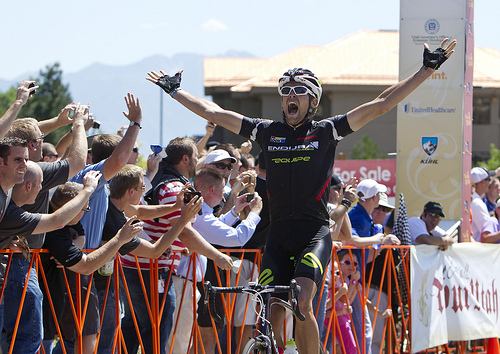
Jack Bauer wins stage 2 of 2011 Tour of Utah (Jonathan Devich photo)
Who was that guy in a black kit with lime green stripes? Many spectators leaning over the barriers at the 2011 Tour of Utah’s stage two finishing straight didn’t recognize the tall rider who had just flashed across the line with his arms raised. Chances are they met this man, Jack Bauer of the UCI Continental UK-based Endura Racing team, for the first time as he saluted the crowd from the presentation stage. More than just his powerful sprint caught cycling fans’ attention during that race.

Brad Sohner interviewing Jack Bauer after stage 2 2011 Tour of Utah win (Mary Topping)
“The fans in the U.S. are pretty excitable and happy with an autograph/photo,” Jack said in comments to ProVéloPassion. “They get excited over accents as well…kiwi ones that is!” At the end of the 2011 season, Jack shared in his blog on the Endura Racing website that the team had a blast racing in Utah.
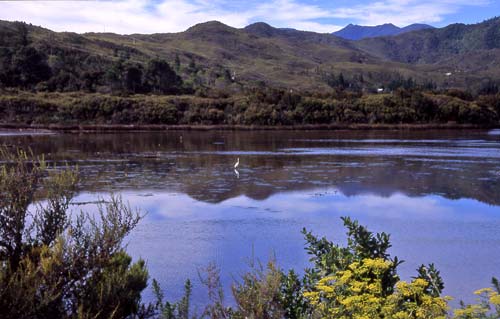
Parapara Inlet New Zealand (Jock Phillips photo, Te Ara Encyclopedia of New Zealand)
Racing pulls Jack away from New Zealand from January to October, which sounds hard on him. Again in his last blog, Jack wrote, “I can’t wait to get back to NZ and see familiar faces and home again.” Among those familiar faces are his “kiwi girlfriend,” Alice, and his immediate family.
In his bio on the Endura Racing website, Jack cites his father, Hans, as the person who has had the most influence on his cycling career: “…when I was younger I started my riding and mountain bike racing with him. Back then we’d always race each other so I guess you could say he taught me the importance of riding for the win! He keeps tabs on me and has supported me a huge amount throughout my career.” Jack grew up in a small town called Parapara on the south island of New Zealand, near the Tasman Sea and Southern Alps mountains. He rode in his first mountain bike event, The Rainbow Rage, at age 13.
As a mountain biker he scored top-five results and made the New Zealand under-23 team for cross country world championships in 2006. Then, burned out from overtraining and studying for a degree in physical education, he almost gave up on cycling and gave music a run as bass player in the “Dream Farm” band. He picked up the bike again in 2007. After working as a cycle courier, in 2009 he joined the Kingsnorth International Wheelers amateur team in Belgium. He stacked up nine wins while competing for the first time against an international field on the road.
Amidst the ups and downs, it seems his father has been his anchor, his biggest source of encouragement.
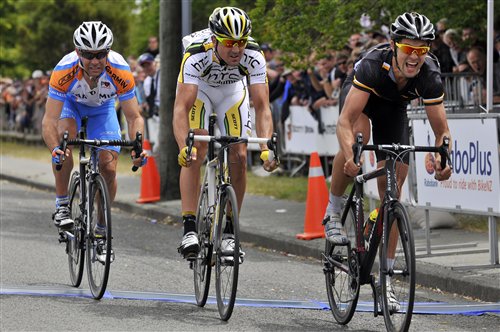
Jack Bauer Wins 2010 Elite New Zealand Road Championship (Pete Bruggeman photo)
Hans supported Jack when, at 24 years-old, he battled elbow-to-elbow with favorites for the 2010 New Zealand National Road Championship title in 2010. In reply to the ProVéloPassion question about the best thing that’s happened to him so far in his professional racing career, Jack said, “Winning the NZ road nationals last January. Of course we’re not a large cycling country but that really put me on the map and gave me a lot of confidence. Plus I had my Dad there to support me. He doesn’t get to see me race much, so for him to be there was really special.”
Jack’s fans enjoy keeping tabs on him, too, in different ways. “The European crew are more into hounding you for a jersey, or a signature on some photo they’ve dug up online from 5 years ago!” he said to ProVéloPassion. “How the old French boys can suss out the internet and track down random pics that even I don’t remember beats me!”
And his admirers want even more of him. They have pled with Jack’s Endura teammates and anyone who will listen to persuade Jack to sign up on Twitter. He feels pretty strongly about not signing up, though. He told ProVéloPassion, “Sorry, I won’t be getting a Twitter account. I hate the thing.” Apparently there won’t be too much disappointment at this news in the New Zealand cycling world. When ProVéloPassion asked him how he would compare New Zealand fans to those from the U.S. and Europe, Jack said, “There are none in New Zealand.” Surely he didn’t mean to leave out his dad, the rest of his family, and Alice?
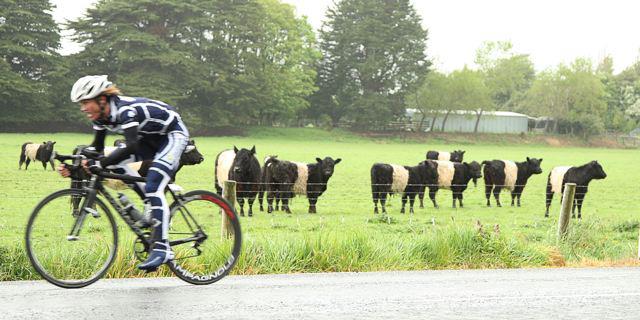
Are there really no cycling fans in New Zealand? (Partners Life - Champion System rider, Cycling Southland Facebook photo, 2011 Tour of Southland)
Racing at the UCI World Championships has also raised Jack’s visibility. He represented New Zealand in the time trial race in 2010 and 2011. In the 2011 UCI Road World Championships, he competed in the road race for the first time. “I was really excited to ride my first Road Worlds, especially in support of Julian and Greg on a course which suited our strengths,” he said to ProVéloPassion. “With 6 laps to go though we all got caught up in a tangle on a particularly narrow section of the 14km circuit. The crash blocked the course, split the field, and from then on it was pretty much game over. I buried myself for 2 or 3 laps trying to chase back on, but the race was over as GB [Great Britain] were setting a hard tempo at the front reeling in the break. Still, the whole experience was awesome. Bring on next year!”

Jack Bauer in the 2011 World TT Championships (Andreas Otto photo)
New Zealand and Jack fared better in the World Championships time trial race this year where he finished 19th and Jesse Sergent placed 18th. “The Worlds was an awesome experience riding the TT in central Copenhagen especially,” he told ProVéloPassion. “Painful! But a lot of fun at the same time. I hadn’t expected to ride the TT at Worlds this year, but since it fell on a Wednesday with the road race not taking place ‘til Sunday it worked out well.”
Jack hadn’t expected to ride the time trial at the 2010 Worlds either. That race scored as his reply to the ProVéloPassion question about the worst thing that’s happened to him during his cycling career: “Probably trying to ride the TT at the Worlds last year in Melbourne after getting the call up last minute – and flying straight from London to Oz. I arrived the day before race day and felt like death warmed up…with cankles! Not the best way to start a race, and I’m still not completely sure how I stayed awake on that start ramp…” Jack managed it pretty well, because he finished 23rd.
Right now Jack’s fans anticipate his announcement regarding the team he will ride for in 2012. While he acknowledges that Endura Racing is a great team, he’s made it clear in the press since 2009 that he yearns to ride for a Pro Tour team. He’s also looking ahead to the New Zealand championships in January, 2012. And until then, as he told VeloNation in a recent interview, “I’ll also ride a few races with my dad, for fun.”

Jack and Hans Bauer (Jack Bauer photo)
————————
Used with permission, Parapara Inlet Photograph by Jock Phillips, Te Ara, the Encyclopedia of New Zealand, © Crown Copyright 2005- 2011 Ministry for Culture and Heritage, New Zealand. The Parapara Inlet is located in the Golden Bay Area near Collingwood.
Used with permission, Jack and Hans Bauer photo.
Thanks to Melissa German, Roxanne King, and Tracie Robinson for their suggestions regarding questions for this interview, and to Martin Steele of Endura for his assistance.
[updated 11/29/2011. Updates in blue font. Sixteen cities or towns have confirmed bid submission. With 27 reported bids, that leaves 10 as yet unidentified assuming Denver should be counted as bid. A hypothetical parcours based on a route leak is now available here.]
Names of cities that have submitted bids to host a 2012 USA Pro Cycling Challenge stage started to appear in the news this week. Denver has previously been named as the final finish location. This list will be updated as more information becomes available. The date for naming host cities has been moved out to mid-December.
Where would you like to see the race go?
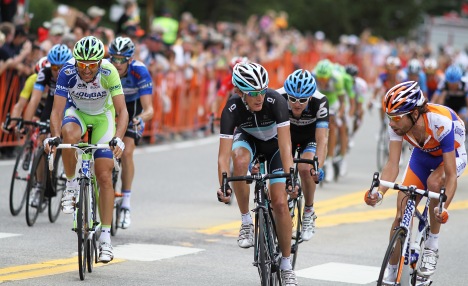
Andy Schleck and Laurens ten Dam play cat and mouse in Breckenridge (Jenney Coberly photo)
Confirmed bids submitted to host a start or finish
- Montrose
- Pagosa Springs
- Lakewood
- Telluride/Town of Mountain Village
- Salida
- Aspen
- Vail
- Durango
- Crested Butte
- Winter Park
- Breckenridge
- Boulder
- Grand Junction
- Gunnison
- Golden
- Steamboat Springs
Confirmed bids submitted to be a pass-through city
- Longmont (via Scott Conlin, Twitter)
Telluride submitted a bid for 2011 but was not selected. The town confirmed a bid submission for 2012, partnering with the Town of Mountain Village, the neighboring ski resort community. Greg Clifton, Town Manager, said, “We kept it open for either start or finish this year. Last year we coupled with the City of Durango and promoted a stage that would specifically start in Durango and finish in Telluride, via Lizard Head Pass. I believe that particular stage is still a strong consideration, but we elected to keep all options open.”
Lakewood submitted a bid for a stage start. The city is about seven miles west of Denver.
Pagosa Springs bid. Jennifer Green, Director of Pagosa Springs’ Tourism Committee, said, “We would be thrilled to be a host community. We are proposing a mountain top finish on Wolf Creek Pass. However, we also expressed willingness to participate however the organizers deemed best. We are big fans of the event and look forward to 2012.”
According to the Aspen Times, Aspen aims to host a start and finish. Nancy Lesley, the city’s special events director, said while Aspen and Pitkin County would prefer to have an overnight race segment, they will take whatever is given. “We applied for everything,” she said. “Everything is on the table.”
Grand Junction’s proposed routes, according to the GJFreePress, “include starting in Gateway and riding along Hwy. 147 and through the Grand Valley; or riding from Gateway to Grand Mesa, over Lands End Road, pass Powderhorn, ending in downtown Grand Junction. Another route could loop around the valley, including Palisade and Fruita.” Local organizers continue to express interest in a route that includes the Colorado National Monument.
A Real Vail article said, “The Vail Valley Foundation is working to make sure the event returns for the Vail Time Trial, which ended on Vail Pass and was critical in this year’s outcome. They also would like to see Avon incorporated again, although perhaps in some way that includes the nearby resort of Beaver Creek.”
Comments by John Messner, Gunnison: “We offered to be either a start or a finish city, whatever works best for the overall race. It was a great experience for the whole community in 2011 and there is tons of excitement and support for the 2012 bid. We’re keeping our fingers crossed!”
Comments by Kara Givnish, Steamboat Springs: “We would love to have a finish and a start again as we did last year but we are open to other options as well.”
According to a Sky Hi Daily News article, “Winter Park is the only town in Grand County that submitted a bid to be a host city for the 2012’s USA Pro Cycling Event. One [of three] proposed routes is a start at Winter Park Resort ending in Denver.”
Rumored bids submitted
- Ouray
- Colorado Springs
“Interested” cities who decided not to bid for 2012
- Idaho Springs
- Pueblo
- Alamosa
- Morrison
- Greenwood Village
- Cañon City
- Castle Rock
- Delta
- Estes Park
- Evergreen
- Glenwood Springs
- Granby (by implication from Winter Park statement)
- Fort Collins
- Loveland
A Morrison official shared that the town was surprised to have been cited as interested in hosting the race.
Bicycling recently shared the 2011 UPCC route as part of “The Cyclist’s Guide to Biking Colorado.”

 ProVéloPassion