
Stage 1 of the 2012 USA Pro Cycling Challenge departs from Durango on August 20th. Whether fact or fable, here’s a few interesting things about Durango you might want to know if you plan to visit this city to see the race. Think about bringing a shovel, an appetite with a sweet tooth, and your meditation cushion.
Food and more from Durango.org

Honeybee at work
- “The name Durango comes from the Basque word “Urango”, which means “water town.” This name is fitting for Durango, as the Animas River runs through town.
- “The Durango & Silverton Narrow Gauge Railroad uses approximately 10,000 gallons of water per round-trip and 12,000 pounds of coal, which is shoveled one shovelful at a time.
- “The honeybees at Honeyville live for 6 weeks and work 24 hours a day, 7 days a week. They can also fly at speeds as fast as 14 mph.
- “Durango is the hometown of the original Rocky Mountain Chocolate Factory
- “Several well-known movies were made in Durango, including Butch Cassidy and the Sundance Kid, City Slickers, Cliffhanger, National Lampoon’s Vacation, Night Passage, Ticket to Tomahawk, Around the World in Eighty Days, How the West Was Won, and Tracker.”
- Be an agricultural tourist in Durango. According to Durango.org, the Durango area has over 25 farmers or ranchers, some organic, who produce fresh fruits, vegetables, herbs, grass fed and organic beef, pork, lamb, chicken, eggs, churro wool, yarn, flowers, and artesian and goat cheeses. People can visit a working ranch, an organic farm, a local brewery, or a honey maker. The tourism office (at 1-800-463-8726) provides information; you may need to contact the farmers and ranchers yourself to schedule a tour and tasting on the days of the week they welcome visitors.

View along the Million Dollar Highway (photo by Mary Topping)
Motorcycle adventure
Route 550 from Durango to Ouray, also known as the “Million Dollar Highway,” earned 4th best motorcycling road in the U.S. from the American Motorcyclist Association. Red streaked mountains, the remains of mines, and a fast-moving roadside creek elicit “ohs” and “ahs” whether viewed by bike or car.
Some have mentioned this road as a possible USA Pro Cycling Challenge route from Durango to Telluride; the consensus is the race will travel over Lizard Head Pass instead.
Build karma
The Durango Dharma Center (DDC) offers a Monday evening “sitting group” from 5:30 p.m. to 7 p.m. Meditate for 40 minutes and listen to a Dharma talk from one of the center’s leaders or a guest. The DDC is Vipassana (Insight) focused.
Since 1905, prospectors and treasure seekers have told stories about an abandoned mine still rich with gold and protecting the skeletons of three men, located in the Nettleton area 30 miles from Durango. It’s a romantic story of discovery and disappearances, just one of many in Colorado, where the remains of old mines and ghost towns are popular destinations for hikers and 4-wheelers.
See also:

2012 USA Cycling Cyclo-cross Nationals podium, Dylan McNicholas Masters 30 - 34 national champion (photo by Roxanne King, flickr)
When the jackets peel off and the game faces set seconds before an elite men’s cyclo-cross field takes off, who’s got the advantage? Is it the guy that has stared down start lines since his teens, or Dylan McNicholas who began racing cyclo-cross at age 28 and straddled his first real bike a year before?
Now 31 years-old, McNicholas claimed a national championship, seven victories, and fourteen podiums while competing predominantly in the northeast in his fourth cyclo-cross season. McNicholas trains hard from his home in Stratham, New Hampshire. And natural talent must have contributed to his progression from cat 5 to cat 1 in a little over one season. But a few extra years in the game of life have helped too; he’s spun that experience together with support from family and team to achieve rapid results.
McNicholas is proving the path to bike racing success doesn’t have to begin with a racing license at age thirteen.
Bicycle beginnings
McNicholas skate-boarded and roller-bladed as a kid. He also rode BMX bikes a lot, “just like every kid has a 20 inch bike and rallies around,” he said.
He took up motocross, a sport that has supplied him with important skills. “I’m pretty strong at starts,” he said. “They can be intimidating, but a cyclo-cross start is tame compared to motocross, which is very aggressive with elbows and bumping, and I enjoy that.” At the 2012 USA Cycling Cyclo-cross National Championships he won the hole shot in the men’s elite race ahead of Jeremy Powers and Ryan Trebon. Other motocross skills like reading lines and surfing mud and ruts in ever-changing course conditions also enhance his cyclo-cross performance.
One August day in 2007, friends who owned a motorcycle shop in Portsmouth, NH asked him to join them on a non-motorized bike ride. Pedaling to build fitness for motorsports seemed like a good idea to a guy who had won some novice motocross races but hadn’t won events yet as an intermediate.
He said “yes” and it changed his life.
He borrowed a bike that he described as six or seven sizes too big. Wearing tennis shoes, he rode about forty miles. “I was blown away. Forty miles now seems like not that big of a deal but at the time it was monumental,” McNicholas said. He borrowed a bike once or twice more.

Dylan McNicholas at 2012 USA Cycling Cyclo-cross Nationals, elite race (photo by Roxanne King, flickr)
Then he bought his first road bike, a Fuji, which he rolled out a few times a week. He worked for a high-end landscape construction company at that time and built massive boulder and stone walls that took shape over a year. McNicholas learned masonry as a union apprentice when he was twenty years-old. He described the physical work of the profession: “It’s similar in a way to some of the feelings you get from bike racing. You’ll work really hard and then you have that kind of exhausted, tired feeling at the end of the day that’s kind of nice.”
The next spring he bought a mountain bike and entered a local mountain bike race. In his first road race that April, the Turtle Pond Circuit Race in Loudon, NH, it seemed to McNicholas that the field set off on the first lap uphill at a leisurely pace. “So I rode away,” he said. “I think they caught me at the bottom of the hill on the final lap and I managed to still take the sprint up the hill. That sort of is what got everything rolling. I was eager to go to the next race.”
McNicholas won that next road race, and the one after that. He stopped motocross racing. His results inspired him to train harder while continuing to work forty hours or more a week. But his only objective at the time was to progress through the categories. “I didn’t know anything – I just did the races and tried to win or do the best that I could. I was asking questions and reading a lot of stuff and just trying to figure out what it is you do when you’re a bike racer.” He just rode hard, like he does now.
Success in cyclo-cross arrived as easily as it appeared on the road. At his first cyclo-cross event, day 1 of the Gran Prix of Gloucester in the cat 2/3 race, he rode on a collage of a ‘cross bike he assembled with an old frame purchased from a training friend and the cheapest parts he could find. He started at the back of a field of over 100 and pulled out a tenth place finish. The next day he came in sixth.
Since that initiation year in 2008, McNicholas has consistently upped both the number of ‘cross races and his results, according to crossresults.com: from twelve races in 2009 to twenty-two this season, from one win and three podiums to seven wins and fourteen podiums in the 2011 season. He’s progressed from local to bigger teams and now rides ‘cross for Cyclocrossworld.com and with CCB International on the road.
Support for strong performance
Leaping across racing categories as an amateur and chasing down a salary from bike racing require a bottomless well of focus and commitment on the athlete’s part. It takes time, which becomes a scarce resource while balancing racing with raising a child and making a living. His Cyclocrossworld.com team supplies bikes and equipment; McNicholas pays out-of-pocket for many expenses such as travel, and still does some masonry work.
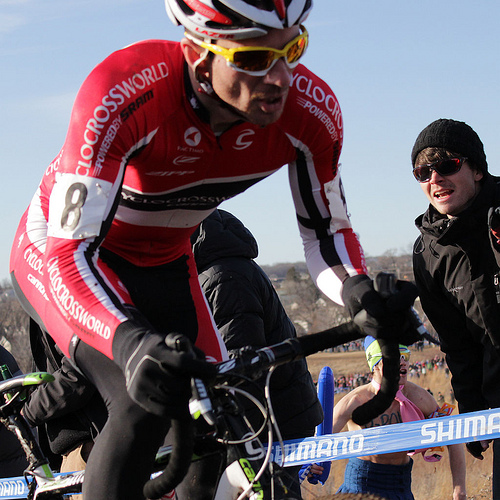
Dylan McNicholas in the 2012 USA Cycling Cyclo-cross Nationals elite race (photo by Roxanne King, flickr)
Progressing in competitive cycling also requires a lot of support, and McNicholas can count on his family and friends for droves of it. McNicholas’ family enjoys spectating at bike races; they travel to watch them, even if he’s not riding. He said, “They’ll do anything to help me out really. They’ll help out with my daughter which is massive.” Just before 2012 ‘cross national championships, his step-father was heading to Chicago. He drove all of McNicholas’ equipment to Wisconsin, which freed McNicholas to fly to the event alongside his daughter Maeve without hauling any equipment.
Maeve, who is three and half years-old, always takes first priority. “I guess everything is sort of based around my relationship with her,” he said.
“Sometimes I’ll travel to a race and the head’s just not in it. But that’s time spent away from Maeve, so sometimes I use that as my motivation to try and do the best that I possibly can.” Forfeiting a chance to race well when he’s already forfeited time with Maeve would be wasting “the opportunity times two,” he said. But once it was the right thing to do. McNicholas has drawn strength from the challenges of balancing parenthood and daily life with racing, which can mean making difficult choices.
In 2010, in Sterling, Massachusetts, McNicholas fought to keep his head in the game on day 2 of Bay State Cyclocross, during his best season to date. He and Maeve’s mom had recently broken up. Out of loyalty to his team he started the race, his mind crammed with “the logistical difficulties of having a child, and figuring out how you’re going to manage all that and the repercussions that [the break-up] could have on your child,” he said.
McNicholas rode third wheel or close to it on the second lap. When he caught sight of his car in the parking lot, his mind connected with his wheels.
Dodging course tape, he sped off to his car and drove away. “I realized I was completely done,” he said. “I should have never even went to the race. I was just at a point where I didn’t have anything for it and my priorities were to take care of my situation and my daughter.”
A year later, in what McNicholas described as “somewhat of a personal victory, like a 180 this year from last year,” he won both Bay State day 1 and day 2 UCI races.
McNicholas came into the 2011 season with “a clear head” and better fitness. He also attributed his stellar season to fantastic support from his Cyclocrossworld.com team and sponsors such as Cannondale, Zipp, SRAM, and Lazer.
He rides ‘cross on the Cannondale SuperX and for the first time he’s had two bikes. “To have really good equipment that works great and is in good shape has made a massive difference,” he said. “And we have a mechanic who’s also a good friend and he’s unbelievable; his support has been huge. Every time I’ve had a great result he’s been a pretty big part of it.”
Fast forward
Speaking about longer term goals, McNicholas said he tries not to place any unrealistic expectations on himself. But he’d like to get a contract. He said, “I’ve talked to a couple of people already about next year and so I’ve got some things I’m pretty excited about.” And while he’s grateful to compete in the New England Cyclo-cross Series, he’d like to enter a few more Gran Prixs next year. “I’d even like to get over to Europe for just a handful of races next year. It would just be for the experience; I would set no expectations on myself obviously,” he said.

Dylan McNicholas in the 2012 USA Cycling Cyclo-cross Masters 30 - 34 race (photo by Roxanne King, flickr)
The pitch to a professional team is harder for someone who’s entered the sport at what’s considered a late age. Talking about starting at age 28, he said, “All around it’s a disadvantage. In terms of finding a team and a job it’s a disadvantage. You don’t have the experience that guys who have been racing ten years have – it’s the large base of experience teams want, not just the bike racing but also the travel and preparation.
“But the advantage is physically I’m strong. I’m starting at an age where my body is mature. The biggest thing could be I’m fresh – my head is fresh, I’m still pretty excited and motivated,” he said. McNicholas believes the maturity a few extra years of life brings helps as well. He can shrug off a bad day and move on, unlike younger guys who might get derailed by what he called “bike racing tunnel vision.”
He thinks he can improve in some areas. For example, he’d like brush up his technical skills. He said, “I have five good years of racing in me. I’m looking forward to that and expect to see some progression.”
McNicholas was happy with his season at the time of this interview a week before the 2012 USA Cycling Cyclo-cross Nationals. He subsequently topped off his season there with a national championship victory in the Masters 30 – 34 category and an eighth place in the men’s elite race where only 25 of 85 starters finished. He described his approach to those races before they took place as, “just to ride as hard as I can.” It’s an expectation he meets with honest effort, consistently.
While he calls cyclo-cross his focus, McNicholas will continue road racing. He enjoys it, his CCB International teammates, and the fitness it builds. He also plans on a little mountain bike racing, in between one of his favorite activities – going out to breakfast with Maeve.
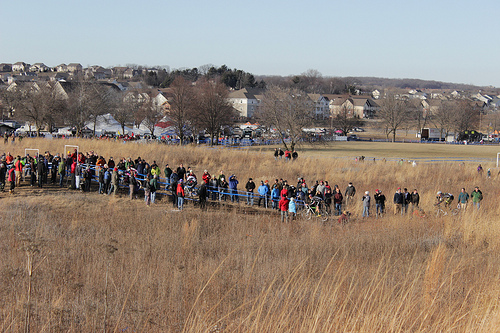
2012 USA Cycling Cyclo-cross National Championships course (photo by Roxanne King, flickr)
[Special thanks to Dylan McNicholas for his time while preparing Maeve’s dinner, and with gratitude to Roxanne King for permission to use her photos — find them and more great shots on her flickr account, and to Melissa German for telling me I had to interview McNicholas.]
I just saw the movie Moneyball for the first time. The world needs to turn traditional thinking on its ear more often.
Here’s a great example of that, with text from a news report on the Team Type 1-Sanofi website:
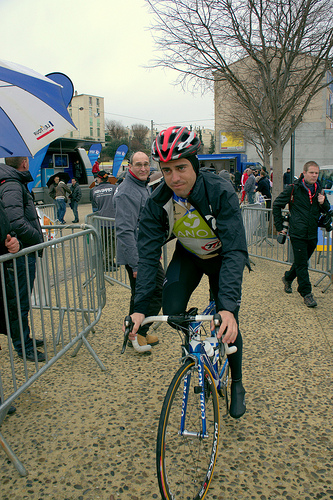
Javier Megias, Team Type 1-Sanofi at 2012 La Marseillaise (photo by Team Type 1-Sanofi)
“In Aix en Provence, Team Type 1-Sanofi rider Javier Megias met with local diabetologists, patients and family members at an evening roundtable discussion entitled ‘Diabetes and Sports: Une Solution pour Chacun,’ which translates as ‘A Solution for Everyone.’
“Megias said, ‘I am not sick, I don’t consider myself to have an illness. I have diabetes, and as a professional cyclist competing at the highest level of the sport at races here in France and around the world, I look at myself as just an athlete with one more thing to manage in my life.'”
Lots of cyclists and other athletes point out the importance of having the right mind, or mental game, to succeed.
Ultimate Sports Psychology is one of the sponsors of the American continental Wonderful Pistachios Pro Cycling Team (click on the sponsor tab of their website and your mouth will start to water). The company markets hypnosis CDs to a variety of clients, including cyclists. Ultimate Sports Psychology’s founder, Josh Horowitz, says on the company’s website that his program has “helped athletes to over 40 National and World Championship titles including three wins at the Tour of California.”
Here’s a sample of what’s available. Do you think hypnosis can help an athlete — counting yourself — improve?
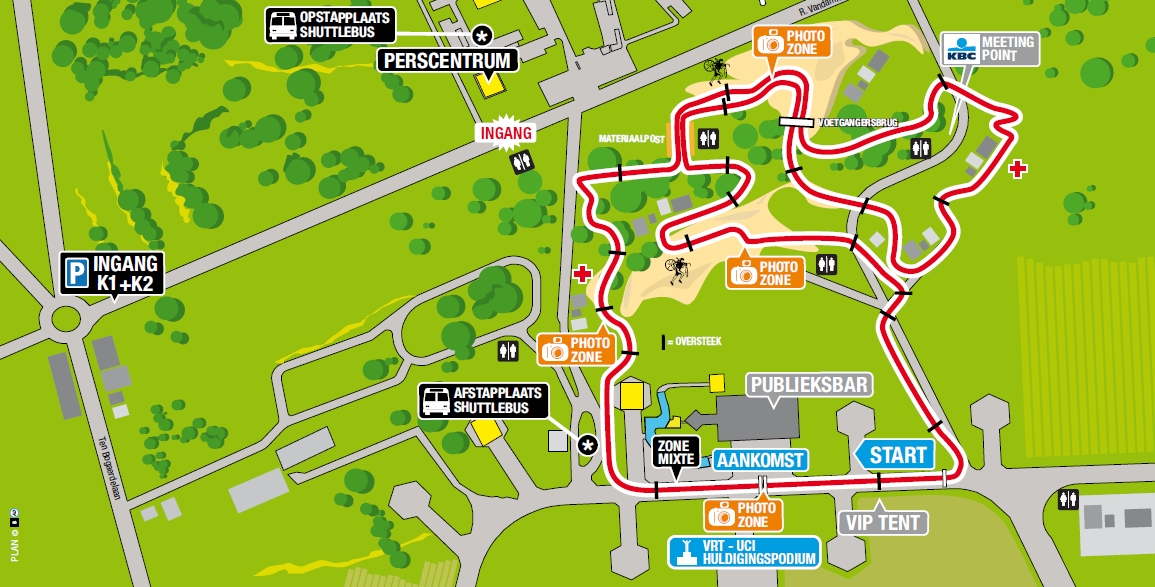
Koksijde Dunes Cross course for 2012
The Koksijde cyclocross course and town border the North Sea, in the northwestern part of Belgium. Hence, an abundance of natural sand.
The Koksijde Dunes Cross venue introduces a new sand dune for 2012, the “X Dune;” it will be named after the new world champion. Koksijde hosted the ‘cross World Championships once before, eighteen years ago, when a dune received the name of that year’s world champion, Paul Herygers. It appears the “X Dune” will be graced with the name of the 2012 male world champion.
The choice of the letter “x” to name the new dune raises a certain question: since males have one Y chromosome and one X chromosome, while females carry two X chromosomes, shouldn’t the “X Dune” be named after the female world champion? She is clearly more thoroughly “x” than her male counterpart.
Lewi Rattray, just the third Australian to ever race the cyclocross World Championships, wrote about his course preview and said one third of the racing occurs on sand. The composition of sand varies by location. Grains of sand derive from minerals like quartz, and / or bits of shell or coral. Perhaps the riders wish that a mineral named “friendly” formed the Western Flanders Koksijde sand.
Enjoy PodiumInsight’s video “Riding the sand at Koksijde.” Stybar is the only rider in the video who does not dismount or dab.
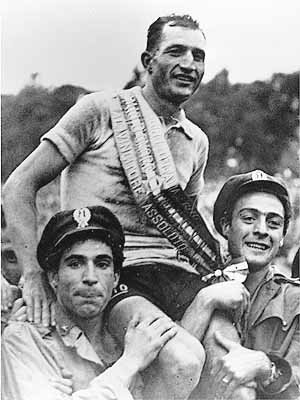
Gino Bartali (from http://www.fondazionebartali.it/)
Today the UCI website posted a non-cycling story about a great cyclist.
Gino Bartali — four-time Italian champion, and winner of three Giros and two Tours de France and numerous other races — is thought to have saved 800 persons of Jewish faith during World War Two by smuggling materials for new identity papers inside the frame and saddle on his bike. Since he never spoke about his actions, not even to his wife, an investigation continues to seek evidence regarding the extent of Bartali’s actions.
The story quotes Bartali as having said, “Good is something you do, not something you talk about. Some medals are pinned to your soul, not to your jacket.”
Reflection one
The peloton’s domestiques, or any rider who serves whichever teammate rides strongest on a give day, heads to the team car or bus after the finish line. For him or her, no kisses on the cheeks, no bouquet of seasonal blooms, no trophy to raise overhead before a sea of admiring fans and camera lenses. If his team leader did not win that day, he might ask himself if he pulled long and hard enough on that last climb, each pedal stroke siphoning oxygen from the fragile capillaries penetrating his heart. He knows he worked as hard as he could. After the race at the dinner table, he discusses the food and the next day’s program.
Reflection two
Bikes save lives. Descendents of those Bartali rescued know this. So do many, many others, by losing weight and building strength in the soul.
- Michel Marcuse: “I ride to stay alive…riding taught me that I had more determination and inner strength than I was aware of.”
- Katie Ratcliffe: “ In February 2009, I found a lump on my left breast after a self-examination…If I had not lost the weight [by cycling] I would not have found the lump and could have been dead in a year’s time.”
- David Grant: “Three years ago, I was dying a slow death and didn’t even know it. My vision was failing, as were my internal organs. It’s a pretty safe bet to say that cycling saved my life.”
[updated 1/29/2012]
Tour de San Luis Stage 5 profile
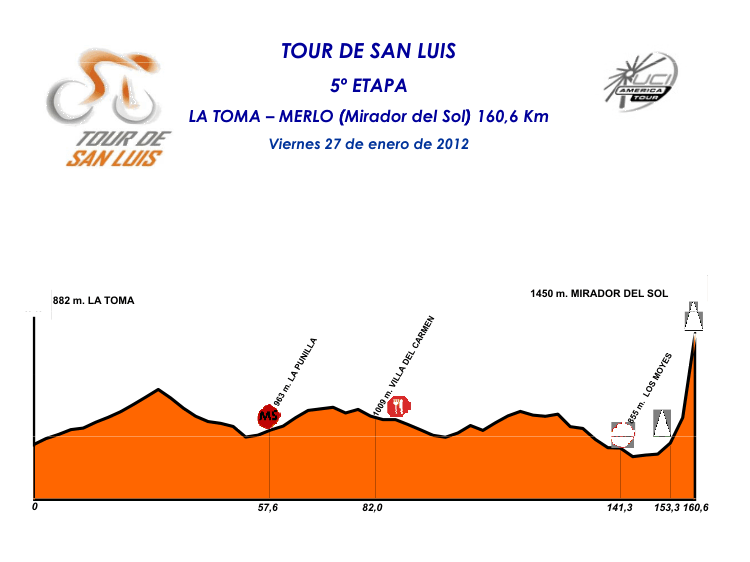
Today riders in the Tour de San Luis face arguably the most difficult final kilometers of all the stages in the second mountain-top finish. The sting in this 7.3 km climb? It’s steep. With an average grade of 8.75% and several portions rising to 14% – 15%, defending the leader’s jersey on this climb up to Mirador del Sol should prove difficult.
Alberto Contador unleashed his signature climbing skills on Stage 3 when he won on Mirador del Potrero de los Funes. While Levi Leipheimer finished near Contador’s wheel, he couldn’t take the chance that Contador will gain too much time on him today. Leipheimer had to pull on the leader’s jersey yesterday after the time trial; he accomplished that in great form with the next best placed rider, Vincenzo Nibali, 23 seconds behind.

Vincenzo Nibali (Fan club photo)
Contador delivered a so-so time trial result; he came in 1:01 behind Leipheimer. Was Contador saving his energy for today’s final climb? Its steepness certainly favors Contador over Leipheimer. With Nibali just 55 seconds behind Leipheimer in GC, and motivated to repeat his overall win at the Tour de San Luis in 2010, he’s bound to attack in the last 7 km unless something goes wrong for him, as is Stefan Schumacher. Nibali, Schumacher, and Contador are all within a minute of the overall lead.
Saxo Bank’s Philippe Mauduit reiterated yesterday that Contador’s form hasn’t reached peak. The team’s race report didn’t mention any goals for tomorrow and also said Contador’s win on Stage 3 was “more than we could have hoped for.” What the team didn’t say was, when the road rises, hope always stands by Contador for a victory. In this race Saxo Bank’s riders provide more support uphill than the teammates surrounding Leipheimer; Nibali can count on more riders for support uphill as well.
Today’s race action should be exciting. @opqscyclingteam and @BiciGogaESPN provide excellent Tour de San Luis coverage on Twitter, and the latter daily tweets a link to live radio in Spanish. (This link to the radio coverage worked on an earlier stage: http://www.radiodigitalsanluis.com.ar/.) The announcer’s exuberance raises emotion to a frenzy that lasts for quite some time after the winner crosses the line, even for non-Spanish speakers.
Jake Keough finished third in Stage 2’s sprint finale; in this Cyclingnews report with video he and UnitedHealthcare Pro Cycling teammate Jay Thomson talk about that day’s race.
General Classification, Tour de San Luis, after Stage 4
| Place | Rider | Overall time |
| 1 | Levi Leipheimer, Omega Pharma-QuickStep | 13:07:52 |
| 2 | Stefan Schumacher, Christina Watches-Ofone | 0:00:53 |
| 3 | Vincenzo Nibali, Liquigas-Cannondale | 0:00:55 |
| 4 | Alberto Contador Velasco, Team Saxo Bank | 0:00:57 |
| 5 | Sylvain Chavanel, Omega Pharma-QuickStep | 0:01:20 |
| 6 | Daniel Diaz, San Luis Somos Todos | 0:01:36 |
| 7 | Luis Mansilla, Chile | 0:01:43 |
| 8 | Jose Rodolfo Serpa Perez, Androni Giocattoli | 0:01:49 |
| 9 | Magno Prado Nazaret, Funvic-Pidamonhangab | st |
| 10 | Andrey Amador Bakkazakova, Movistar | 0:02:51 |
| 73 | Ted King, Liquigas-Cannondale | 0:13:39 |
| 90 | Jeff Louder, UnitedHealthcare | 0:15:10 |
| 91 | Jake Keough, UnitedHealthcare | 0:15:12 |
| 92 | Adrian Hegyvary, UnitedHealthcare | 0:15:19 |
| 97 | Timothy Duggan, Liquigas-Cannondale | 0:15:52 |
| 163 | Jason McCartney, UnitedHealthcare | 1:00:03 |

Iris reticulata blooms about the same time as crocus
The end of January approaches, and the road racing season is coming to life.
The Santos Tour Down Under and the Vuelta a Tachira concluded on Sunday, while an exciting field currently climbs to Miradors (Spanish for viewpoint) and dodges hail this week in the Tour de San Luis. Soon the first crocus will push above ground seeking sun alongside perfumy hyacinth; spring classic after spring classic will tumble from televisions, magazines, and computer screens. The Giro, June stage races, and Tour de France follow soon after, leaving little room for anything else to occupy cycling fans’ attention.
So now is the best time to dig into upcoming Olympic cycling events and developing news and study up on prior Olympic history so you won’t feel left behind when the athletic drama and achievement of this once-every-four-year event arrives in August. Get started with this short quiz a.k.a. Olympic cycling primer. The key awaits below the questions.

2008 Olympics
1. In which cycling discipline did the U.S. win the most / least medals in 2008?
- Road
- Mountain
- Track
- BMX
2. Which cycling event was a new Olympic event in 2008?
3. Which cyclist won the most medals at the 2008 Olympics?
- Fabian Cancellara (Switzerland)
- Marianne Vos (Netherlands)
- Chris Hoy (Great Britain)
- Bradley Wiggins (Great Britain)
Looking back
4. Which male American cyclist has attended the most Olympic Games up to 2008?
- Leonard Harvey Nitz
- Wayne Stetina
- George Hincapie
5. Which female American cyclist has attended the most Olympic Games up to 2008?
- Erin Wesley Hartwell
- Rebecca Twig
- Connie Anne Paraskevin-Young
- Inga Thompson
Looking ahead
6. Which is a new Olympic cycling event in 2012?
- Women’s team pursuit (track event)
- Team time trial
- Omnium (track event)
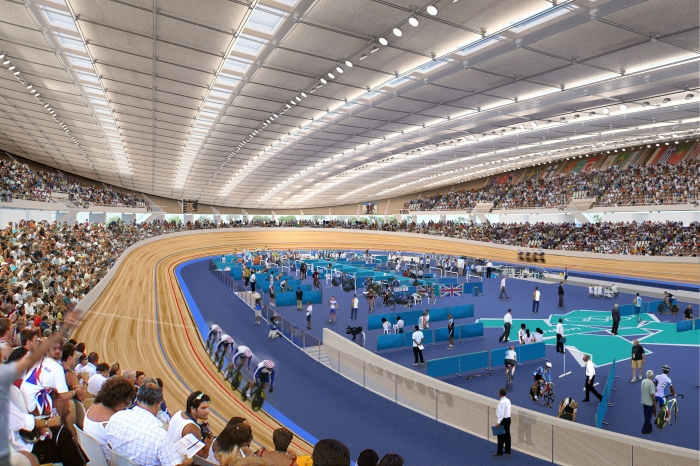
Artist’s rendering of London Velodrome (from london2012.com)
Key:
1. Most — BMX. The U.S. took home three medals, one Silver and two Bronze in BMX. No track or mountain event medals went home with U.S. cyclists.
2. BMX.
3. Chris Hoy. He won three gold medals in track events, the first British athlete to win three gold medals at a single Olympic Games since 1908.
4. Hincapie is a five-time Olympic athlete, named to the games in 1992, 1996, 2000, 2004, and 2008. (Source: USA Cycling)
5. A bit of a trick question. Erin Hartwell is a man; he won Silver and Bronze medals in track events in 1992 and 1996. The remaining three ladies each participated in three Olympic games: Rebecca Twig in 1984, 1992, and 1996; Connie Anne Paraskevin-Young in 1988, 1992, and 1996; and Inga Thompson in 1984, 1988, and 1992. (Source: USA Cycling)
6. Both the women’s team pursuit and omnium (men and women) are new events for 2012.

View from Ophir near Lizard Head Pass, Lizard Head formation at left (photo by Mary Topping)
[updated 3/20/2013]
A few noteworthy items surfaced in news about the USA Pro Cycling Challenge (UPCC) in the last two weeks. Which one matters most to you?
A shorter nickname
Channel 9 News published take-aways from visiting with the local organizing committee leads and race organizers during their planning session on January 18th. Among those takeways: a race nickname. 9 News wrote, “The USA Pro Cycling Challenge also adopted a nickname this year, shortened to USA Pro Challenge.”
Lizard Head Pass or the more challenging Million Dollar Highway for Stage 1?

Trout Lake, near Lizard Head Pass (photo by Mary Topping)
In December a Denver Post article postulated that racers would travel from Durango to Telluride via Lizard Head Pass; this route would likely pass through Mancos, up Highway 184 to Dolores, and then continue to Telluride. A different, longer option traverses Coal Bank and Molas Passes then winds along the Million Dollar Highway past Red Mountain.
A former pro-cyclist now living in Delores believes the Lizard Head Pass route is the logical choice. Michael Engleman told the Cortez Journal, “Those bikers can certainly handle it (the Durango-Silverton route to Telluride) but I doubt they will start a seven-stage race with something that difficult.”
Great times on Indy Pass as women’s race adds stage
The Aspen/Snowmass Women’s Pro Challenge race is growing. In 2012 the best female cyclists will compete over four days from August 20th to 23rd for an increased first place prize of $25,000 in the event which now resides on USA Cycling’s National Racing Calendar. Organizers expect a larger field of about eighty women this year; that would double the first year’s rider count. The 2012 route includes a climb from Aspen to finish on top of Independence Pass on the same day (August 23) the men summit that pass and continue to Beaver Creek.
According to the Aspen Daily News, Specialized-Lululemon and Exergy Twenty12 teams have told the race founder, Jessica Phillips, that they would like to attend the event.
Last year the Aspen/Snowmass Women’s Pro Challenge ran three days; the last day coincided with the finish of the men’s UPCC in downtown Aspen. Kristen Armstrong on Peanut Butter & Co. won the overall title. Anne Samplonius (Now Cycling/Now), Kristin McGrath (Peanut Butter & Co.), Janel Holcomb (Colavita / Forno), and Amanda Miller (HTC Colombia) secured second through fifth places.
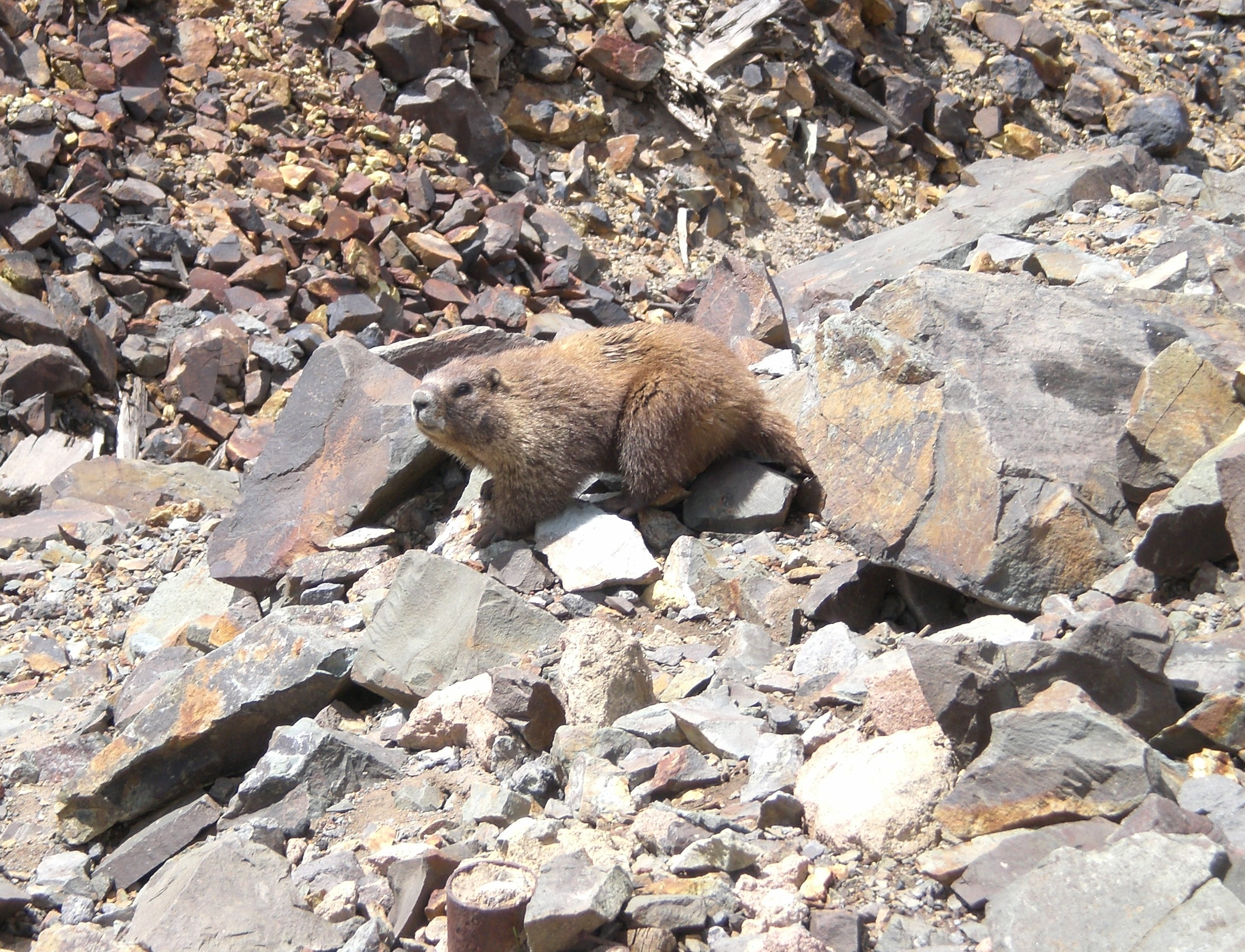
Marmot in Ophir, near Telluride (photo by Mary Topping)
American Reports
In the first Tour de San Luis report, the American threesome of Timmy Duggan, Ted King, and Levi Leipheimer were scheduled to start the race. Earlier this week UnitedHealthcare Pro Cycling Team named its roster, adding four Americans to the startlist: Jeff Louder, Jake Keough, Adrian Hegyvary, and Jason McCartney. 2012 marks Louder’s and McCartney’s first season with the UnitedHealthcare team.
Duggan and King of Team Liquigas-Cannondale have reported on their adventures in and around San Luis during the past week. They posted Strava data from a five hour training ride that included a 25 km ascent.
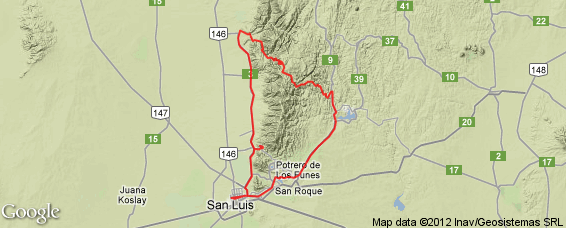
Timmy Duggan's Strava data from climb near San Luis (via http://justgoharder.com/)
Duggan wrote in his journal, “My teammate Vincenzo Nibali won the race in 2010 en route to the Vuelta Espana victory later in the year, and we are looking to repeat his successes as well as pop in there for the sprint stages with our star speedster Elia Viviani. We arrived a week prior to the race to adjust to the heat and the time change and to check out some of the stages.”
It’s disappointing to learn from Duggan that the race food in Argentina follows the European pattern he’s mentioned before. “Oh, its nice to be back in race mode. Flavorless grilled chicken and steamed vegetables.”
Ted King reported on the weather among other topics: “So day one exhibited temperatures reaching 42 degrees Celsius which is an uncomfortable touch over 107 degrees Fahrenheit, or in contemporary vernacular, “Wicked friggin’ hot.” It was dry and sunny and enough to make you feel unpleasantly toasty just by looking out the window.”
Levi Leipheimer tweeted on January 19th that he was on his way, which means he may have arrived on the 21st, two days ahead of the start. Leipheimer’s Omega Pharma Quick-Step team selected its roster to fare well in the sprints, overall, and time trial. Sports Director Davide Bramati, said, “For the sprints we can count on the skills of Boonen and Chicchi while for the more challenging stages the team will pull together around Levi Leipheimer, who could also do well in the 4th time trial stage with Bert Grabsch…Our goal is to capture a stage and to figure well in the general classification.”
Louder also departed on January 19th. He tweeted from the airport, “On my way to Argentina for the first race of the year. I got a hair cut today so I am TOTALLY ready!! (1st airport tweet this year too, btw).”
Other news
A more comprehensive rider list has become available at procyclingbet.com.
Earlier this week Danish press reported that Michael Rasmussen on Christina Watches-Onfone has suffered from a stomach illness. Unable to ride for six days, Rasmussen downplayed his chances for a great performance at San Luis and pinned his hopes on teammate Stefan Schumacher to win at the Tour de San Luis.
It seems the biggest news of the week from an Argentinian perspective was the arrival of Alberto Contador. According to the Alberto Contador Notebook, Contador accepted an invitation from the president of Argentina’s Olympic Committee and visited with him in Buenos Aires before proceeding to San Luis. Fans greeted Contador at the airport, where someone thrust an infant against Contador’s chest for a photo opportunity. See this moment at about 1:35 into the video below.

 ProVéloPassion