

Late September, Peak-to-Peak Highway, Colorado (Mary Topping)
The off-season has already begun for many pro-cyclists who race on the road. I imagine their emotional responses to this brief break fit into a broad spectrum, from relief to joy to bewilderment. I like how Alex Candelario of Kelly Benefit Strategies-OptumHealth Team describes off-season: “It’s not easy to do, you know, to take that rest you deserve. The first thing you start to think about once the season is over is the next season as contracts and new signings are taking place.” To avoid getting stuck there, Alex likes to surf. He said, “The wintertime along the Californian coast boasts some of the best surf on the planet and at about four hrs from our house, I can be getting barreled or getting pummeled any day of the week.”
Most pro-cyclists turn to other sports in the off-season to maintain fitness — cyclo-cross, mountain biking, cross-country skiing, hiking, running. Erik Slack of Team Exergy and Peter Stetina of Garmin-Cervélo have already kicked up some dirt on their mountain bikes. Here’s how Jesse Anthony, also with Kelly Benefit Strategies-OptumHealth, stays fit in the off-season: “I race cyclocross until I’m completely fried and then some. Then I sleep for a few weeks and start training for the road season.” Jeremy Powers who rides for Jelly Belly presented by Kenda also hits the cyclo-cross circuit. Ben Day recommends two to four weeks off before returning to an pre-season training schedule.

Manuel Quinziato (Twitter profile photo)
With so many months away from home, these athletes welcome the gift of time with family and friends. Manuel Quinziato of BMC recently tweeted about his off-season aspirations: “spend time with my family and friends and enjoying time home! That usually makes also fun!” Michael Barry on Team Sky describes the joy of a more leisurely pace:
“A professional cyclist is rarely off of his bike in the off-season for more than a month. Progressively, through the months of November and December I slowly ease back into the routine of training. With time, the distance and intensity of the rides increases. As the morning fog lifts with the chill of the damp night air, we meet at a café to plan a route over cortados and pastries. In the warmth of the café we linger and socialise. The races are months away, we know our fitness will come so for now we can simply enjoy the ride, the camaraderie and the environment.”
I suspect the range of emotions for pro-cycling fans occupies a singular space, and I’ll call it despondency. Bewilderment might describe how we feel too, given the time we have on our hands with fewer and soon no races to watch on TV or on-line. We just can’t get enough of road racing, and nothing fills the void.
——————-
For more about the off-season, you can find some interesting comments in an article on the Amgen Tour of California website that features Dave Zabriskie and George Hincapie.
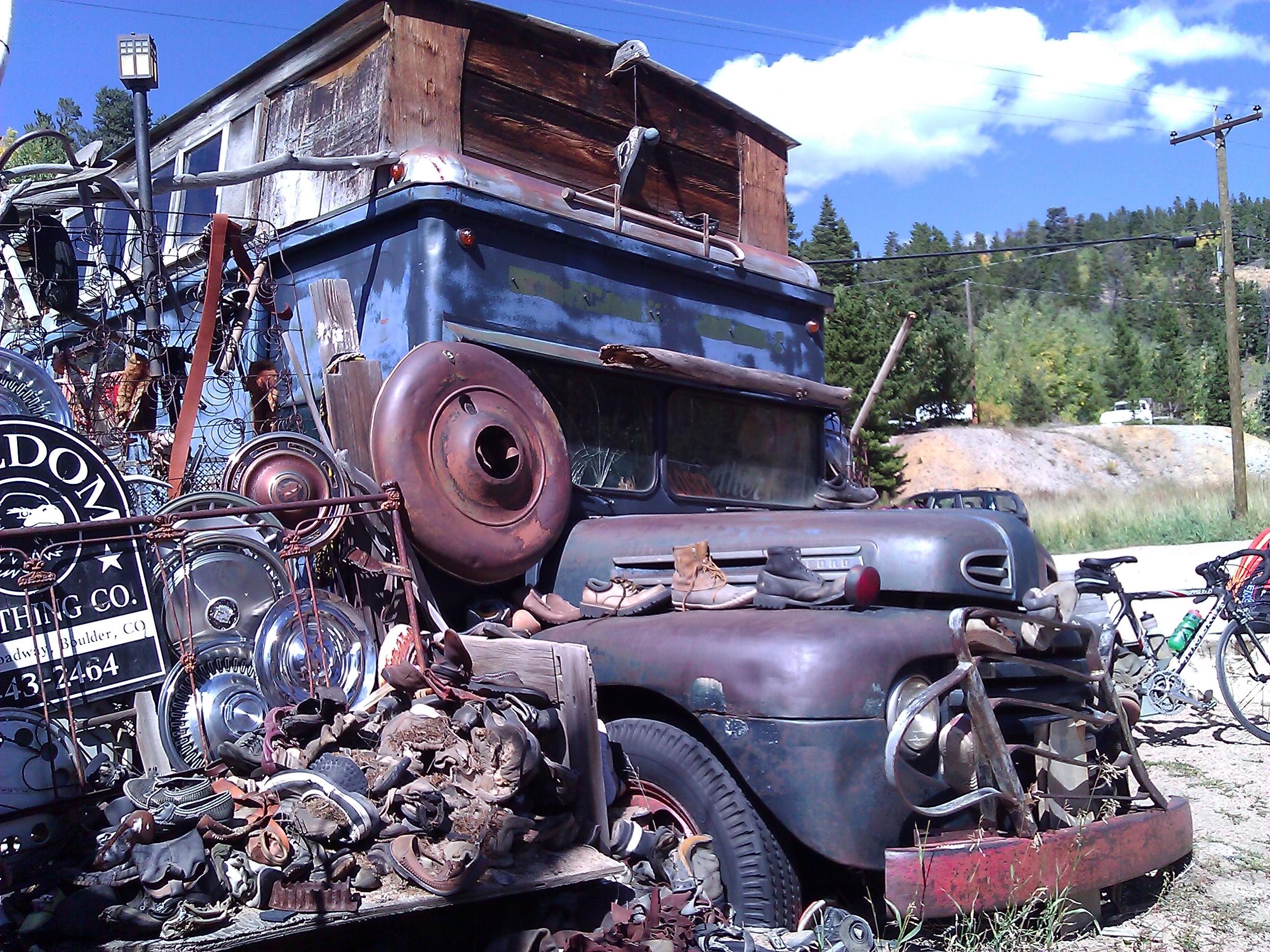
Ward, Colorado. Roadside Art (Mary Topping)
The first few steps off my bike didn’t feel right. I had just dismounted at the Raymond general store, where others on the ride hung about snacking and laughing.
My husband Donald’s annual leaf-peeping ride, a 48 mile loop starting and ending in Lyons with 4,167 feet of Colorado climbing, started peacefully that morning. We followed the curves of the St. Vrain creek past horses and fields on Old St. Vrain Road out of Lyons, in the shadow of stacked red rock cliffs to our left. Summer teased fall: yellow aspen leaves jingled under blue sky and a full sun that warmed the air to 80 degrees F.
The climbing commenced after Old St. Vrain Road joined Highway 7. An hour of slugging it out with the rising road introduced me to a new muscle between my inner thigh and hamstring. It now clenched itself into a tight angry fist, especially on the right side. I shook my legs, but couldn’t pry it loose. I hobbled to the store entrance. When I took the high step into the store right foot first, I nearly collapsed as my leg didn’t want to support me.
A few minutes later the group prepared to set off. I straddled my bike and pointed it uphill, concerned for the first time in my life about my ability to continue and finish the ride. I had confided my condition to Donald; he thought I had strained a muscle or developed a cramp. Now he said, “You can go back to Lyons, you know.”
It’s never been in my DNA to “give up.” I finished a cross-country self-supported bike journey fifteen years ago in wrist braces I had acquired in Ohio to ameliorate carpel tunnel symptoms; surgery on my right hand followed after the trip. Plus, I had to make it to Ward. The general store there sells the best chocolate chip cookies in the universe for $1 each. Truthfully, the chocolate chip cookies were the real reason I joined the ride. More a cross between cookie and scone, each one a little mound of delight, not too soft and not too crunchy, the chocolate chips and not the cookie knit this confection together.
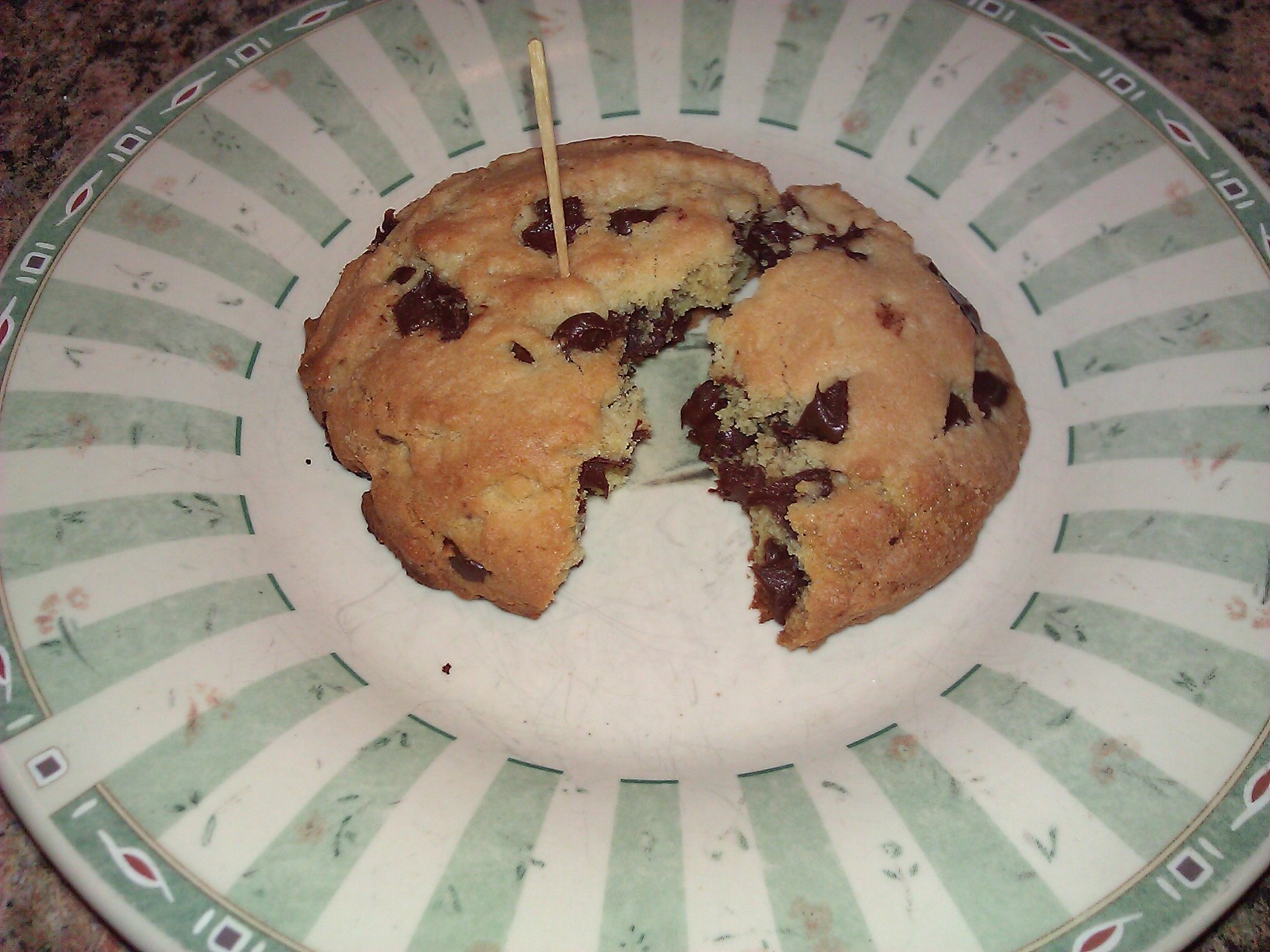
Ward General Store Chocolate Chip Cookie, view 1
“Maybe if I ride it will work itself out,” I said. We both knew something that I was not willing to admit and needed to prove I could continue on with despite it. My weekly exercise schedule of one short bike ride and a twenty minute walk for the past six weeks didn’t render me fit enough for today’s route.
“What do you do when you have a strained muscle?” I asked Donald.
“You don’t exercise,” he said. I imagined myself hinged over the crutches I would need to get around for the next couple of weeks in order to rest the muscle. How would I cover cyclo-cross races in early October?
After five minutes uphill even I couldn’t ignore that each turn of the pedals hurt. We exited the side road from Raymond onto Highway 72. “It’s a long hill here,” my husband said. “You can still go back to Lyons.”
I’m sure pro-cyclists ride with pain a lot, I thought. Maybe pushing through it will help me better understand what they experience on the road. This seemed like a good idea since I write about them. “Let me see what happens,” I said. “Anyway, I really want that chocolate chip cookie.”
As I continued slowly on this four mile uphill stretch, sung phrases from the Mass I had attended before the ride circled my mind. One repeated itself with each pedal revolution: “Lord have mer-er-cy.”
I had never felt so much pain riding my bike. My mind searched for an explanation. In the past month my legs became awfully stiff if I sat for an hour or more. Lately I found myself practically guiding my legs out the driver’s side door of the car, unsteady after I straightened up. Maybe the circulation in my legs had dropped to an abnormal rate. This reminded me of my mother and father, both of whom were thought to have died suddenly because of blood clots. That’s it, I thought, a blood clot, maybe two, lurks in my right thigh where it hurts. If I keep pedaling the clot will jiggle loose and I’ll have a pulmonary embolism and die right here on the tarmac. Is this how I want to go? I imagined the newspaper headline: Cyclist Dies Searching for Chocolate Chip Cookie. Maybe I should coast back down to Lyons, I thought. I pedaled on.
I shook out my left hand to relieve the recurring numbness. Remembering research I did for the piece I had recently written about athletes with type 1 diabetes, I recalled some people get diagnosed when symptoms appear suddenly, including cramps and numbness. My mom and father’s mother had type 2 diabetes. In the back of my mind I’ve wondered for years if I eat too many sweets. Now my worst fear surfaced as a reality. I concluded I had diabetes. And it was all my fault. I must have finally put my blood sugar over the edge by eating 2 donuts, a croissant, enchiladas, and no vegetables yesterday. Maybe, I thought, I should turn back. The pain hadn’t lessened with the motions of riding.
Four miles finished, I crested that hill. My husband, who rides in a league beyond me, waited at the top. “I think you’ll make it,” he said. “There’s just one hill left, and it’s shorter.” He shook his head. “You’re tough.”
On this last three-mile hill I considered altitude as a possible source of my malaise. After all, at this point in the ride our wheels must touch at least 8,500 feet. I’m hypoxic, I thought. My legs need more oxygen. I started to breathe faster.
The next thought I had registered as the worst one yet.
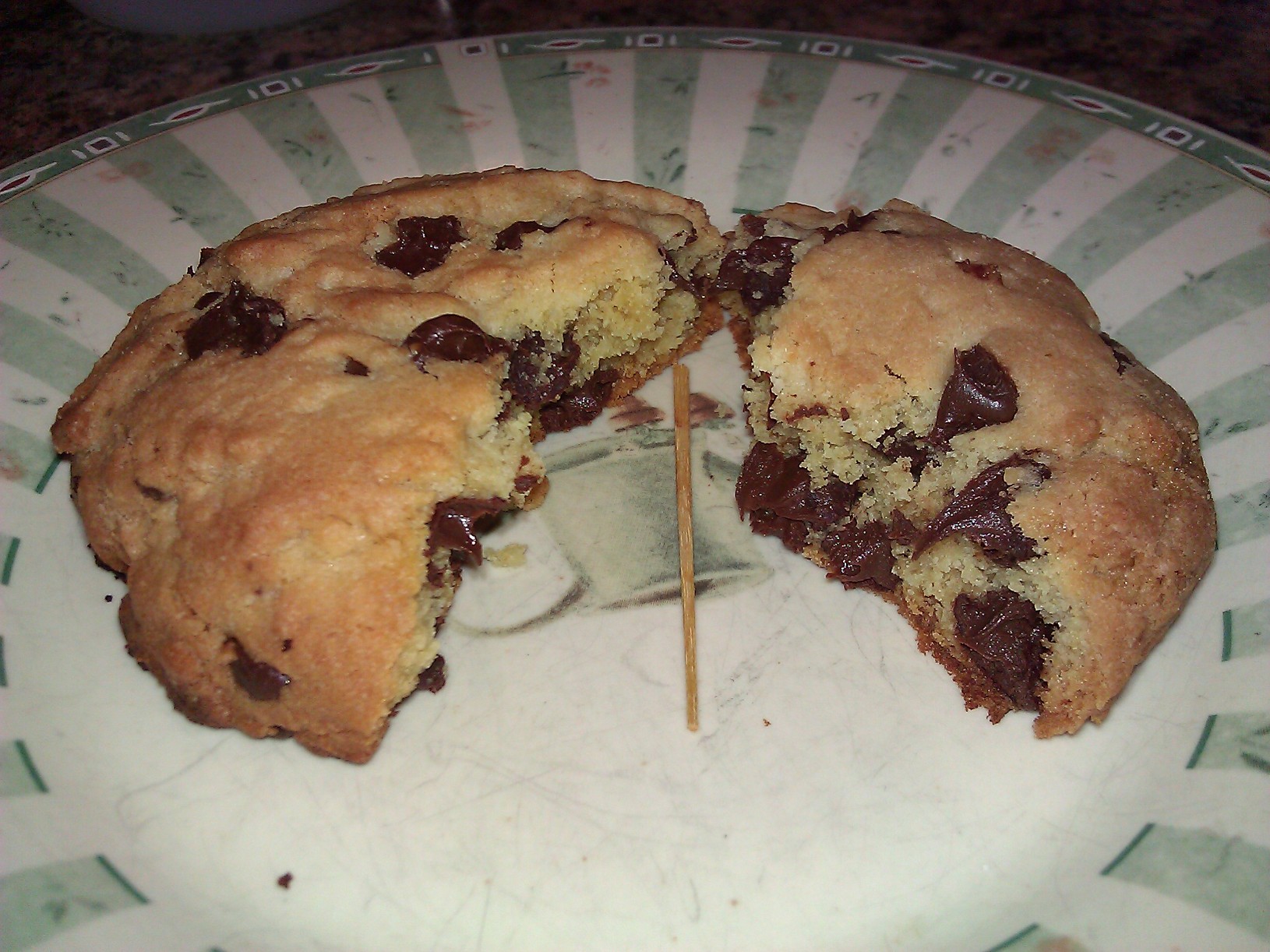
Ward General Store Chocolate Chip Cookie, view 2
I’d be the last to arrive in Ward, with twelve other ride members and who knew how many Boulderites landing there before me. What if I’ve gone through all this and they have sold the day’s lot of chocolate chip cookies when I finally get there? Just then I approached a restaurant on the right hand side of the road. Motorcycles parked in front. Pizza, a sign said. Music pumped out of the restaurant. Barry White. “I Can’t Get Enough of Your Love Babe.”
“Girl, all I know is every time you’re here
I feel the change
Somethin’ moves
I scream your name
Do whatcha got to do”
Barry White’s voice seduces me. I would do anything that voice asked me to do. The voice of love, I would follow it anywhere. It’s as if he lets this inner animal in me loose.
I sat up with one hand on the bike and danced, bouncing my chest and shoulders up and down, swinging my head back and forth, singing loudly, “Oh, I don’t know why I don’t know why, can’t get enough of you my babe.” The switch from suffering to singing seemed a bit psychotic. But I enjoyed the best feeling of the day. It was like I had just received a transfusion after losing pints of blood. My energy spiked.
Still singing, “Can’t get enough of you my babe,” I sped toward Donald where he waited at the top of the hill for me, again. I pummeled the air with my right fist, feeling very Voeckler-esque as I mimicked the gesture he made each time he reached a mountain-top finish and retained the yellow jersey in the TDF this year.
Suddenly forgetting about the mechanics of leg muscles and which new disease caused my distress, I had become a red, pulsing heart on wheels rushing toward Donald and a chocolate chip cookie on the other side of the hill.
My last thought on the bike as we pulled into the lot in Lyons where we had parked the car that morning: I’m usually not a girly-girl, but I think I’ll glue some sparkles onto my bike shoes.
Factoid
The USA Pro Cycling Challenge (UPCC) was the first professional race in Colorado since the Coors International Bicycle Classic ended after the 1988 edition.
2012 dates announced
The UPCC will return in 2012 for seven days from August 20 to 26.
What cities want to host a start or finish in 2012?
The local organizing committee (LOC) is an important contributor to the success of the UPCC at the local, statewide and international levels; it helps plan and facilitate the race in its community.
Winter Park, Granby, Boulder, Frisco, Copper Mountain, Montrose, Telluride and Ouray have been mentioned as receiving invites to bid, which suggests the race organizers are contemplating stages in their neighborhoods. In addition to these towns, the following have indicated interest, according to the Denver Post: Alamosa, Cañon City, Castle Rock, Crested Butte (Mount Crested Butte, the resort, hosted in 2011), Delta, Estes Park, Evergreen, Fort Collins, Glenwood Springs, Greeley, Idaho Springs, Lake City, Longmont, Loveland, MorgulBismark/Superior, Morrison, Pagosa Springs, Pueblo, Woodland Park, Grand Junction and Durango.

Green thong on Rabbit Ears Pass - expect these on Lookout (D.J. Molny)
All eleven of the host cities for the UPCC 2011 edition have expressed interest in a stage for 2012. They are: Colorado Springs, Salida, Gunnison, Aspen, Mount Crested Butte, Vail, Breckenridge, Avon, Steamboat Springs, Golden and Denver. Aspen and Steamboat Springs have said they are definitely submitting a bid for 2012. The fact that Vail’s proposed 2012 municipal budget recommends using the General Fund balance to finance the race indicates they are committed.
It’s sounding like Boulder is a shoe-in to host a stage. Shawn Hunter, race co-chairman, said he has talked a couple of times over the past six months with Boulder’s organizing committee. “They have a very solid vision for how to get Boulder in the race. The good news for them is they’ve been thinking about this since February and really planning…”
How will the selection process work? “It’s going to be a hard decision,” Hunter said. “What it’ll boil down to is selecting a route that is keeping it interesting for the athletes, interesting for the spectators and allows us to showcase different parts of the state.” According to race organizers, the request for proposals will be posted on the UPCC website at the end of September. Proposals are due on Oct. 31, with the next host cities for the UPCC announced by the end of November.
Mountain-top finish?
Hunter said he wants a mountaintop finish in 2012. Mount Evans, the highest paved road in North America at 14,240 feet, will be considered.

Swan Mountain, 2011 UPCC (photogjono)
Host City’s Costs
- The total cost of the race in Steamboat Springs was $220,728; this includes the value of 2,600 hours of city staff time.
- In Aspen expenses to host the race were $258,952. The city supplied $60,000 the Aspen Chamber Resort Association picked up $50,000. Sponsorships and patron fundraising covered most of the remaining amount.
Economic Impact in Host Cities
- A member of Grand Junction’s organizing committee said, “We’re told that in the Tour of California, some towns had a 6-1 dollar ratio. Every dollar they spent, they saw $6 come in. That’s hard to confirm. But after this race went through Salida and Gunnison, those towns are champing at the bit to get back.”
- Kremmling Chamber Executive Director Beres said even though the race passed through town as a sprint location, it brought an economic boost to business owners. Restaurants had their share of traffic before the race came through, Beres said, and some retailers were pleased with sales to international customers.
- In Steamboat Springs many lodging properties reported being at or near capacity Friday night but not Saturday night. And many local restaurants and businesses didn’t report a noticeable increase in sales that weekend.
- Aspen: 95 percent of local businesses expressed support for the event in a recent city survey. Questions about the impact on local businesses met with mixed results. Comparing Aug. 24 to the same Wednesday a year ago, 43.4 percent said business was about the same, 28.7 percent said sales were higher, and 27.9 reported that it had decreased.

Road closure sign in Golden for 2011 UPCC
Other
- Aspen estimates 18,000 and 25,000 people were in town on the day of the race.
- However, Aspen city officials recognized they can do better when it comes to logistics like pedestrian flow in town, better access for retailers and more activities post-race — like a concert.
- Per the UPCC Facebook page, more than 3500 riders logged their miles during the inaugural USA Pro Virtual Cycling Challenge on MapMyRide, raising $25,000 for our official charity, Millennium Promise.
When it comes to reaching for our dreams, we’re often our own worst enemies. We allow obstacles beyond our control as well as those we create ourselves to hold us back. Last night in Denver I met four athletes who embody the opposite mentality. Each has type 1 diabetes. All of them have discovered how to soar with a diagnosis that many define as life-limiting.

The four Team Type 1 Elite athletes – Kerry White, Dan Schneider, Dan Cunkelman, and Dustin Folger – exchanged stories and insights into living and competing with diabetes in the company of about thirty people at the Barbara Davis Center for Childhood Diabetes at the University of Colorado School of Medicine. All cyclists, they race in different types of events. The audience included teens and adults who compete or aspire to compete in cycling, triathlon, and running events, many diagnosed with diabetes. They received detailed answers from the athletes to questions about what to eat and when during a race and for recovery.
According to the American Diabetes Association, 25.8 million Americans have diabetes, and this includes 7 million who don’t know they have the disease. Five percent of those with diabetes have type 1; others have type 2. People with type 1 do not produce any insulin. Left unmanaged, diabetes can result in neurological, cardiovascular, ocular, and renal dysfunction, even death.
“I’ve done everything I shouldn’t do,” Kerry White said, while describing her efforts to maintain healthy blood sugar levels. White and four other women started the solo Ride Across America in 2007. Imagine pedaling a bike 3,000 miles in 13 days. Kerry covered that distance on a sleep schedule that began as four hours a day and dwindled to five power naps lasting ten minutes each in the last few days. Even when it became clear she would be classified as DNF for not making the time cut-off, she rode on. She was the only woman in the solo category that finished the entire race.
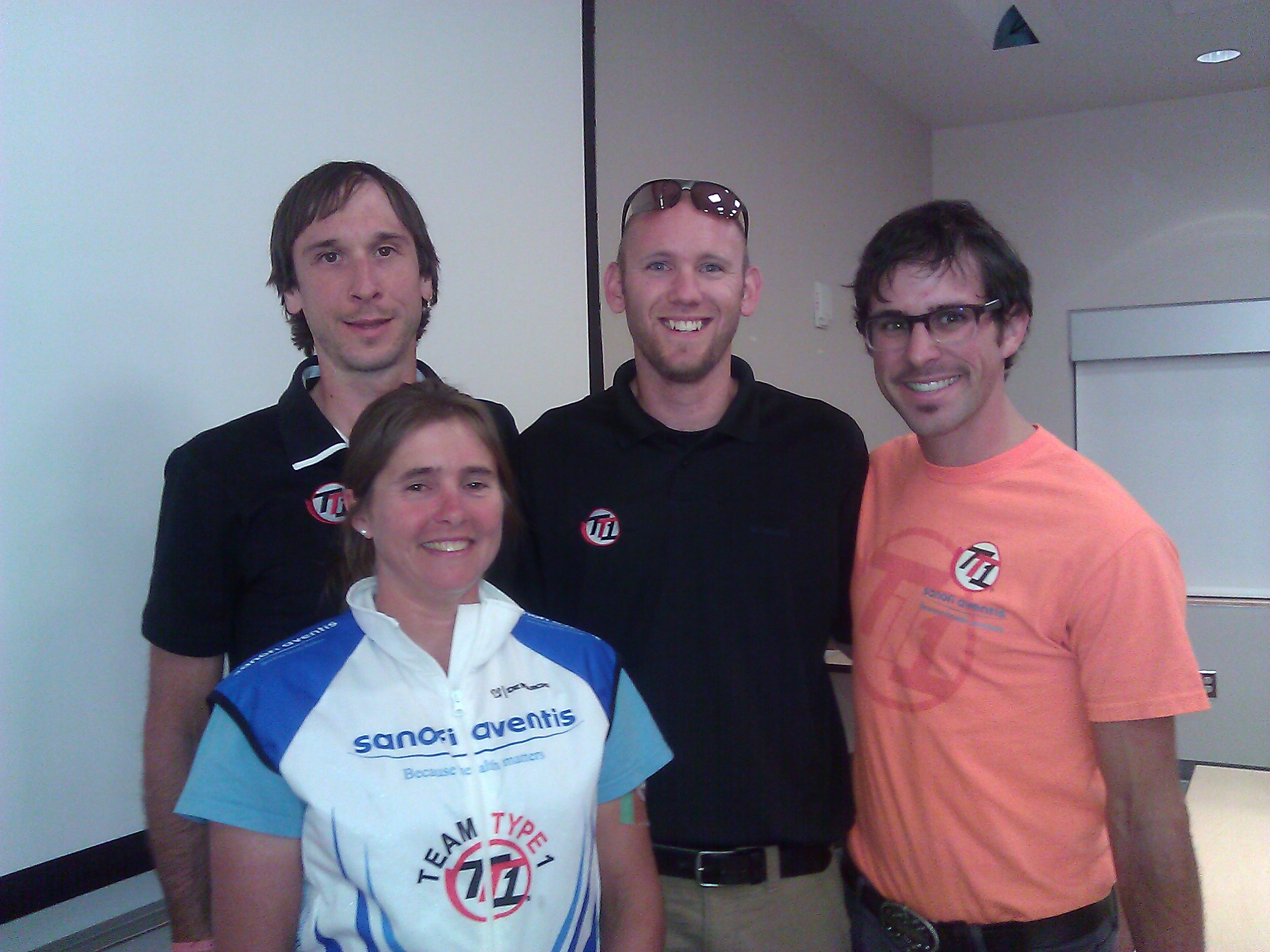
Dan Cunkelman, Kerry White, Dustin Folger, Dan Schneider (l to r), Team Type 1 Elite Athletes (Mary Topping)
My respect and awe for these athletes peaked as Kerry, Dan, Dustin, and Dan explained that physical effort and the stress of competition can wreak havoc on blood sugar – and hence performance – for people with diabetes. The effect as well as methods to address this physiological response varies by individual and even type of competition for an individual. Kerry outlined years of trial and error to arrive at the combination of nutrition, insulin, and exercise that works best for her as an endurance athlete.
The passion and honesty of these four athletes infused the audience facing them with something beyond hope. It was confidence. Confidence in the ability to find personal solutions to live and compete optimally. Kerry, Dan, Dustin, and Dan are outstanding examples of doing the best you can with what you’ve got. They also epitomize the mission of Team Type 1: instill hope and inspiration for people around the world affected by diabetes.
At the end of the evening’s session, I asked Kerry if having type 1 diabetes made it harder to be a successful athlete. She thought for a minute. “Maybe if I didn’t spend time testing and monitoring during [the 2007] RAAM,” she said, “I might have made the time cut-off. But who knows.” She thinks it’s an advantage because her understanding of her body and what she needs nutritionally to excel in endurance competitions gives her an edge.
Dan Schneider, who recently won at Starcrossed, responded to the same question. “There are things I can’t do. Like walk into the woods for two weeks with a backpack,” he said. “But I don’t feel held back. After competing, I don’t think about the fact that I had diabetes and I did this. I just think, ‘I did it.’”
Below, find more on this foursome, Team Type 1, and diabetes.
———————-
Dan Schneider, up close and personal:
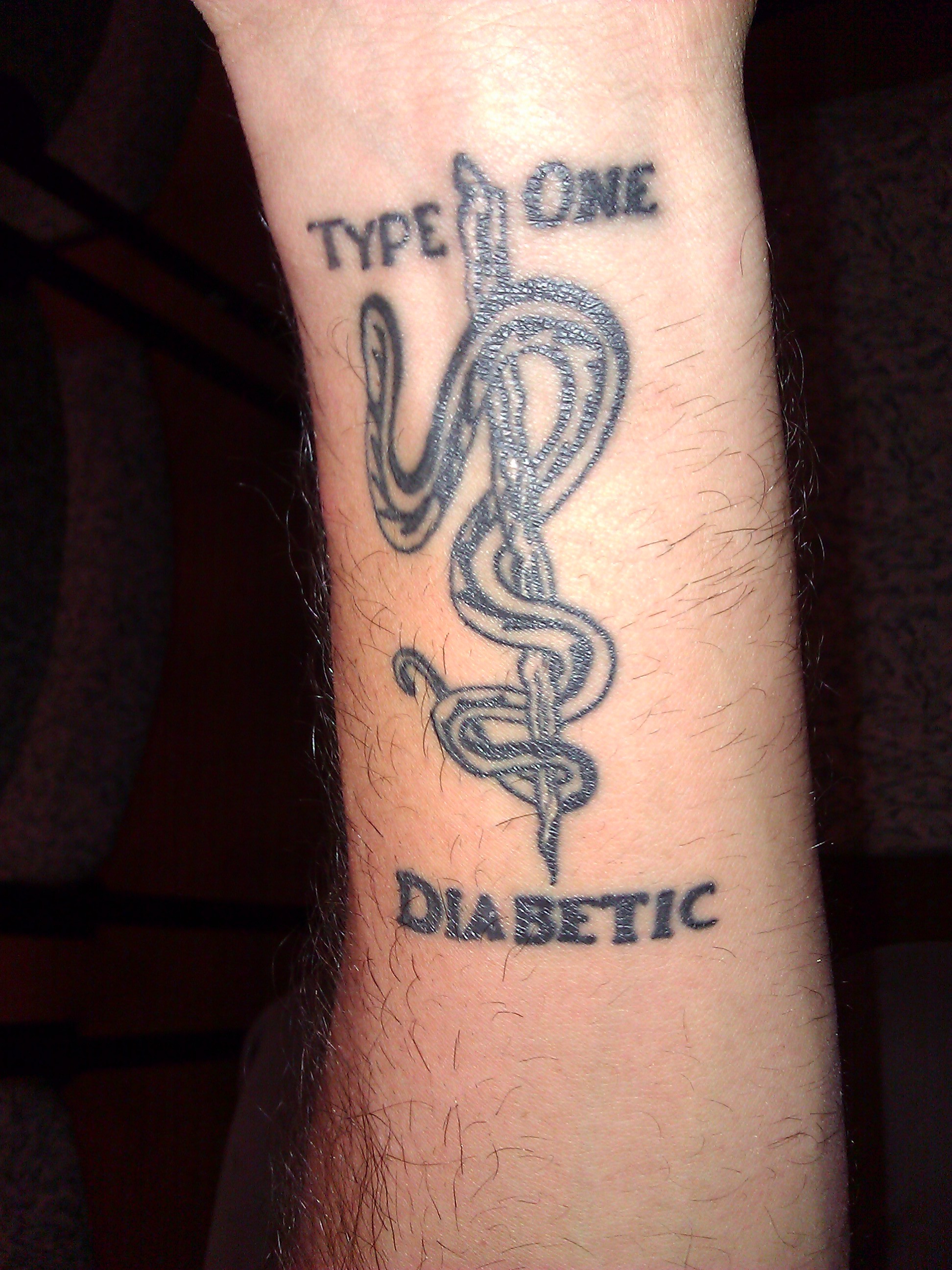
Dan Schneider's Proud New Arm Expression (Mary Topping)
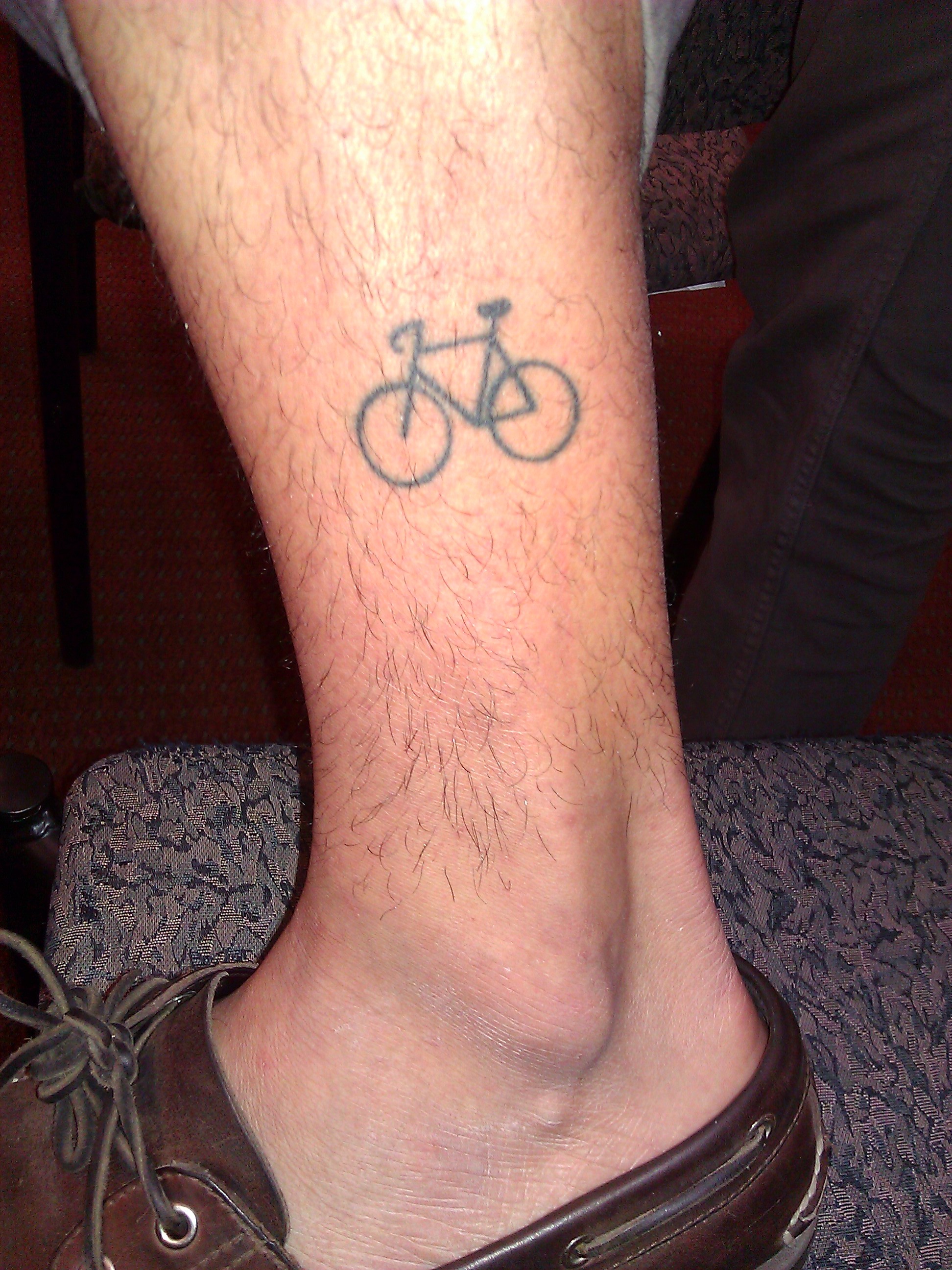
Dan Schneider's Above the Sock-line Bike (Mary Topping)
Phil Southerland, CEO and Founder of Team Type 1
Phil recently authored a book about his passion for cycling and his life-affirming experience with type 1 diabetes, Not Dead Yet.
About Team Type 1
Team Type 1, a world class athletic program that includes professional, development, and elite athletes in cycling, triathlon, and running, started when Phil Southerland met Joe Eldridge at a bike race. Both took insulin before the race. As their friendship grew, so did Southerland’s belief that anyone can be a competitive athlete when they manage their diabetes successfully. Their passion grew into founding Team Type 1 in 2004 to compete in the 2005 Race Across America. Today 115 athletes compete under Team Type 1. Team Type 1 also participates in research related to diabetes and exercise.
Team Type 1’s mission: “We strive to instill hope and inspiration for people around the world affected by diabetes. With the appropriate diet, exercise, treatment, and technology we believe anyone with diabetes can achieve their dreams.”
Find profiles on Kerry White, Dan Schneider, Dan Cunkelman, and Dustin Folger, members of the Team Type 1 Elite Team, here. Each member of the Elite Team lives with type 1 diabetes.
About Diabetes
Type 1 diabetes is usually diagnosed in children and young adults, and was previously known as juvenile diabetes. In type 1 diabetes, the body does not produce insulin.
Type 2 diabetes is the most common form of diabetes. In type 2 diabetes, either the body does not produce enough insulin or the cells ignore the insulin. Insulin is necessary for the body to be able to use glucose for energy. When you eat food, the body breaks down all of the sugars and starches into glucose, which is the basic fuel for the cells in the body. Insulin takes the sugar from the blood into the cells. When glucose builds up in the blood instead of going into cells, it can lead to diabetes complications.
You can take a less than one minute survey to see if you are at risk for diabetes. Go ahead, be a hero.
This is Part 3 of a three-part story. For Part 2 on whether mountain-top finishes turn up the heat, click here.
Part 3 of this story steps back in time. Analysis of previous Tour of Utah and Tour of California courses and outcomes could shed light on the influence of a mountain-top finish on stage race results and whether one should be included in the USA Pro Cycling Challenge. Remembering that the courses (and perhaps the riders as well) have evolved in both races, here are the top three winners of both races in the past few years.
| Tour of Cali | Rider “type” | Tour of Utah | Rider “type” | ||
| 2011 | 1st | Horner | climb / AR | Leipheimer | TT / AR |
| 2nd | Leipheimer | TT / AR | Henao | climb | |
| 3rd | Danielson | climb / TT | Brajkovic | climb / TT | |
| 2010 | 1st | Rogers | TT / AR | Leipheimer | TT / AR |
| 2nd | Zabriskie | TT / AR | Mancebo | climb | |
| 3rd | Leipheimer | TT / AR | Boswell | climb / AR | |
| 2009 | 1st | Leipheimer | TT / AR | Mancebo | climb |
| 2nd | Zabriskie | TT | Lill | climb / AR | |
| 3rd | Rogers | AR / TT | Louder | AR / climb |
Tour of California
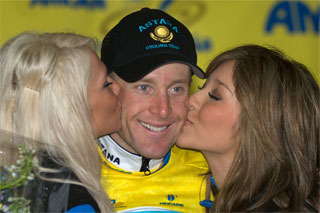
Leipheimer wins 2009 Tour of California (Mike Norris, steephill.tv)
The Tour of California didn’t showcase a real mountain-top finish until 2011; the 2010 course included the first “mountain-top” finish at Big Bear, but despite the scent of stands of evergreen trees, the road leveled out kilometers before the finish. Peter Sagan of Liquigas Cannondale won the stage. Multiple aspects of the course changed between 2009 and 2010. The race organizers swapped the 24 k bucolic TT course in Solvang that Leipheimer had enjoyed for a longer 34 K flat course around shiny downtown Los Angeles for 2010. In addition, the Tour of California courses prior to 2010 opened with a prologue while 2010 and 2011 began with a road stage.
Did the elimination of the flat prologue favor a different type of rider for high GC placement in 2010? Defining Rogers as more an all-rounder than a TT specialist bolsters that opinion. It’s muddy, but 2010 was the first year Leipheimer didn’t win. It seems a mountain-top finish and discontinuing the prologue unlocked the 2011 Tour of California to a wider field of GC contenders.
Tour of Utah
Tour of Utah Logo (ToU flickr photo)
Likewise, the Tour of Utah has modified its course several times during its history. At least one interesting point emerges from analyzing the routes. The 2009 and 2010 editions packed two mountain-top finishes. Each year the top three overall in GC after the first summit finish on day three stood on the podium in the same positions when the race ended after six days. Each year featured the same TT at the Miller Motorsports Park. The mountain-top finishes proved selective.
Leipheimer’s track record in both races invites inspection. He won three years of the Tour of California without a mountain-top finish. And he won the more climber-friendly Tour of Utah with mountain-top finishes. I don’t think this proves the course is not a prime influencer for GC results. Instead, these results point more to Leipheimer’s form and ability to win week-long stage races, as well as perhaps Leipheimer’s response to racing at altitude. He may fit into a class of pro-cyclists who respond better to racing at altitude and recover well from efforts in high places; his first place finish in the inaugural USA Pro Cycling Challenge (UPCC) supports the altitude theory.

Leipheimer after Vail TT win, 2011 UPCC (Mary Topping)
Certainly there are many ways to interpret race results and many factors not discussed here that affect who wins in what types of races on what kinds of courses. Surprise – it’s a complex equation. And yet it does seem adjustments to the Tour of California route made a difference. Analysis of Tour of Utah routes shows mountain-top finishes can determine GC winners. At the same time, Utah’s race results reveal that, like TTs, mountain-top finishes can also blunt the GC battle and hence excitement for the remainder of the race when they conclude earlier stages.
The USA Pro Cycling Challenge’s 2012 Course
What does this mean for the UPCC which did not have a real mountain-top finish in 2011? Tom Danielson of Team Garmin-Cervélo, in an interview at his home in the weeks before the UPCC, voiced his preference for a TT up Lookout Mountain in the Colorado race. If the race organizers took his suggestion, and changed the prologue to a relatively flat profile instead of downhill – or eliminated it altogether – would that overly favor the climbers, or level the playing field between climbers and TT specialists? I suggest they try it on for size. Then spectators can relish the added anticipation of whether anyone can best Danielson’s record of 16 minutes and two seconds.

Lookout Mountain from downtown Golden (Mary Topping)
This is Part 2 of a three-part story. For Part 1 on GC dynamics, click here.
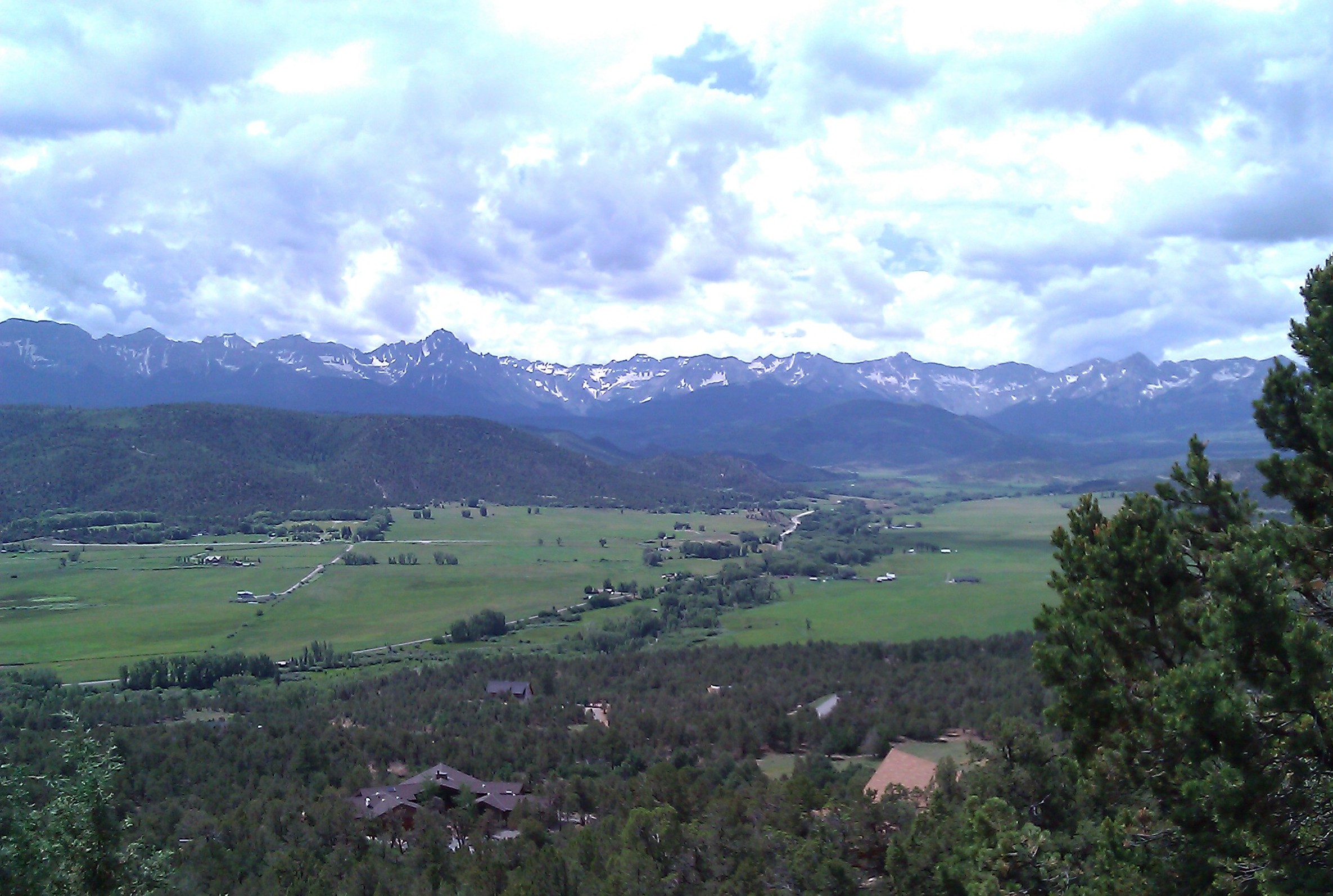
San Juan Mts, Colorado (Mary Topping)
Many factors influence bike race outcomes, including the course. The course also contributes significantly to the level of excitement a race delivers. Certainly top five overall finish times within 53 seconds as well as the yellow jersey changeover from Leipheimer to Van Garderen and back again supplied thrills to USA Pro Cycling Challenge (UPCC) spectators.
But can a race truly be described as exciting when, as in Utah and the UPCC this year, a TT mid-way through determined the final GC and subsequently the leader’s team discouraged interesting breaks while the leader followed wheels for the remainder of the race? Lots of stage races play out like this. It’s difficult to design a route that draws spectators, motivates and challenges the riders, and delivers fiery performance from the field until the very last stage.
Sprint finishes, for example, usually do not sort out the GC outcome, but are exciting to watch – the speed and roar of that train as it passes the finish line is thrilling, and if the course doesn’t entice teams with the possibility of a sprint finish near the end of a stage race, some sprinters, depending on the scoring for the points jersey, might quit during the race and go sight-seeing. Maybe that’s palatable if an exciting leader’s race is the course’s main objective.
Would the addition of a mountain-top finish to the UPCC craft a more competitive GC battle through the end of the race and motivate more riders to aim for a high GC result? According to the Denver Post, UPCC co-chairman Shawn Hunter recently said he wants a mountain-top finish for 2012 and mentioned Mount Evans which tops out at 14,240 feet (though the race could stop at Summit Lake, elevation 11,300 feet). Although it was short, the two mile, 4% uphill finish to Mount Crested Butte in stage one of the 2011 UPCC created some separation among the GC hopefuls: seven seconds from Leipheimer to Frank Schleck, Evans, Vande Velde and Van Garderen; ten seconds from Leipheimer to Gesink; and eighteen seconds between Danielson and Leipheimer.

Summit Lake on Road to Mt. Evans (Mary Topping)
Many have argued the UPCC will not be selective if it doesn’t include a true mountain-top finish. Peter Stetina of Team Garmin-Cervélo: “I am of the opinion that Colorado needs a real mountain top finish (and steeper, selective climbs to live up to it [being] the Rocky Mountain showcase). 5% climbs are not selective.” Using the definition that climbs steeper than 5% create selection, Mount Evans, with pitches of 2% – 6%, wouldn’t be sufficiently selective. I would believe that Peter, having grown up in Colorado, took altitude into consideration. According to the Mount Evans website: “The last 5 miles have grades of 2-5%, but because you are above 12,000 feet it will feel like 10-15% grade to top.”
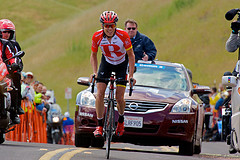
Chris Horner on Sierra Grade, Tour of California 2011 (Ron Dell'Aquila)
Team RadioShack’s Chris Horner’s comments about summit finishes in the Tour of California apply to Colorado. He said the mountain-top stage finishes were one of the features that will keep the sport’s top talent coming back to the Tour of California. “Without the summit finishes, it made it hard to focus on the race. The time trial specialists like Levi [Leipheimer] and David Zabriskie would put so much time into us… With the summit finish it becomes a realistic goal.”
Lucas Euser of Team SpiderTech powered by C10 provided a view from an organizer’s perspective on the question of whether the Colorado race needs a mountain-top finish. He said, again during TourChats, “I don’t know. It was really aggressive this year, there was lots of good racing. I think eventually we’ll see a mountain-top finish but I think for the first year it was good they didn’t [have one] – nobody looked at the race and said, ‘Oh my God, this race is too hard, we’re not going to be able to do it.’ They played it right to where they attracted the right field and they made it a success.”
Is a mountain-top finish truly decisive in sorting out the GC? Again, it’s complex. One thing it depends on is the type of TT in the race. Thankfully the race organizers for the Tour of Utah and the UPCC didn’t select longer TTs.
In yet another dinnertime bike racing conversation, my husband pointed out that if a mountain-top finish happens early in the race with the TT at the end, favorites can still follow wheels to the mountain-top finish – unless it is super steep – if they think they can make up enough time in the TT. Time bonuses at a summit finish could make potential leaders more aggressive. The riding styles of the favorites and the degree of risk they are willing to take can also determine if a mountain-top finish delivers time gaps between the GC hopefuls. Many pieces of the procycling puzzle need to align.
One thing seems clear, however: the road to the summit needs to rise steeply. This might nix the Mount Evans idea, and spread cheer among the mountain goats.

Mountain Goats near Summit Lake, Mt. Evans (Mary Topping)
Next up in Part 3: What the Tours of Utah and California Teach Us About Mountain-top Finishes
[Updated September 20, 2011, 4:10 p.m.]
This is Part 1 of a three-part story.

Independence Pass ascent view from 1K to top (Mary Topping)
Part 1: Climbers’ Perspectives
The inclusion of two passes above 12,000 feet elevation in the USA Pro Cycling Challenge (UPCC) lulled many into believing climbing prowess would make a difference in the race. Headlines reinforced this perception, such as this one from cyclingnews.com when the host cities were announced: “Quiznos Pro Challenge not one for the sprinters.” Two and a half months before the race, a different opinion surfaced from Bicycling’s “Boulder Report,” by Joe Lindsey. He said an all-rounder would win the UPCC: “The climbs themselves will be spectacular, but looking at the race, I see only a few spots for anyone to gain real time, and the gaps in the top five by the finish in Denver could be measured under a minute total, much like the Tour of California until this year.”
The UPCC’s GC results bear out Lindsey’s prediction uncannily well; the top five in the UPCC finished within 53 seconds of one another. I would make a slight modification to Lindsey’s description of the type of rider the UPCC course favored. I would describe him as an all-rounder / strong time-trialer. A different story seemed to unfold in Utah this year. Looking at the 2011 top ten GC finishers in the UPCC and Utah races, the Tour of Utah appears to benefit the climbers.
| 2011 Utah GC | Rider “type” | 2011 UPCC GC | Rider “type” | |
| 1 | Leipheimer | TT / AR | Leipheimer | TT / AR |
| 2 | Henao | climb | Vande Velde | AR / TT |
| 3 | Brajkovic | climb / TT | Van Garderen | AR / TT |
| 4 | Sevilla | climb | Danielson | climb / TT |
| 5 | Danielson | climb / TT | Hincapie | AR |
| 6 | Vande Velde | AR / TT | Infantino | AR / climb |
| 7 | Duggan | climb | Evans | AR / TT |
| 8 | McCarty | climb | Clement | TT |
| 9 | Euser | climb | Pires | climb |
| 10 | Louder | AR / climb | Sutherland | AR |
| Rider “type” definitions: | ||||
| Climber | climb | |||
| All-rounder | AR | |||
| Time-Trialist | TT | |||
Todd Gogulski phrased it well when he said during this year’s Vuelta a Espana, “It’s a very complex equation out there on the road.” Lots of dynamics play into GC results – like how who’s in the field and how strong the leader’s team rides and hence how well it can control the race. But are these the only factors that determined which riders finished high in GC in Utah versus Colorado?

Timmy Duggan at UPCC Stage 6 Start (Mary Topping)
Timmy Duggan of Liquigas Cannondale joined the Boulder Full Cycle ride with Team Rabobank members after the UPCC, and shared his thoughts on why stronger climbers fared better in Utah: “The climbs in Utah were harder. It was more explosive in Colorado — we’d go easy and then boom! it exploded, like the last K to Mt. Crested Butte.” Timmy thought the easier pace on the climbs in Colorado could have been due to some athletes’ concerns about how they would fare at altitude. Timmy also pointed out that many of the competitors experienced for the first time two races back-to-back at altitude, and reiterated what he had mentioned in an earlier interview, that each athlete’s ability to recover and approach to recovery could have influenced performance in Colorado, especially for guys like Timmy who “went hard in Utah,” finding the breaks nearly every day of racing.

Stef Clement, Boulder Full Cycle ride post UPCC (Mary Topping)
Stef Clement’s comment in Boulder provides further insight. In response to my question about what he thought about the UPCC, he said, “I like riding in the U.S. There are wide roads. I’m not a guy for the corners.” Stef rode to an eighth place overall in the UPCC for Team Rabobank; he is the current Dutch TT champion. His reply echoes Santiago Botero’s assessment of the Colombian GOB team’s results part-way into the UPCC, from an article by cyclingnews.com: “But we had expected steeper mountains like in Colombia,” he said. “These big roads with lots of wind and gradual climbs are not good for us. But still we try every day to make breakaways and to finish well.”

Peter Stetina before stage 2 of 2011 Tour of Utah (Mary Topping)
Peter Stetina of Team Garmin-Cervélo also weighed in: “Yeah, honestly the climbing in Utah was harder. The climbs were steeper/ more selective. Plus the make-up of the race favored climbers with the uphill TT and Snowbird finishes. Whereas Colorado had shallower climbs and flatter TT’s geared to TT specialists. But Colorado was still harder because of the level of competition and it was a much bigger event.”
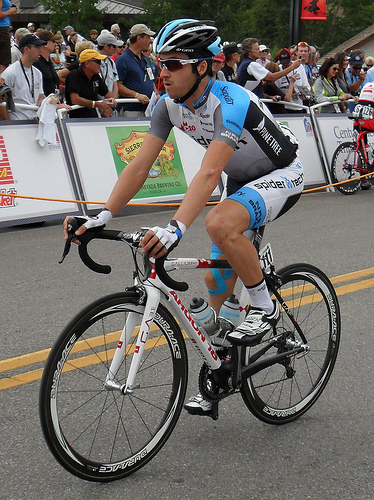
Lucas Euser at Avon Start (Roxanne King)
Like Timmy Duggan and Peter Stetina, Lucas Euser on Team SpiderTech powered by C10 raced in both Utah and Colorado. During the September 4th, 2011 video session of TourChats, Lucas compared Utah to Colorado, explaining how a race organizer’s other objectives can influence the course, and hence outcomes: “They were both equally difficult in different ways. In Utah you see a little bit shorter stages, a little bit more intensity. You see circuit-race style courses. The USA Pro Cycling Challenge was a different race in the sense that they really wanted to bring the TDF stars, bigger teams, and showcase that. They wanted to showcase as much of Colorado as possible.”
Next up in Part 2: Do Mountain-top Finishes Turn up the Heat?
All of the merging and forming and closing of procycling teams for 2012 hard to sort out? Here is a great overview with insightful points about whether superteams yield success, from Outside Magazine’s “The Cycle Life” blog.
http://www.outsideonline.com/blog/outdoor-adventure/biking/the-rise-of-the-cycling-superteams.html
Johan Esteban Chaves (Colombia es Pasion website)
A New Name
Johan Esteban Chaves Rubio. Remember this name. Yes, he’s Colombian, born in Bogota in 1990. The elevation of Bogota is 8,612 feet (2,625 meters). You get the idea. Johan Esteban Chaves just won the 2011 edition of the Tour de l’Avenir — tour of the riders of the future, as it is an under-23 event for riders ages 19 – 22.
The Tour de l’Avenir fields riders by country, not by team. France won the team classification this year, with Colombia a close second. Earlier in the race, which consists of a prologue plus seven stages, Johan Esteban wore the polka dot jersey in stages one and three. Garikoitz Bravo of Spain won the final mountains classification; Johan Esteban took second.
Chavez rode in the Team Colombia es Pasion colors, which I like because of the word “passion” in the name — and the jersey sports a heart motif. The team’s mission, found on its website, inspires: “Through our cycling team and their performance in competitions outside of Colombia, we intend to improve the country’s image, to rescue its credibility, trust, products and people.” (using Google translate from the original Spanish)

Colombian Department of Cundinamarca
Bogota is in the department of Cundinamarca. The department of Antioquia, which sponsors the GOB team cycling fans discovered this past August when team members like Henao and Acevedo flew past the peloton with attacks and stage wins, lies just to the west. Bogota and the department of Cundinamarca lie along the spine of a range of the Andes mountains in the middle of the country. Sounds like it provides fine training territory for aspiring pro-cyclists.
What’s in a Name
Most Colombians, as well as people in all Hispanic countries, have both a maternal and paternal surname and will use both. The origin of the use of both surnames seems to have come about from Arabic influence on Spain (and hence to Colombia when Spain colonized the country). It took me, I kid you not, hours to find this explanation of “why two names.” Plenty of websites explained where each of the two surnames come from in the families, but not the root “why,” which felt imperative for me to know and share. Apparently Arabic naming traditions reflected the names of the child’s ancestors, and this is why the hispanic naming tradition preserves both paternal and maternal lineage. The practice of carrying two surnames also permits a woman to continue to carry the father’s family name down to her children, and thus the father’s family name will not end if he is blessed with just daughters and no sons. It feels very patriarchical, but I kind of like that names don’t disappear, but continue; it provides a more complete picture of family history and ancestry.
The father’s surname is first of the two surnames and is the one used in conversation. This is why I called Johan Esteban “Chaves” and not “Rubio.” This becomes very important in calling bike races. During one of the stages in the USA Pro Cycling Challenge, the official Twitter account mentioned “Suarez” as a member of the break. The person manning the account had selected the second surname to identify the rider. Calling the rider Suarez led me to conclude the rider in question was Juan Pablo Suarez Suarez, while in fact the rider in the break was Eduard Alexander Beltran Suarez. I replied to one of the account’s Tweets, and henceforth the correct name of Beltran was used.
Here is a fine explanation of the derivation of a person’s two surnames, from an American woman who married a Colombian.
“The word used in Spanish in order to ask for what we call a LAST NAME is APELLIDO, which is more closely translated as SURNAME. In Colombia, as well as all Hispanic countries, most people will have 2 APELLIDOS — called the FIRST and SECOND APELLIDOS. The person’s first surname (apellido) is their father’s first surname and the second surname (apellido) is the mother’s first surname, what we call ‘the mother’s maiden name’ in the U.S.
Here’s an example:
Father’s Apellidos: García Gómez
Mother’s Apellidos: Osorio Pérez
Child’s Apellidos: García Osorio”
Why do we often see two names before the two surnames? Spanish does not use a “middle name” per se, but rather a second first name (“segundo nombre”). According to Spanish411.net, two nombres instead of one occur for a variety of reasons. Traditionally, many Hispanic children take a saint’s name, especially the patron saint of their birthday. A second name can be added “in honor of other saints (and therefore increase divine protection) or to honor other relatives. Many traditional names (like ‘Ana’) are so popular that a second (or third) name is included to avoid any confusion (e.g. ‘Ana María,’ ‘Ana Lucía’).” A person will decide if he prefers to use just one or both nombres.
So now we understand why, to remember the name of the winner of this year’s Tour de l’Avenir, we must recall four names: Johan Esteban Chaves Rubio.

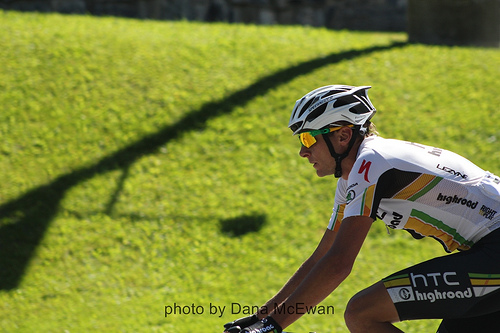
Pate in Montreal (Dana McEwan)
Danny Pate’s 2011 Grand Prix Cycliste Montréal ride calls to mind a certain gutsy TDF stage 15. It was 2008, the first year both then Team Garmin-Chipotle and Danny rode in the TDF. That day Danny and three others left the peloton at kilometer 12 and didn’t look back. After climbing about 10,000 feet, Danny scored third place, a huge result for his first Tour. Three years later, he’s delivered another grand effort (un vrai numéro) and won the passion prize for the Montréal race.
Danny broke away alone after about 37 k of the 205 k course but soon three others joined him: Di Luca, Arashiro, and Geslin. At 50 k to the finish the foursome’s lead dwindled to 45 seconds. For the next 23 k multiple riders would leap from the peloton to try to bridge to the break while race-favorite teams dialed up the pace, but none would succeed. Di Luca returned to the pack at 46 k to go. With 33 k remaining Danny raced forward while Arashiro and Geslin fell back. At this point commentators said it wouldn’t be long until the group reeled Danny in. They would swallow their words when Danny, in time-trial mode, remained out front for enough of a lap to get maximum climbing points and overtake Di Luca to win the KOM (as reported by velonews.com). Six riders finally caught him with two laps left in the race.
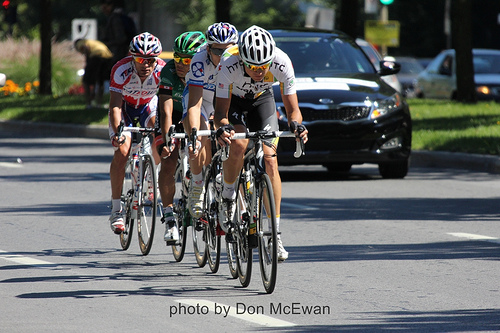
Pate at front of four-man break, Montreal (Dana McEwan)
It may be ironic to award Danny the passion prize, because the print media casts the impression that he’s just a guy doing his job. Here’s what he said in a piece cyclingnews.com published just before the 2011 TDF: “A successful Tour for me is being able to do what the team wants me to. I’m here to be a support rider and we’ve got some of the best riders in the world here on the team. Instead of calling it responsibility it’s part of my work. We’re going to go out there and race our race every day. My part of that will probably be riding on the front and that’s fine.”
The thing is, Danny does his job really well. You could believe that for him to work as hard as he does, he takes his job to heart. But he doesn’t wear it on his sleeve. Instead, his legs do the talking. Those legs maintained a sustained crescendo during 2011 TDF stage 15 from Limoux to Montpellier. As described by The Irish Times, Pate and Lars Bak set a relentless tempo that day. “Five men formed a breakaway as soon as the field had left the town behind, but HTC’s two workhorses, Danny Pate and Lars Bak, responded by assembling their colleagues into a disciplined line that would sit on the front of the main bunch for the next four and a quarter hours,” the equivalent according to a quote from Mark Cavendish in the same article, of 190 kilometers. The scene of Danny on the front played many times during the 2011 TDF.
Although known primarily for the time trial skills that prolonged his lead in Montréal when his break-mates lost their desire to continue, Danny isn’t a stranger to climbing. He won the KOM competition in the 2005 Nature Valley Grand Prix, and placed third in the Tour of Ireland KOM in 2007.

Stage 15 2008 Tour de France Profile (www.letour.fr)
Then there’s that career-defining stage 15 in the 2008 TDF from Embrun to Prato Nevoso over the hors-categorie climb of the Col Agnel and finishing on a category one mountain. The four-man break established itself 12 k into the 183 k stage. Four hours and 51 minutes of climbing and descending later on the uphill finish, Danny crossed the line just ten seconds behind the stage winner, Simon Gerrans.
A velonews.com article quoted Danny saying post-race that he wasn’t sure anyone in the break knew the Montréal race offered KOM points. Some might say Danny’s Montréal performance sprung out of the need for a new team in 2012, or mimicked earlier days when he attacked just to make things interesting. Those remain possibilities, but Danny’s results in Montréal’s stand on their own merits – or two long hard-working legs.
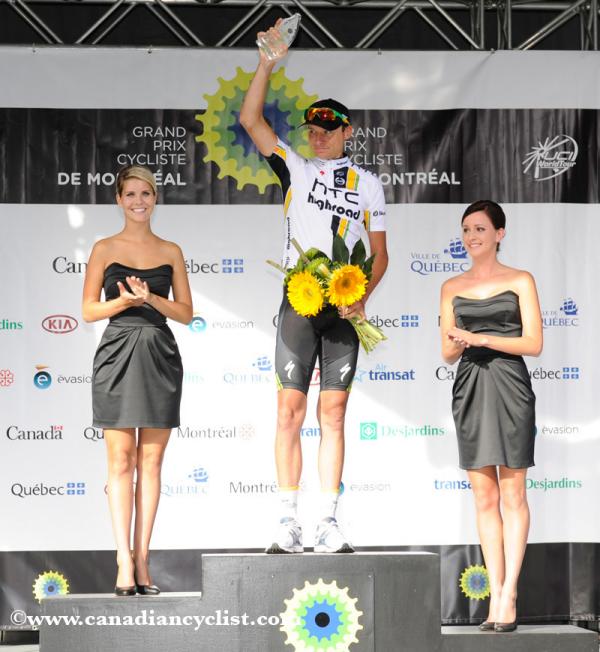
Danny Pate KOM Montreal Podium (Rob Jones, cyclingnews.com)
[Link to Danny in the polka-dot jersey in the 2005 Nature Valley Grand Prix here.]

 ProVéloPassion